
Reviewed · PUERTO MADERO TOURS
Buenos Aires: Puerto Madero Tour For Small Groups
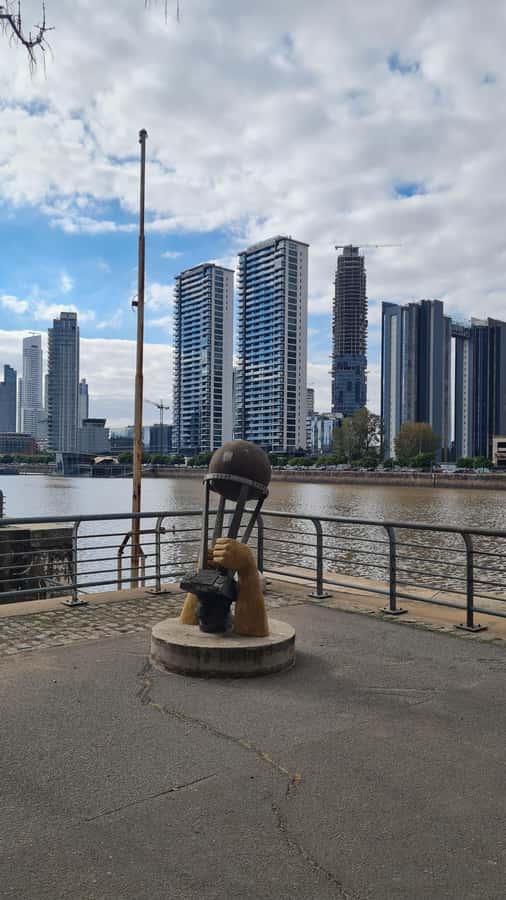
Puerto Madero changes character block by block. You begin beside an old naval training ship, pass red-brick port warehouses and the tango-inspired Women’s Bridge, then leave the city streets for birds, open paths, and wide views at the ecological reserve. It is a smart way to see both Buenos Aires’ polished waterfront and its wilder edge.
I like the mix of urban landmarks and wildlife, and I like that Miguel leads the walk with local knowledge and plenty of discussion. The main consideration is the pace: three and a half hours on foot, including 90 minutes in the reserve, is not a good match for anyone who wants a short sightseeing stop or needs wheelchair access.
In This Review
- Key points at a glance
- Why Puerto Madero makes such a good walking route
- Starting beside the Sarmiento frigate
- The Women’s Bridge and the tango connection
- Old docks, brick warehouses, and modern towers
- Ninety minutes inside the Ecological Reserve
- Lola Mora’s Fountain of the Nereids
- Ending at Museo de la Cárcova
- What Miguel adds to the walk
- Is $20 a fair price?
- Who should book this walk?
- Should you book the Puerto Madero tour?
- FAQ
- How long does the Puerto Madero tour last?
- Where does the tour begin?
- Where does the tour finish?
- What language is the tour conducted in?
- Is entry to the Sarmiento frigate included?
- How much time is spent in the Ecological Reserve?
- What should I bring?
- Can children or wheelchair users join?
Key points at a glance
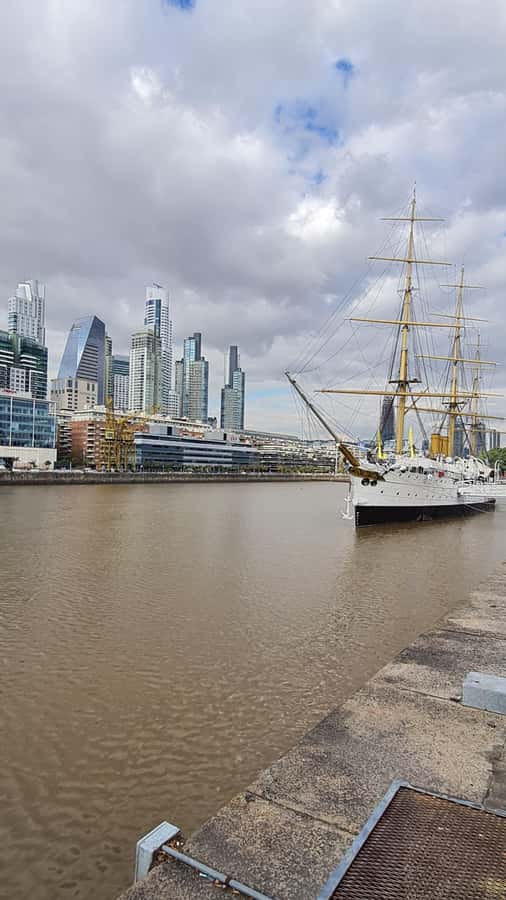
- A full walk through Puerto Madero: See the old docks, English-brick warehouses, restaurants, UCA buildings, port machinery, and modern towers.
- Miguel leads in Spanish: The tour includes guided explanations and conversation rather than a simple photo walk.
- The Ecological Reserve takes 90 minutes: Plan for open paths, city views, birdwatching, and possible sightings of other animals.
- The Sarmiento frigate is viewed from outside: You see the historic museum ship, but entry is not part of the tour.
- Lola Mora provides the final cultural note: The walk passes the Fountain of the Nereids and ends at Museo de la Cárcova.
- Bring protection from the sun: Comfortable shoes, a hat, sunscreen, and water matter on this long outdoor walk.
Why Puerto Madero makes such a good walking route
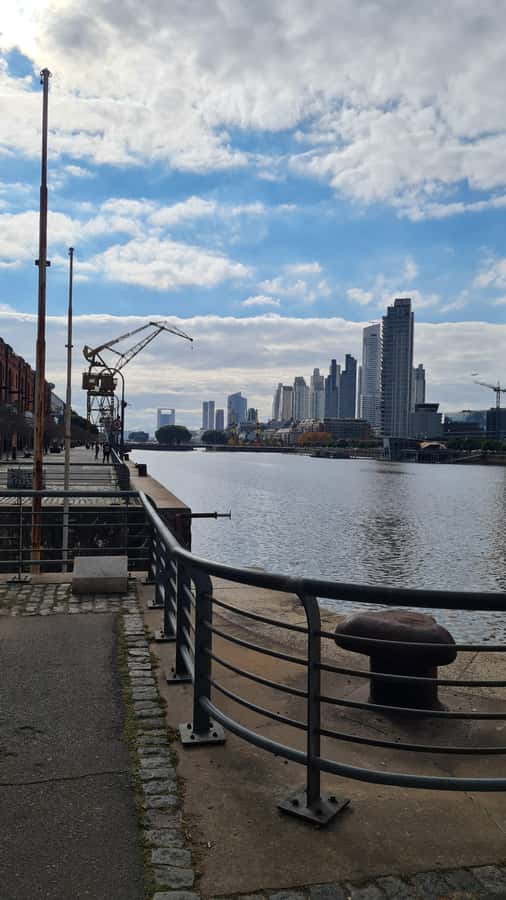
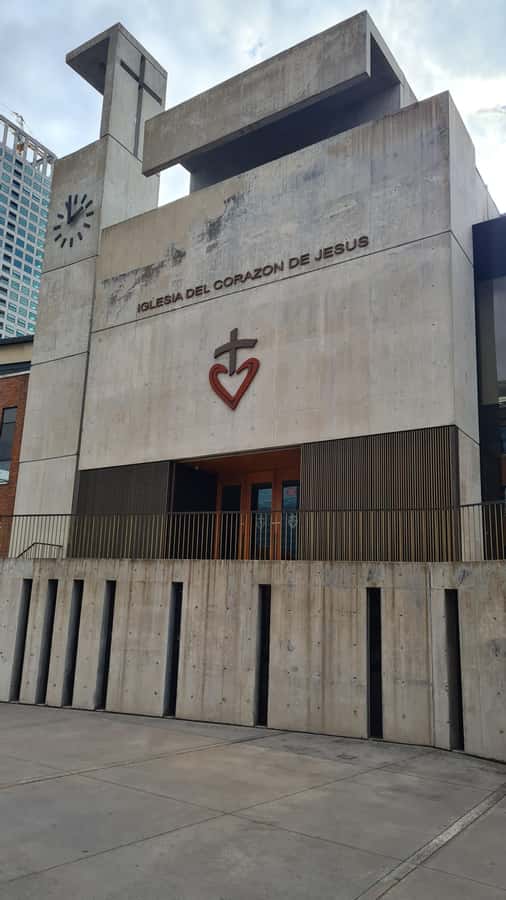
Puerto Madero offers one of Buenos Aires’ clearest visual contrasts. Along the water, old port buildings made with English bricks sit near sleek towers and modern public spaces. The former industrial district now has elegant restaurants and the Pontifical Catholic University of Argentina, yet traces of its working-port past remain in the docks, machinery, and warehouses.
That contrast gives the walk more substance than a standard city-center stroll. You are not simply moving from one monument to another. You are watching one part of Buenos Aires change from a port district into a fashionable waterfront neighborhood while its older structures remain in place.
The tour covers the dock area on foot, so you can take in its scale slowly. I like this kind of route because the details are close enough to inspect: brickwork, bridges, ship fittings, and the relationship between the old port buildings and the tall buildings behind them.
The setting also makes the tour useful early in your Buenos Aires visit. It gives you a clear sense of the city’s eastern edge and shows how the built-up center meets open public land. Just remember that the route is not a quick introduction. Three hours and 30 minutes is a serious walk.
More around Puerto Madero:
- Buenos Aires: Madero Tango Show with Optional Dinner
★ 4.3 · 748 reviews - Buenos Aires: Puerto Madero Sunset Cruise with Open Bar
★ 4.1 · 439 reviews - Buenos Aires: Puerto Madero to Tigre Round Trip Cruise
★ 4.4 · 190 reviews
Starting beside the Sarmiento frigate
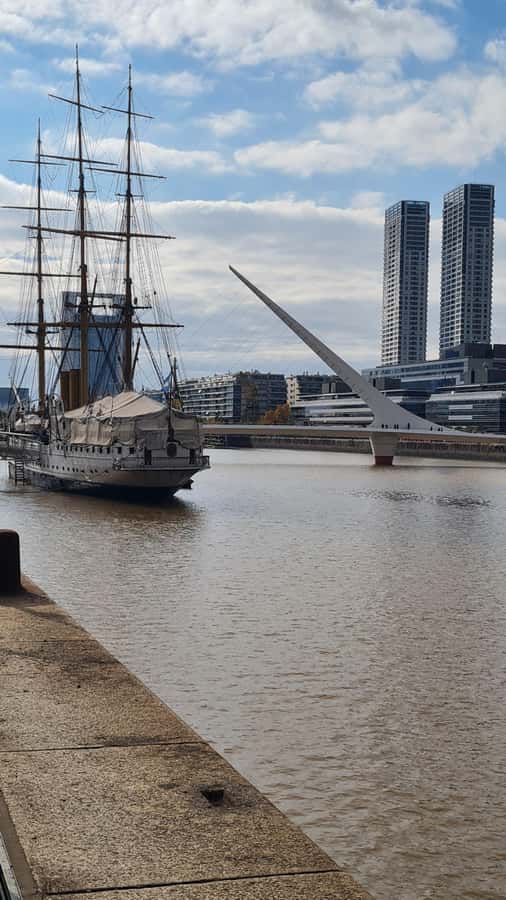
Your meeting point is the Buque Museo Fragata A.R.A. Presidente Sarmiento. Miguel waits here for the group, making the ship an easy landmark for the start of the tour.
The Sarmiento was once a training ship for generations of midshipmen in the Argentine Navy. Today it operates as a museum, although this tour does not plan an interior visit. You will spend about 10 minutes on a guided look and pass by the ship rather than touring its galleries.
That limitation is worth noting. If your main goal is to explore a naval museum, you will need a separate visit. On this walk, the ship works better as an opening piece of Buenos Aires’ maritime story. It gives the route a strong sense of place before you move along the docks.
A short stop here also helps set the tone. Puerto Madero is not only restaurants and apartment towers. Its identity began with ships, cargo, training, and trade. The frigate is a visible reminder of that older chapter.
The Women’s Bridge and the tango connection
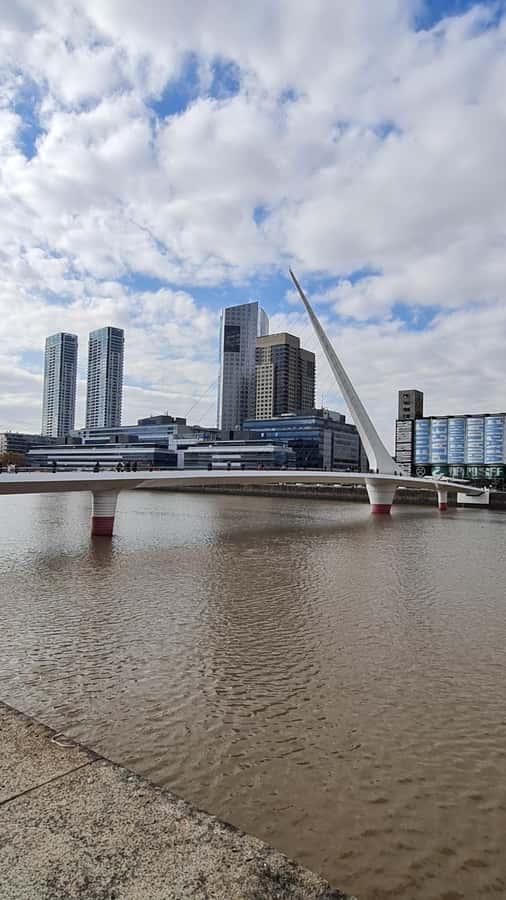
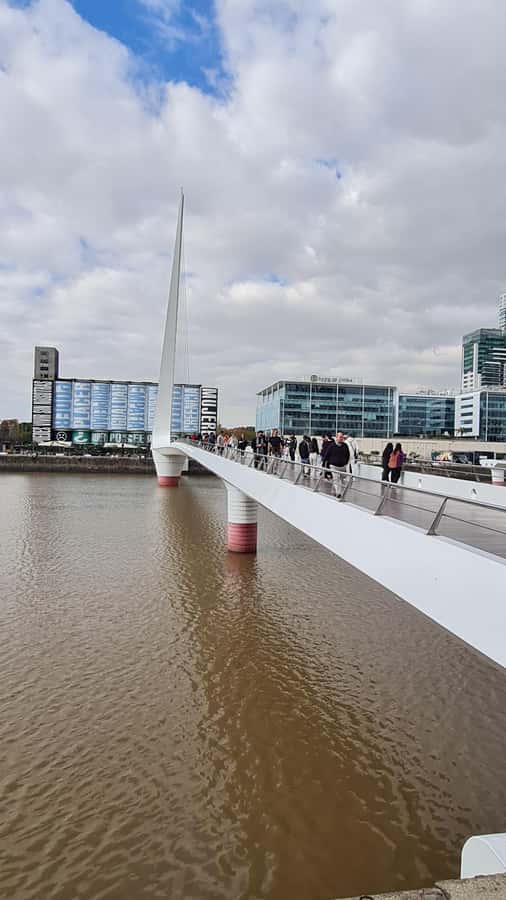
The Puente de la Mujer is one of Puerto Madero’s most recognizable sights. The bridge represents tango culture, and its unusual form gives you an excellent photo stop during the walk.
You spend around 20 minutes here with a guided explanation and time to look around. The bridge is especially useful for understanding the area’s public design. It links the waterfront spaces while acting as a sculptural landmark in its own right.
I would not treat this as a long architectural tour. The stop is relatively brief, and the activity is built around seeing the bridge, hearing its cultural connection, and moving onward. That is fine for most people, especially if you want a broad look at Puerto Madero rather than one detailed study of a single structure.
The bridge also marks the point where the tour’s themes begin to overlap. Tango, naval history, port engineering, modern architecture, and public art all appear within a compact part of the city.
Old docks, brick warehouses, and modern towers
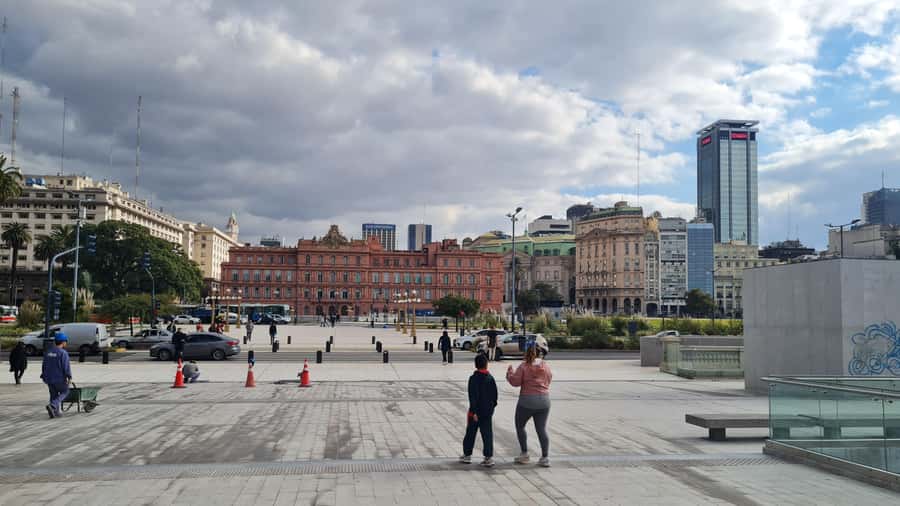
The main Puerto Madero section lasts about 30 minutes. Here you explore the dock area, the old port warehouses, and the waterfront views.
The warehouses were built with English bricks and now hold impressive restaurants. Their original purpose and current use make a useful contrast. The buildings still suggest storage, cargo, and working docks, but their interiors now serve a very different social life.
Nearby, the prestigious Pontifical Catholic University of Argentina occupies part of the area. You also see old port machinery and the tallest, most modern buildings in the city. This pairing is one of the strongest parts of the tour because you can look in one direction and see the old docks, then turn and find a much newer Buenos Aires rising behind them.
You will have a photo stop and guided sightseeing here. The tour does not include a meal, so do not expect time to sit down at one of the restaurants. Still, the dining scene is useful to know about if you plan to return to Puerto Madero later for an evening meal.
This portion of the walk is also the easiest for visitors who prefer urban sightseeing. The reserve later brings more natural ground and a longer stretch away from city streets. If you want to focus on architecture and waterfront views, pay close attention during these first sections.
A different sort of afternoon, still in Buenos Aires:
- Buenos Aires Hop-On Hop-Off Bus, Free Walking Tours & Discounts
★ 4.5 · 2,218 reviews - Buenos Aires: Piazzolla Tango Show with Optional Dinner
★ 4.4 · 2,122 reviews - Buenos Aires: City Highlights Guided Tour with Transfer
★ 4.7 · 1,946 reviews - Buenos Aires: Hop-On Hop-Off City Bus Tour
★ 4.2 · 1,855 reviews
Ninety minutes inside the Ecological Reserve
The largest part of the tour is the Reserva Ecológica, with about an hour and a half for a visit, guided walk, sightseeing, and photographs. This is where the experience changes pace.
The reserve offers city views, birdwatching, and the chance to see various animal species. You should think of it as an outdoor nature area beside the city, not as a formal zoo or a guaranteed wildlife encounter. The value comes from the change in setting and the possibility of spotting birds and other animals while still seeing Buenos Aires nearby.
That city connection is the reserve’s special appeal. You do not leave the urban story behind completely. Instead, you see open ground and wildlife with the modern city still part of the view. The result is a useful reminder that Buenos Aires contains more than grand avenues and dense neighborhoods.
Ninety minutes is enough time to make the reserve a real part of the tour rather than a token stop. It is also the section that demands the most from you physically. Wear comfortable shoes, carry water, and use sunscreen. A hat is a good idea, too, since the supplied information specifically recommends one.
The reserve may be less appealing if you want nonstop monuments or indoor attractions. Paths, views, and possible wildlife sightings require a slower, more patient outlook. You should also be prepared for outdoor conditions, since this is a walking visit rather than a vehicle-based lookout.
Lola Mora’s Fountain of the Nereids
As you leave the reserve, the route reaches the Fuente de las Nereidas, created by Argentine sculptor Lola Mora. The stop lasts about 10 minutes and includes a guided explanation and time for photographs.
The fountain adds a different kind of cultural detail to the walk. After the reserve’s birds and open views, you return to public art and the work of an important Argentine sculptor. It is a short stop, but it keeps the tour from ending as a simple nature walk.
I like the placement of this fountain near the end. The route has already shown you ships, docks, bridges, restaurants, university buildings, modern towers, and wildlife. Lola Mora’s sculpture gives the final stretch another point of connection to Argentine art.
Do not expect an extended museum-style discussion here. The fountain is a pass-by stop, so the emphasis is on seeing it in context and learning why it matters.
Ending at Museo de la Cárcova
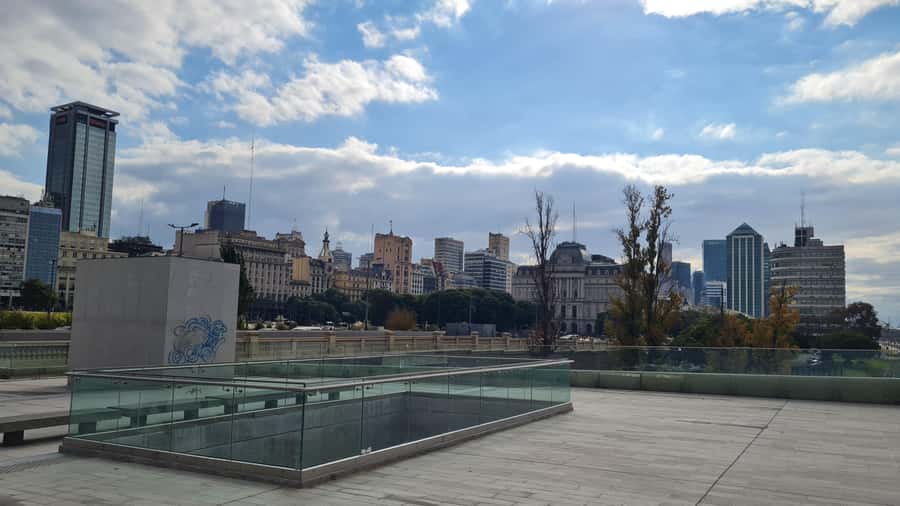
The tour finishes at Museo de la Cárcova after about 20 minutes of guided visiting. This provides a more formal cultural ending after the long outdoor section.
The activity does not provide a detailed description of the museum’s collection, so I would treat this stop as a compact final visit rather than plan your entire day around it. The museum gives the walk a clear endpoint and adds an art-focused note after the public sculpture at the Fountain of the Nereids.
Ending here also makes the route feel thoughtfully connected. The walk begins with a ship linked to Argentine naval training, moves through the old port and its modern redevelopment, enters a reserve, passes a major sculpture, and concludes in a museum setting.
Because the tour finishes at the museum rather than returning to the frigate, you should keep that in mind when arranging the rest of your day. The starting and ending points are different.
What Miguel adds to the walk
Miguel is the named guide for this experience, and he leads the tour in Spanish. His role appears to be central to the walk’s appeal. He brings extensive knowledge of Puerto Madero and Buenos Aires, and the format allows time for discussion rather than only fixed speeches.
That matters in a district where the visual contrasts are easy to see but not always easy to interpret. A guide can explain why the old warehouses matter, how the waterfront relates to the city’s growth, and what connects the bridge, ship, reserve, and sculptures.
The language choice is important. The tour is offered in Spanish, so you should be comfortable following explanations and asking questions in Spanish. If you need an English-language tour, this is not the right option based on the details provided.
The strongest personal quality associated with Miguel is his passion for Buenos Aires. That can make a difference on a long walk. Three and a half hours feels much shorter when the guide encourages conversation and brings local feeling to places that might otherwise seem like a collection of buildings.
Still, the tour’s success depends partly on what you want from a guide. If you prefer to explore independently and set your own pace, the fixed route and guided format may feel restrictive. If you like asking questions and hearing context as you walk, Miguel’s approach should suit you well.
Is $20 a fair price?
At $20 per person, this is a low-cost way to spend 210 minutes with a guide across several parts of Puerto Madero. The value is strongest if you want a broad introduction to the district, the ecological reserve, and nearby cultural sights in one outing.
You are paying for a guided walking experience, not transport, meals, or entry into every attraction. The Sarmiento frigate is viewed from outside, and the tour does not include a restaurant stop. Keep those limits in mind when comparing it with a museum-focused visit or a private sightseeing service.
The price works particularly well for independent visitors who want orientation without committing to an expensive private tour. You receive a route, a Spanish-speaking guide, local context, and access to a mix of urban and natural sights.
The main cost is physical rather than financial. You spend much of the time walking, with the reserve alone taking 90 minutes. If you are happy to trade comfort for a fuller look at the area, $20 represents solid value.
The small-group format should also make discussion easier than on a large coach excursion, though a precise group size is not provided. You should not assume a private tour.
Who should book this walk?
I would recommend it to adults and older children who enjoy walking, city history, public art, and outdoor spaces. The tour is not suitable for children under 10, and it is not designed for wheelchair users.
It is a particularly good choice if you have already seen Buenos Aires’ main central sights and want a different side of the city. Puerto Madero offers a modern waterfront, while the reserve supplies open space and wildlife. Together, they create more variety than a route limited to streets and monuments.
You should also consider it if you want a guide who can connect individual sights into a larger story. Miguel’s local knowledge and discussion-based style are useful for visitors who do not want to simply take photographs and move on.
I would hesitate if you need an accessible route, dislike long walks, want an English-language guide, or mainly want to go inside the Sarmiento frigate. Those are not minor details. They affect the basic shape of the experience.
Book with the weather in mind. Comfortable shoes, water, sunscreen, and a hat are specifically recommended, and the reserve makes outdoor conditions part of the day. You can cancel up to 24 hours before the activity for a full refund, and the reserve now, pay later option lets you hold a place without paying immediately.
Should you book the Puerto Madero tour?
Book this tour if you want one guided walk that combines old docks, modern Buenos Aires, public art, and urban wildlife. The route gives you more than the polished restaurant district, and the ecological reserve makes the experience feel broader than a standard waterfront tour.
Skip it if you want a short, indoor, or fully accessible activity. Also skip it if you need English, since the live guiding is in Spanish.
For the right person, the best reason to book is the combination of place and personality. Miguel’s local knowledge, passion, and willingness to discuss Buenos Aires add meaning to a route that already has plenty to see. Bring water, wear good shoes, and allow the full three hours and 30 minutes.
FAQ
How long does the Puerto Madero tour last?
The tour lasts 210 minutes, or three hours and 30 minutes. It includes a 10-minute pause for restroom use.
Where does the tour begin?
The meeting point is the Buque Museo Fragata A.R.A. Presidente Sarmiento. Your guide Miguel waits there.
Where does the tour finish?
The tour ends at Museo de la Cárcova.
What language is the tour conducted in?
The live tour guide speaks Spanish.
Is entry to the Sarmiento frigate included?
No. The tour includes a guided look and pass-by visit, but the group does not plan to enter the museum ship.
How much time is spent in the Ecological Reserve?
The ecological reserve portion lasts about 1.5 hours and includes walking, sightseeing, photographs, and guided explanations.
What should I bring?
Bring comfortable shoes, a hat, sunscreen, and water.
Can children or wheelchair users join?
Children under 10 are not permitted, and the activity is not suitable for wheelchair users.
Just added around Buenos Aires
- Unique Tigre and Delta Private Day Cruise Navegation★ 5.0 · 3 reviews
- Buenos Aires: Customizable City Tour in Polish★ 4.7 · 3 reviews
- Tango Show at: MichelAngelo★ 4.5 · 3 reviews
- Velez Sarsfield Football Match★ 5.0 · 3 reviews
- Enjoy a Rural Experience in a Vineyard near Buenos Aires★ 4.7 · 3 reviews
- Guided tour Boca Juniors Museum & Stadium + Caminito★ 3.3 · 3 reviews
- From Colonialism to Eclecticism, Buenos Aires arquitectonica★ 5.0 · 3 reviews
- Buenos Aires: Private City Tour by Car with Hotel or Pickup★ 5.0 · 3 reviews
Puerto Madero Tours, compared.

Madero Tango: Executive Only Tango & Folklore Show
Read our review →Browse the lists this tour appears in