
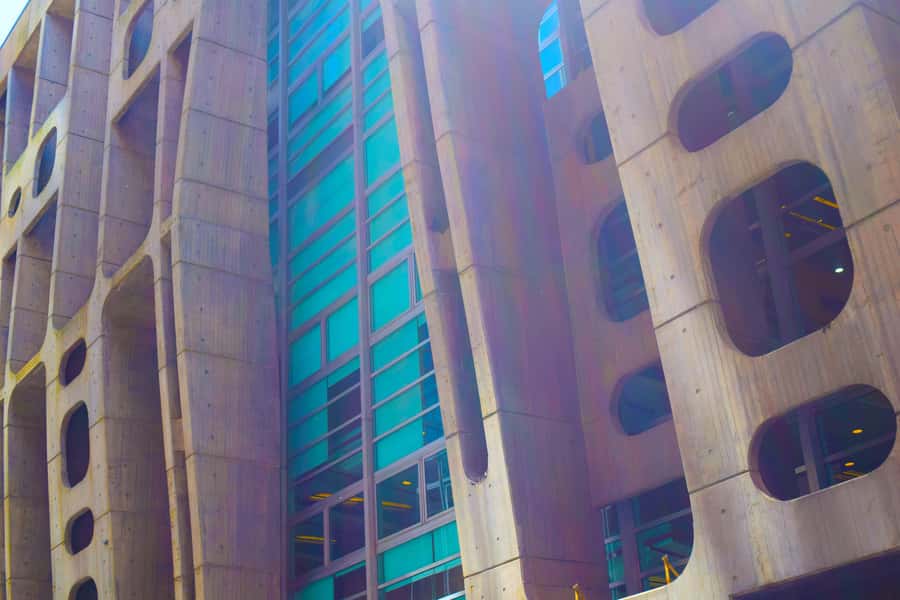
Reviewed · BUENOS AIRES CITY TOURS
From Colonialism to Eclecticism, Buenos Aires arquitectonica
Buenos Aires reveals itself through its buildings, and this three-hour walk makes that idea the main event. You move from the Cabildo and Casa Rosada to the Brutalist Banco Hipotecario, the CCK, the Gran Rex, the Obelisk, and Teatro Colón. It is a useful way to see how several architectural eras share the same downtown streets.
I like the small group of up to four, which gives you room to ask questions and shape the walk around your interests. I also like the mate tasting, water, and traditional Argentine snack, since they add a personal cultural touch rather than treating Buenos Aires as a collection of facades. The main consideration is that this is an outdoor walking tour, so sun, heat, and comfortable shoes matter. Entry to Teatro Colón is not included.
In This Review
- Key points to know before booking
- Why this walk makes Buenos Aires easier to read
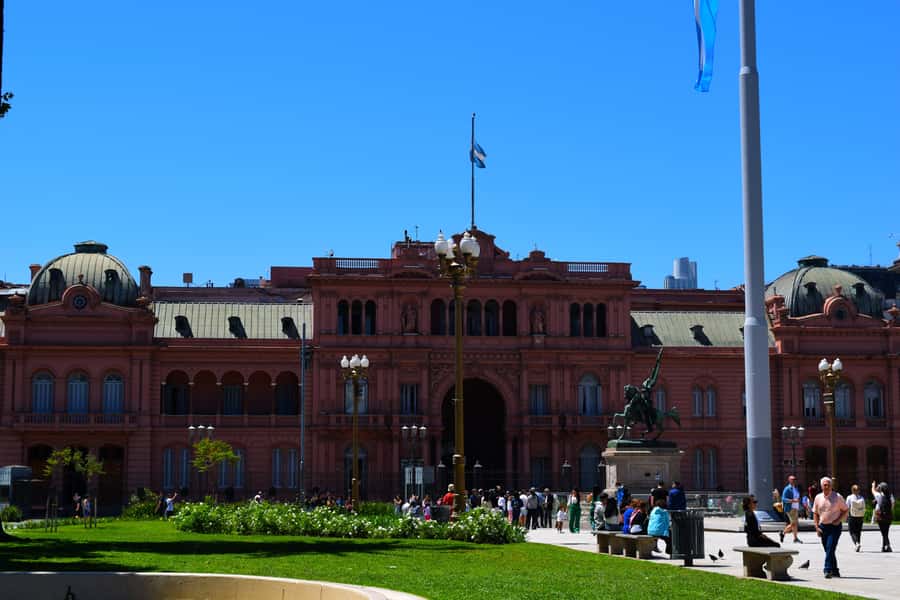
- Plaza de Mayo: colonial beginnings and national power
- Reconquista Street and the Banco Hipotecario facade
- The CCK and the former Post and Telegraph Palace
- Avenida Corrientes, Gran Rex, and the Opera
- The Obelisk and a wide view of the city
- Plaza Lavalle and the final architectural contrast
- Mate, snack, and a local pause
- Price, pace, and who will get the most from it
- My verdict: a smart choice for architecture fans
- FAQ
- Where does the tour start?
- Where does the tour finish?
- How long does the tour last?
- What languages are available?
- How many people can join the group?
- Is entry to Teatro Colón included?
- Is mate included?
- What should I bring?
Key points to know before booking
- Architecture beyond the usual postcard stops: Look closely at the Banco Hipotecario, CCK, Courts Palace, and Julio Argentino Roca School.
- A clear three-hour route: Begin at Plaza de Mayo and finish near Teatro Colón, passing through Microcentro and Avenida Corrientes.
- Only four people maximum: This is a personal format with room for questions and possible adjustments to suit your interests.
- Mate is part of the lesson: You taste the drink while learning why it matters in Argentine culture.
- English or Spanish guiding: Juan Ignacio and Loli lead the experience, with both languages available.
- Bring sun protection: Wear comfortable shoes and clothes, and pack sunglasses, a hat, and sunscreen.
Why this walk makes Buenos Aires easier to read
Many city tours give you a quick look at Plaza de Mayo, the Obelisk, and Teatro Colón. This experience uses those familiar points as anchors, but its real purpose is to show you the less obvious buildings between them.
That matters in Buenos Aires. A single block can bring together colonial forms, nineteenth-century civic architecture, modern office design, Brutalism, and grand theater interiors. Instead of seeing downtown as a blur of traffic and stone, you learn to pause and ask who designed a building, when it was built, and what the city needed at that time.
The guides, Juan Ignacio and Loli, bring different strengths to the walk. Juan Ignacio focuses closely on architects, periods, and design details. Loli adds stories connected with Argentina and South America. The result should suit you if you enjoy asking questions rather than simply following a fixed list of sights.
The group limit is especially useful here. With no more than four participants, you are less likely to miss a detail while looking up at a facade. You can also tell the guides if you care more about modern architecture, political buildings, cultural life, or local customs. The advertised format allows some adjustment to your tastes.
More ways to see Buenos Aires in a day:
- Buenos Aires Hop-On Hop-Off Bus, Free Walking Tours & Discounts
★ 4.5 · 2,218 reviews - Buenos Aires: City Highlights Guided Tour with Transfer
★ 4.7 · 1,946 reviews - Buenos Aires: Hop-On Hop-Off City Bus Tour
★ 4.2 · 1,855 reviews
Plaza de Mayo: colonial beginnings and national power
The walk starts at Bolívar 65, at the intersection of Bolívar Street and Avenida de Mayo, right by Plaza de Mayo. This is the right place to begin because the square brings together several of the city’s most important civic and religious buildings.
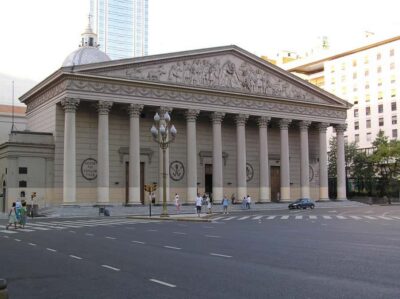
The Cabildo offers a look at Buenos Aires during the colonial period. It is one of the clearest reminders that the city existed long before its later avenues, theaters, and office blocks. The Metropolitan Cathedral brings a religious counterpoint, while Casa Rosada represents the national government and the political life of modern Argentina.
You will also see Banco Nación. Its presence helps explain how Plaza de Mayo is not only a historic square but also a working center of public power and finance. The guide’s job here is not just to name the buildings. You should expect context about how their roles shaped the square and the country.
This opening section can feel familiar if you have already visited Plaza de Mayo on your own. The added value comes from looking at the group as an architectural conversation rather than as separate sights. It is also a busy urban area, so your attention will shift between facades, traffic, people, and the guide’s explanations.
Reconquista Street and the Banco Hipotecario facade
From Plaza de Mayo, the route heads north along Reconquista Street. This is where the walk begins to move away from the standard first-time visitor circuit.
The stop at Banco Hipotecario is one of the tour’s most distinctive features. Its Brutalist facade gives you a sharp change from the older buildings around the square. Brutalist architecture often asks you to pay attention to mass, structure, concrete, and bold geometric form rather than decorative detail. Here, the contrast with the Cabildo or the cathedral is part of the lesson.
You do not need to arrive with a background in architecture. A good guide can help you see why the building looks the way it does and how it fits into the city around it. The experience promises curious facts about buildings outside the classic routes, and this stop is a strong example of that approach.
Microcentro contains many styles and many architects. That mix is useful for comparison, but it also means the walk is not a tidy sequence of matching buildings. You may prefer clear historical periods and unified districts. If so, the variety can feel scattered. If you enjoy contrasts, it is one of the tour’s best qualities.
The CCK and the former Post and Telegraph Palace
The route continues to the CCK, the former Palacio de Correos y Telégrafos. The plan is to stop outside, study the facade, and learn about the building’s past.
This stop adds another kind of public architecture to the route. A post and telegraph palace was built for communication, administration, and national connection. Its original purpose gives you a way to think about how cities express their changing technology through buildings.
The CCK also helps bridge older Buenos Aires and the cultural city you see today. You are not only looking at a former government communications building. You are seeing how a historic structure can remain part of the city’s cultural life.
The information provided does not include an interior visit here, so you should plan on an exterior-focused stop. That is worth knowing if you want access to grand interiors. The route gives you history and facade details, not a full museum visit.
A different sort of afternoon, still in Buenos Aires:
- Buenos Aires: Piazzolla Tango Show with Optional Dinner
★ 4.4 · 2,122 reviews - Buenos Aires Hop-On Hop-Off Bus and Exclusive Benefits
★ 4.4 · 1,714 reviews - Buenos Aires: La Boca Guided Walking Tour in English
★ 4.8 · 1,587 reviews - Buenos Aires: La Recoleta Cemetery Guided Tour in English
★ 4.8 · 1,359 reviews
Avenida Corrientes, Gran Rex, and the Opera
Next, the walk reaches Avenida Corrientes, a major center of Buenos Aires nightlife and culture. The avenue is associated with shows, restaurants, and evening activity, but this tour focuses on two important theaters: Gran Rex and the Opera.
These buildings let you see how entertainment shaped the city. Both had their strongest period in earlier decades and remain places for performances and large gatherings. Their facades are not just decorative fronts. They point to Buenos Aires as a city where theater and popular culture have long been part of daily urban life.
The Gran Rex and the Opera also create a useful change of mood. After government buildings, banks, religious architecture, and communications offices, you are looking at spaces designed for an audience and a shared public experience.
Avenida Corrientes can be noisy and crowded. That is part of its character, but it can make a long explanation harder to follow. Stay close to the guide and expect the experience to feel like a street lesson rather than a quiet architectural seminar.
The Obelisk and a wide view of the city
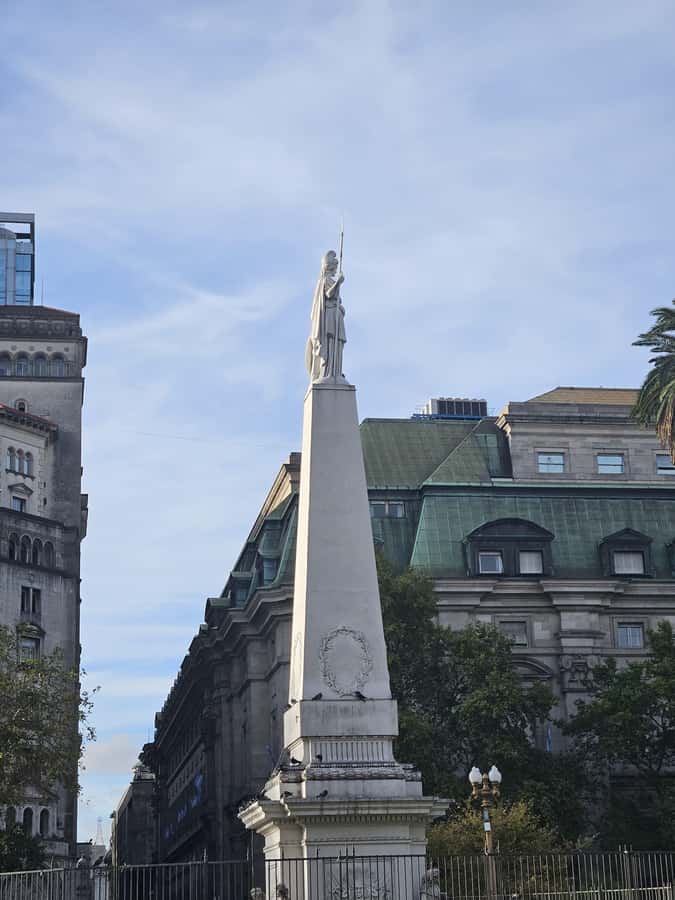
The first major section ends at the Obelisk and Plaza de la República. The Obelisk is one of Buenos Aires’ clearest symbols, but the tour treats it as more than a photo stop.
You will learn about its history and its place in the political and social life of Argentina. The surrounding intersection is equally important. Avenida 9 de Julio and Avenida Corrientes meet here in one of the city’s most recognizable urban scenes.
A brief pause at the Obelisk staircase provides a panoramic viewpoint over the intersection. This is a practical photo opportunity, but it also helps you understand the scale of central Buenos Aires. From street level, the avenues can feel like separate corridors. From a higher viewpoint, their relationship becomes easier to grasp.
The view is likely to be one of the walk’s most memorable moments, but do not expect a full city panorama from a major observation deck. It is a short stop connected to the route, not a separate sightseeing attraction.
Plaza Lavalle and the final architectural contrast
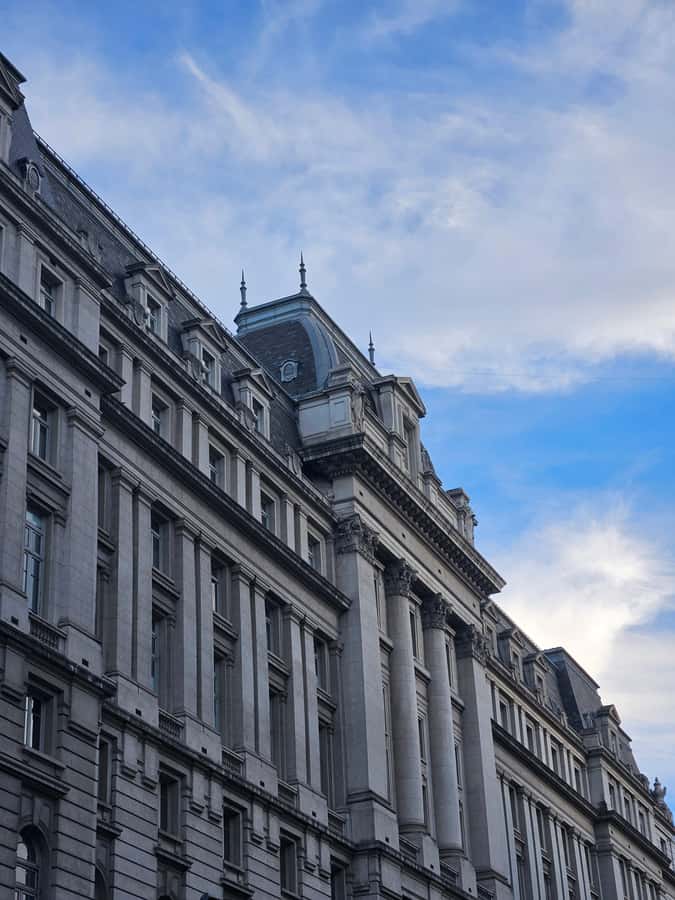
The last part leads to Plaza Lavalle, where two notable buildings face one another: the Courts Palace and the Julio Argentino Roca School.
This pairing gives the guide another chance to compare civic and educational architecture. The Courts Palace represents the legal system and public authority. The school brings education into the same urban discussion. Looking at them together shows how a city assigns different identities to public buildings.
Plaza Lavalle also moves the walk toward Teatro Colón. By this point, you have seen colonial, religious, governmental, financial, Brutalist, communications, entertainment, legal, and educational buildings. The route’s strength is this range. You are not asked to admire one style. You are asked to notice how Buenos Aires grew through competing periods and needs.
The tour ends at Teatro Colón, one of the city’s major cultural landmarks. You have the option to remain there and take a guided interior visit, but that visit is not included in the $25 price. Check the current arrangements before counting on entry as part of your day.
Mate, snack, and a local pause
The mate tasting is more than a refreshment break. Mate is closely tied to Argentine culture, and the guides explain its history and tradition while you taste it.
That makes the stop useful for visitors who want cultural context along with architecture. You learn about a daily custom in the same way you learn about a facade: through explanation, observation, and direct experience. Water and a traditional Argentine snack are also included.
The exact snack is not specified, but one earlier experience included typical cookies. You might find something similar, though you should not treat that as guaranteed. The mate itself is the central part of this pause.
This is also a pleasant change from three straight hours of looking upward and keeping pace. Still, anyone who dislikes shared drinks or unfamiliar flavors may find the tasting less appealing. You can ask the guides about the process and tradition before trying it.
Price, pace, and who will get the most from it
At $25 per person, the tour offers three hours with an English- or Spanish-speaking guide, water, a traditional snack, and mate tasting. For a small group limited to four, that is a reasonable price if you value conversation and interpretation more than a long list of admissions.
The price does not include lunch or entry to Teatro Colón. Since the route is outdoors and moves through central streets, you should budget for food separately and decide if you want to add the theater visit.
The pace is suited to people who can walk comfortably for three hours. Wear practical shoes and comfortable clothes. Sunglasses, a hat, and sunscreen are sensible because much of the experience takes place outside.
Starting times vary, so check availability when you book. You can cancel up to 24 hours ahead for a full refund, and the reserve-now, pay-later option keeps your plans flexible.
One detail deserves clarification. The route description finishes at Teatro Colón, while the meeting information also says the activity ends back at the meeting point. Ask the provider to confirm the exact endpoint before booking, especially if you have an evening reservation or need to reach another part of Buenos Aires.
My verdict: a smart choice for architecture fans
I would choose this tour if you want to understand central Buenos Aires through buildings rather than rush from landmark to landmark. It is especially suitable for repeat visitors, architecture students, design fans, and curious first-time visitors who like local explanation and small groups.
Juan Ignacio and Loli’s roles make the experience feel personal. Their focus on architectural periods, architects, South American stories, and Argentine customs gives the walk more range than a simple facade tour. The mate tasting is a welcome touch, and the four-person limit should make it easy to ask questions.
I would skip it if you want extensive interior access, a bus tour, or a quiet route away from traffic. The Colón entrance costs extra, and the city center can be loud and sunny. For everyone else, the $25 fee buys a focused introduction to Buenos Aires’ layered architecture, with enough local character to change how you look at the buildings for the rest of your stay.
FAQ
Where does the tour start?
It starts in Plaza de Mayo at the intersection of Bolívar Street and Avenida de Mayo, at Bolívar 65.
Where does the tour finish?
The route description finishes at Teatro Colón. The meeting information also says the activity ends back at the meeting point, so confirm the exact endpoint with Viajes de Juani tours before booking.
How long does the tour last?
The walking tour lasts three hours. Starting times depend on availability.
What languages are available?
The live guide is available in English and Spanish.
How many people can join the group?
The group is limited to four participants.
Is entry to Teatro Colón included?
No. Entrance to Teatro Colón is not included. You may stay at the theater and take a guided visit inside, but that visit is separate.
Is mate included?
Yes. The experience includes a mate tasting and an explanation of its place in Argentine culture.
What should I bring?
Bring comfortable shoes, sunglasses, a hat, sunscreen, and comfortable clothes. Water and a traditional Argentine snack are included.
Just added around Buenos Aires
- Unique Tigre and Delta Private Day Cruise Navegation★ 5.0 · 3 reviews
- Buenos Aires: Customizable City Tour in Polish★ 4.7 · 3 reviews
- Velez Sarsfield Football Match★ 5.0 · 3 reviews
- Tango Show at: MichelAngelo★ 4.5 · 3 reviews
- Enjoy a Rural Experience in a Vineyard near Buenos Aires★ 4.7 · 3 reviews
- Guided tour Boca Juniors Museum & Stadium + Caminito★ 3.3 · 3 reviews
- Buenos Aires: Private City Tour by Car with Hotel or Pickup★ 5.0 · 3 reviews
- Buenos Aires: Montserrat, San Telmo, La Boca, and Puerto …★ 5.0 · 3 reviews
Buenos Aires City Tours, compared.
Best of Buenos Aires: Guided Sightseeing City Tour
Read our review →

Classic City Tour of Buenos Aires: Neighborhoods and Emblems
Read our review →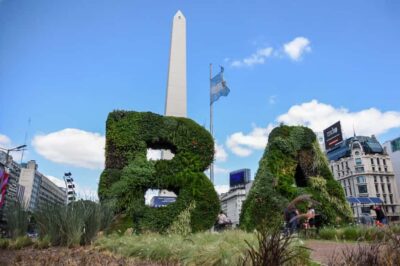
Browse the lists this tour appears in