
Reviewed · LA BOCA & CAMINITO TOURS
La Boca Out off the Beaten Track
La Boca is much bigger than its famous Caminito strip. This 150-minute walk with Paola De Luca, who grew up in the neighborhood, takes you through immigrant houses, harbor buildings, social murals, a fire station, and local streets that most quick visits miss. I like the personal angle, especially Paola’s childhood connection to the area, and the chance to enter a real corrugated-metal conventillo rather than simply photograph one from outside.
I also like the balance between serious history and everyday pleasures: the first volunteer firefighter station in Argentina, a typical Boca home linked to local artists, and coffee in an old café dating to 1882. The main consideration is that La Boca is a working neighborhood with uneven surfaces and a strong local identity, so this is a history-and-culture walk, not a polished sightseeing route. The Quinquela Martín museum costs extra, and the tour ends at Caminito rather than returning to the starting point.
In This Review
- Key points at a glance
- Why this La Boca walk feels different
- From the harbor to the immigrant quarter
- Inside a corrugated-metal conventillo
- The first volunteer fire station in Argentina
- Murals, political memory, and Boca art
- Football and religion in one neighborhood
- Caminito, tango, and fileteado
- Coffee in an old Buenos Aires café
- Is $35 a fair price?
- Who should book this walk?
- Should you book La Boca Out off the Beaten Track?
- FAQ
- Where does the tour begin?
- Where does the tour finish?
- How long does the experience last?
- How much does the tour cost?
- Which languages are available?
- How large is the group?
- What is included in the price?
- Is the Quinquela Martín Museum included?
- Can I cancel the booking?
Key points at a glance
- Paola’s local connection: She was a neighbor of La Boca during childhood and youth, bringing personal stories to the neighborhood’s immigrant and artistic past.
- Beyond Caminito: The route reaches murals, warehouses, old buildings, and streets that receive less attention than the colorful tourist center.
- Inside a former conventillo: You enter a corrugated-metal tenement house now used as a cultural center.
- Argentina’s first volunteer fire station: Admission is included, giving you a look at one of the mutual-aid institutions created by immigrant communities.
- Coffee in an 1882 café: The included coffee gives the walk an easy finish in a traditional Buenos Aires setting.
- Small group and bilingual guiding: The group is limited to 10 people, with tours offered in English and Spanish.
Why this La Boca walk feels different
La Boca is often reduced to three images: brightly painted walls, tango dancers, and the Boca Juniors football stadium. Those images are real, but they tell only a small part of the story. This walk gives you the social background behind the color, showing how immigrants, mutual-aid groups, artists, political movements, religion, and football shaped the neighborhood.
The experience begins at the corner of Avenida Don Pedro de Mendoza and Martín Rodríguez, near the harbor. It finishes at Caminito, so you should think of it as a one-way neighborhood walk. That arrangement works well if you want to spend more time around Caminito afterward, but it matters if you expect to return to your starting point with the guide.
Paola’s connection to La Boca is central. She grew up there, and that allows her to link public history with memories of ordinary neighborhood life. Her English is described as excellent, and the tour is also available in Spanish. The group limit of 10 should make it easier to ask questions, especially about Boca Juniors, local art, and the buildings along the route.
More La Boca and Caminito walks:
- Buenos Aires: La Boca Guided Walking Tour in English
★ 4.8 · 1,587 reviews - Buenos Aires: Navigation from Pto. Madero to La Boca
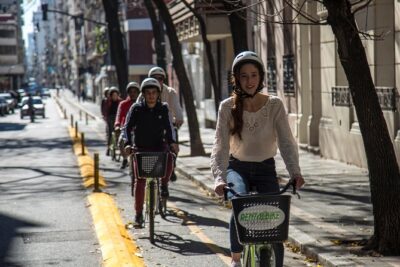
★ 4.1 · 147 reviews - Buenos Aires Bike Tour: San Telmo and La Boca Districts
★ 4.5 · 74 reviews
From the harbor to the immigrant quarter
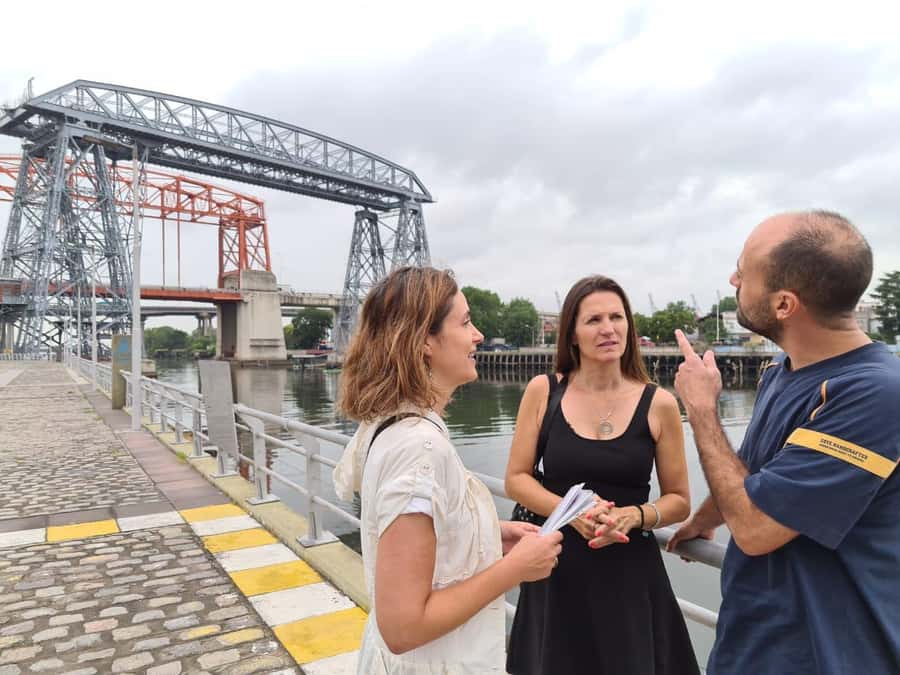
The opening section focuses on La Boca as a port neighborhood. You see the harbor, warehouses, and the picturesque train station where large numbers of immigrants arrived. These places help explain why La Boca developed such a distinctive character.
For many newcomers, the port was their first view of Buenos Aires. They arrived without established roots and often relied on neighbors, family networks, churches, political groups, and mutual-assistance societies. The tour uses the neighborhood itself to show how those communities formed instead of treating immigration as a distant textbook subject.
I particularly like this part because it gives the bright colors of La Boca a reason. The painted streets and mixed architectural styles are not just decorative scenery. They grew from a port community shaped by movement, work, poverty, hope, and close social ties.
The harbor setting also adds useful context before you reach the more photographed streets. You see La Boca as a place where people lived and worked, not only as a backdrop for tango pictures. Expect some walking between stops, and wear comfortable shoes. The route covers streets and older buildings rather than staying on a single pedestrian promenade.
Inside a corrugated-metal conventillo
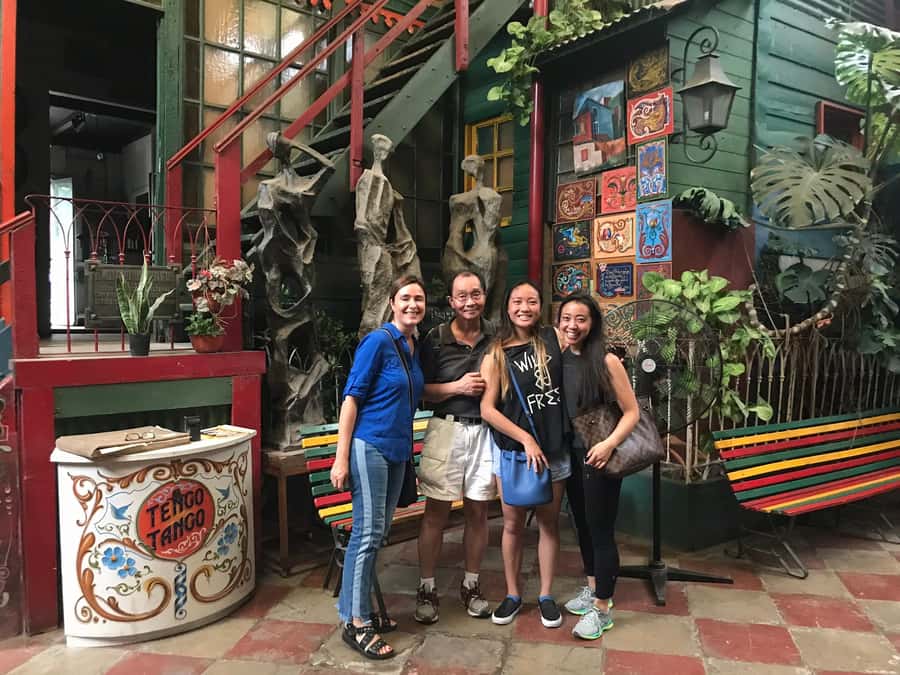
One of the most useful stops is the former conventillo. These tenement houses provided shelter for immigrants, often placing many households under one roof. The building you visit is clad in corrugated metal and now operates as a cultural center.
Entering the building matters. From the street, a conventillo can look like one more colorful piece of Boca architecture. Inside, you get a clearer sense of how housing and community life were connected. Shared spaces, compact rooms, and a mixture of private and communal life help make the immigrant experience more concrete.
This stop may appeal to you if you prefer social history to a long list of dates. It shows how ordinary housing shaped the neighborhood’s identity. It also offers something a standard exterior-only sightseeing walk cannot provide.
The drawback is simple: the tour description does not promise a long interior visit or detail every room. Treat it as a focused stop within a wider walk, not a full architectural tour. Still, the access is included in the $35 price, which adds real value.
The first volunteer fire station in Argentina
La Boca’s immigrant communities did not wait for every service to arrive from elsewhere. They created organizations to protect and support one another, including the volunteer fire department you visit on this walk.
The station is described as the first volunteer firefighter station created in Argentina. Admission is included, and this is one of the tour’s most distinctive stops. It connects the neighborhood’s immigrant past with a practical institution that served local families and businesses.
I like this because it moves the story beyond colorful houses and famous football. A fire station may sound less glamorous than Caminito, but it tells you how a community handled danger, responsibility, and public life. It also gives Paola a strong setting for explaining the role of mutual-assistance associations.
This is a guided cultural visit rather than a promise of an active firehouse demonstration. The available information does not specify what equipment or rooms you will see, so keep your expectations focused on the station’s history and significance.
A different sort of afternoon, still in Buenos Aires:
- Buenos Aires Hop-On Hop-Off Bus, Free Walking Tours & Discounts
★ 4.5 · 2,218 reviews - Buenos Aires: Piazzolla Tango Show with Optional Dinner
★ 4.4 · 2,122 reviews - Buenos Aires: City Highlights Guided Tour with Transfer
★ 4.7 · 1,946 reviews - Buenos Aires: Hop-On Hop-Off City Bus Tour
★ 4.2 · 1,855 reviews
Murals, political memory, and Boca art
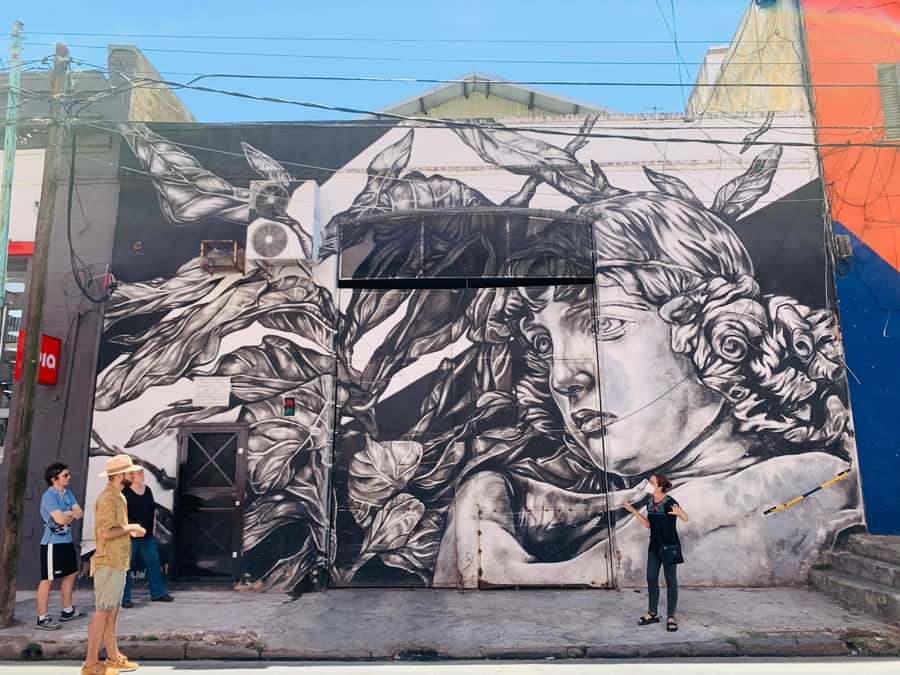
The walk takes you to large murals that reflect different social issues. These works help you read La Boca as a neighborhood where art is tied to local concerns, not simply a colorful surface for photographs.
Paola explains the background of the paintings, which is important. Without context, a mural can become just another picture on a wall. With the story behind it, you can begin to see what the artist is addressing and why the image belongs in that particular street.
The route also passes older buildings connected with anarchist newspapers and bordellos in the early 20th century. These details add a harder edge to the neighborhood’s past. La Boca was not built only from cheerful painted façades and tourist-friendly tango scenes. It also had political arguments, working-class pressures, nightlife, and buildings with complicated former uses.
A highlight for art lovers is the chance to visit a typical Boca house belonging to friends of Paola who were important local artists. The information describes this as a personal visit connected to her relationships in the neighborhood. Because access to a local home is unusual on a standard city tour, this may be the most intimate part of the experience.
The exact timing and availability of that home visit are not specified, so it is wise to regard it as part of the planned experience without assuming a private artist studio demonstration. The important point is the direct connection to local people and the way it brings Boca’s artistic culture down to a human scale.
Football and religion in one neighborhood
The tour also covers two major forces in La Boca: Boca Juniors football and religion. You see Boca Juniors Stadium from the outside, and you visit the Salesian Church.
Football is not an optional side note here. Boca Juniors is one of the neighborhood’s defining symbols, and its stadium helps explain the emotional force attached to the area. Paola gives particular attention to the club’s culture and the passion surrounding its home ground. If you know little about Argentine football, this is a useful introduction to why Boca Juniors matters far beyond match day.
Because the stadium visit is from outside, you should not book this expecting access to the pitch, stands, dressing rooms, or museum. The value is in the location and the story, not an interior sports tour.
The Salesian Church offers a different kind of shelter. Churches worked as refuges for communities that arrived without secure roots, and the tour places religion beside football as another source of belonging. Seeing both in one route shows how identity in La Boca was built through institutions, loyalties, and shared spaces.
Caminito, tango, and fileteado
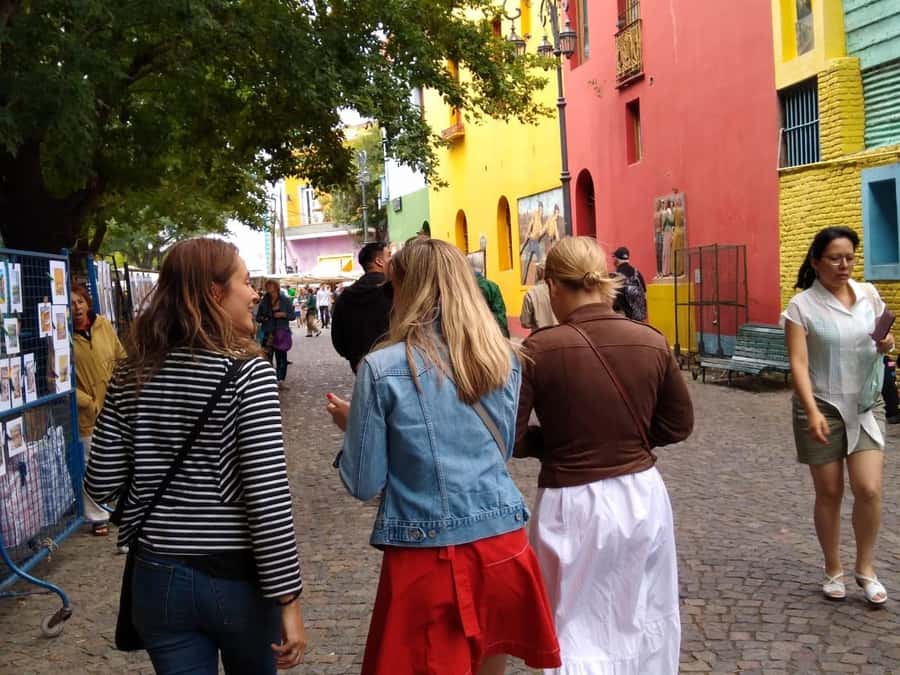
The walk ends at Caminito, La Boca’s best-known tourist area. Here you find tango and fileteado in the streets, along with the painted buildings and concentrated visitor activity that have made the area famous.
Arriving at Caminito after seeing the less polished parts of La Boca changes the way you read it. You can enjoy the dancers, signs, colors, and decorative details without mistaking this small zone for the whole neighborhood. The earlier stops give you a stronger sense of what Caminito represents and what it leaves out.
Fileteado, the elaborate decorative painting style associated with Buenos Aires, is part of the visual language here. The tour helps connect those details with the broader artistic identity of La Boca. This is also the point where you may want to take extra photos or continue exploring independently, since the guided experience ends here.
Caminito can feel more commercial and crowded than the quieter streets earlier in the walk. That is not a flaw, but it is a clear contrast. If you want an uninterrupted local walk, you may prefer the first two hours. If you want the classic La Boca images as well, ending at Caminito gives the experience a practical finish.
Coffee in an old Buenos Aires café
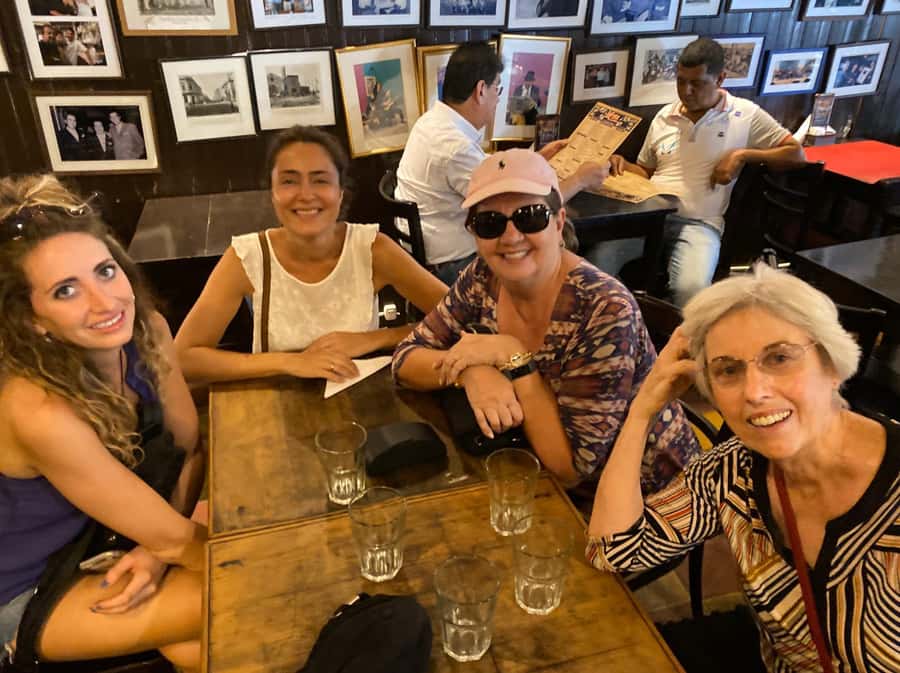
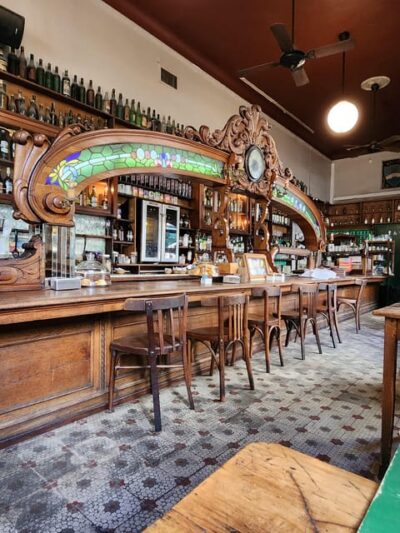
The included coffee comes at a café dating to 1882. This is more than a quick drink between sights. Traditional cafés are part of Buenos Aires social life, and this stop gives you time to sit, ask final questions, and let the neighborhood’s stories settle.
The coffee is included, while food is not. The supplied information does not specify a menu, so plan to pay separately if you want something to eat. The coffee break lasts about 30 minutes, making it a relaxed part of the experience rather than a rushed standing stop.
There is one small point to clarify when planning your day: the stated sequence places coffee before the finish at Caminito, while the broader description also presents the café as the final pause. Either way, the experience lasts 150 minutes and ends in La Boca. Check the exact timing when you book if the order matters to your plans.
Is $35 a fair price?
At $35 per person, this is a reasonable price for a small-group walk with three included elements that are not always part of a basic neighborhood tour: entry to the volunteer fire station, entry to the conventillo, and coffee.
The value comes less from the number of sights than from access and interpretation. You are not paying only for a route through La Boca. You are paying for a bilingual local guide, a group capped at 10 people, interior visits, and personal connections that help explain what you are seeing.
The Quinquela Martín Museum is optional and costs extra. The museum is connected with one of La Boca’s most important artists, Benito Quinquela Martín, and part of the building was his home. If you care strongly about Argentine art, budget separately for admission. If you are satisfied with murals, a local home visit, and the neighborhood’s public art, you can skip that extra cost.
The price is less compelling if you want a fast photo stop at Caminito and little historical explanation. For that, a short independent visit costs less. For a fuller understanding of La Boca, especially the parts beyond the tourist center, the $35 fee is easier to justify.
Who should book this walk?
I would choose this experience if you want to understand how La Boca became what it is. It suits you if you enjoy local stories, immigrant history, public art, football culture, social institutions, and small details that rarely appear in a standard city overview.
It is also a good choice if you value a guide who can connect facts with personal experience. Paola’s childhood in La Boca is not a minor detail. It shapes the way the neighborhood is presented and gives the tour a sense of continuity between past and present.
The walk may be less suitable if you have limited mobility or dislike uneven city routes. Electric wheelchairs are not permitted, and the experience is not considered suitable for people over 95. Jewelry is not allowed, and alcohol or drugs are prohibited.
You should also remember that the tour ends at Caminito, not at the meeting point. That is convenient if Caminito is next on your plan, but less convenient if you need to return toward the harbor side of the neighborhood.
Should you book La Boca Out off the Beaten Track?
Book it if you want more than colorful façades and tango poses. The strongest reasons are Paola’s local connection, the conventillo interior, the first volunteer fire station, the murals with social meaning, and the chance to see Boca Juniors and the Salesian Church as parts of neighborhood life.
Skip it if you only want a short visit to Caminito, a stadium interior, or a museum-focused art tour. The stadium is viewed from outside, the Quinquela Martín Museum costs extra, and the walk gives equal weight to community history, housing, religion, football, and art.
For $35, a 10-person limit, bilingual guiding, included entrances, and coffee make this a solid choice for a first or second visit to Buenos Aires. The tour’s best quality is its sense of place. You leave with a fuller picture of La Boca, not just a collection of colorful photographs.
FAQ
Where does the tour begin?
The meeting point is at the corner of Avenida Don Pedro de Mendoza and Martín Rodríguez in La Boca, Buenos Aires.
Where does the tour finish?
The experience ends at Caminito in La Boca.
How long does the experience last?
The total duration is 150 minutes.
How much does the tour cost?
The price is $35 per person.
Which languages are available?
The tour is offered in Spanish and English.
How large is the group?
This is a small-group experience limited to 10 participants.
What is included in the price?
The price includes entrance to the volunteer firefighter station, entrance to the conventillo, and coffee.
Is the Quinquela Martín Museum included?
No. If you choose to visit the museum, its entrance ticket is not included.
Can I cancel the booking?
Yes. You can cancel up to 24 hours in advance for a full refund. You can also reserve now and pay later.
Just added around Buenos Aires
- Unique Tigre and Delta Private Day Cruise Navegation★ 5.0 · 3 reviews
- Buenos Aires: Customizable City Tour in Polish★ 4.7 · 3 reviews
- Tango Show at: MichelAngelo★ 4.5 · 3 reviews
- Velez Sarsfield Football Match★ 5.0 · 3 reviews
- Enjoy a Rural Experience in a Vineyard near Buenos Aires★ 4.7 · 3 reviews
- Guided tour Boca Juniors Museum & Stadium + Caminito★ 3.3 · 3 reviews
- From Colonialism to Eclecticism, Buenos Aires arquitectonica★ 5.0 · 3 reviews
- Buenos Aires: Private City Tour by Car with Hotel or Pickup★ 5.0 · 3 reviews
La Boca & Caminito Tours, compared.
Buenos Aires Bike Tour: San Telmo and La Boca Districts
Read our review →
La Boca, a collective creation: Port, immigrants, arts and football
Read our review →
Walking Tour of San Telmo and La Boca with local food
Read our review →Browse the lists this tour appears in