
Reviewed · BUENOS AIRES CITY TOURS
Buenos Aires Hop-On Hop-Off Bus and Exclusive Benefits
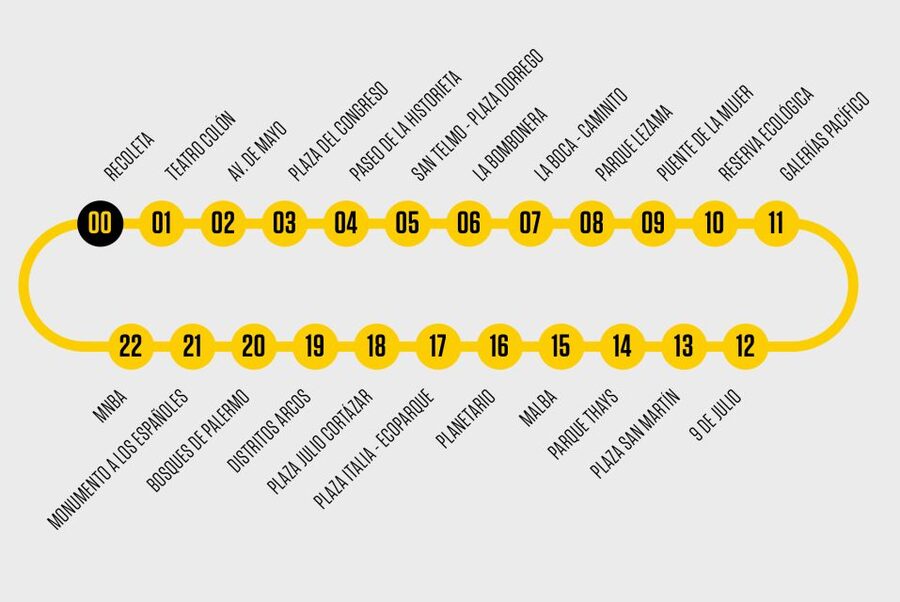
Buenos Aires is a big, spread-out city, and this bus gives you a useful first look without making you wrestle with taxis, maps, or fixed group schedules. The full circuit takes about 3 hours and 20 minutes without stops, passing from the Obelisk and Plaza de Mayo to La Boca, Recoleta, Puerto Madero, and Palermo.
I like the freedom to make the city your own, especially with the 24, 48, and 72-hour ticket choices. I also like the practical savings: one ride can replace several taxi trips, while the included discounts may help with restaurants, clothing shops, and selected attractions.
The main catch is the route length. Traffic can stretch the loop beyond four hours, and some stops sit a fair walk from the sights they serve. Audio quality and content can also vary, so bring patience along with your passport or ID.
In This Review
- Key points to know before you ride
- Why this bus works well in a huge city
- Starting at Córdoba Avenue
- Plaza de Mayo, the Obelisk, and the city center
- La Boca and Caminito
- Puerto Madero and Puente de la Mujer
- Recoleta, Palermo, and the Rose Garden
- The audio guide: useful, but not always polished
- Timing your ticket: one day, two days, or three
- Is the $35 price good value?
- Who will enjoy it most
- Practical ways to get more from the ride
- Should you book the Buenos Aires Bus?
- FAQ
- How long does the full Buenos Aires Bus route take?
- How often do the buses run?
- Which ticket durations are available?
- Which languages are available for the audio guide?
- Where do I exchange the voucher?
- Is the bus wheelchair accessible?
Key points to know before you ride
- The complete loop takes about 3 hours and 20 minutes: Allow longer during traffic, demonstrations, or major city events.
- You can board every 15 minutes on average: This is convenient, though full buses may occasionally pass without room.
- Nine audio languages are available: Choose from Chinese, English, French, German, Italian, Japanese, Portuguese, Russian, and Spanish.
- A first loop helps you plan the rest of your visit: Ride through once, then return to the neighborhoods that deserve more time.
- The bus covers major districts rather than individual attractions: Some landmarks require a walk after you get off.
- Your ticket includes extra discounts: Check the offers at the ticket office before deciding where to eat or shop.
Why this bus works well in a huge city
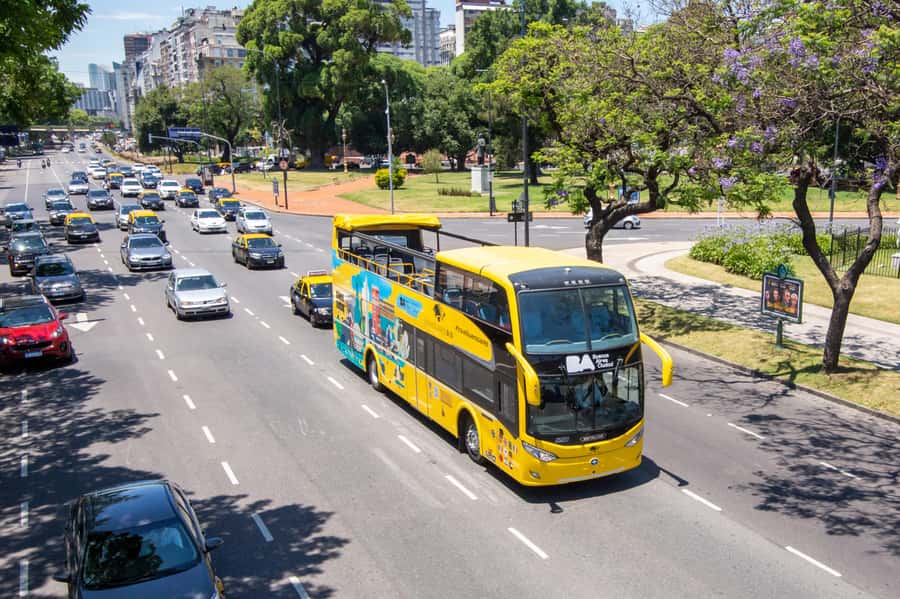
Buenos Aires can feel like several cities joined together. The formal center around Plaza de Mayo has a different mood from the colorful streets of La Boca, the polished avenues of Recoleta, the modern waterfront at Puerto Madero, or the leafy spaces around Palermo.
That distance is where the bus earns its fare. A single ticket lets you cross the city without paying for several separate car rides. It also gives you a running view of the streets between the headline sights, which is often where you begin to understand the city’s scale.
I recommend using the bus in two stages. First, stay aboard for most or all of the loop. Watch the neighborhoods change and note the stops that deserve a closer look. Then use the remaining ticket time for shorter rides between selected areas.
The service runs throughout the day, with buses advertised at roughly 15-minute intervals. That is a good rhythm when the system is running normally, but it is not a guarantee. Traffic, public demonstrations, and special events can slow the route, and a full bus may leave you waiting for the next one.
More ways to see Buenos Aires in a day:
- Buenos Aires Hop-On Hop-Off Bus, Free Walking Tours & Discounts
★ 4.5 · 2,218 reviews - Buenos Aires: City Highlights Guided Tour with Transfer
★ 4.7 · 1,946 reviews - Buenos Aires: Hop-On Hop-Off City Bus Tour
★ 4.2 · 1,855 reviews
Starting at Córdoba Avenue
Before boarding, exchange your voucher at the ticket counter at 466 Córdoba Avenue. Arrive about 15 minutes before you want to start, especially if your sightseeing time is tight.
Once you receive the actual bus ticket, you can board at any of the marked stops. This matters because the voucher exchange point may not be the most convenient stop for your hotel or first planned sight.
Keep your passport or ID card with you. The service does not include hotel pickup, food, drinks, or admission to attractions, so plan those costs separately.
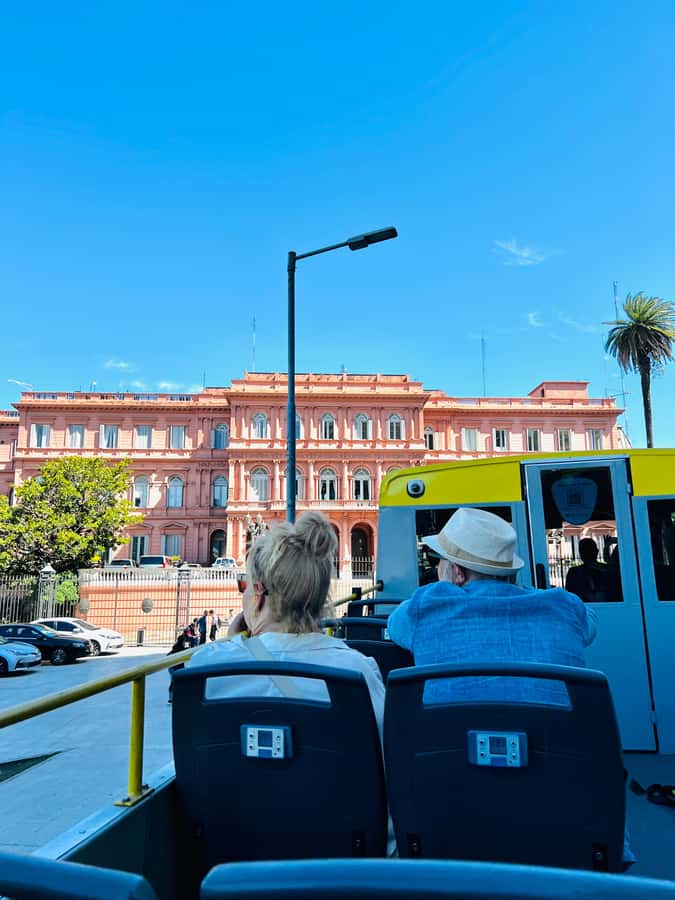
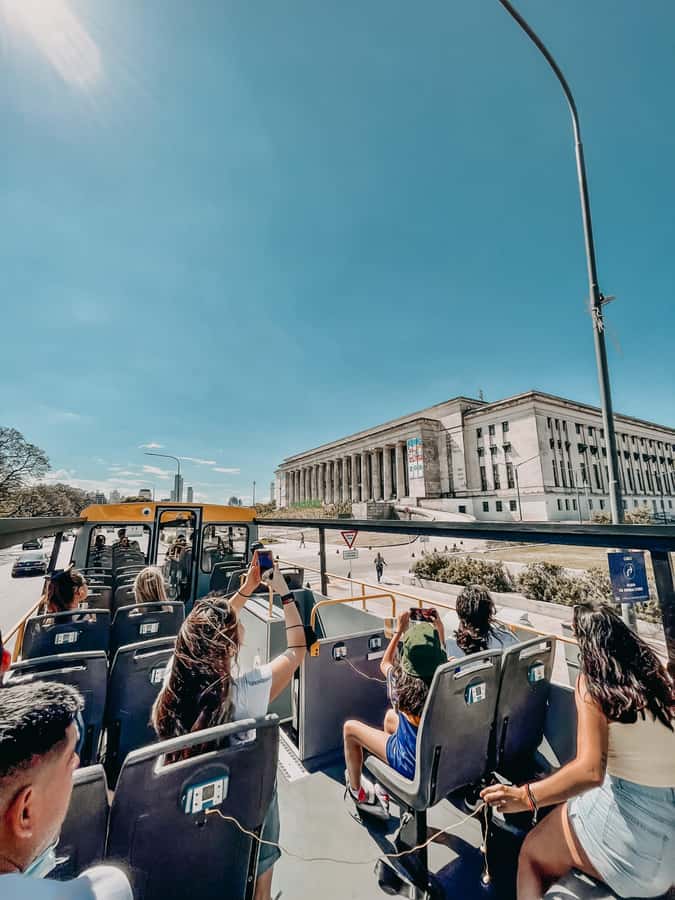
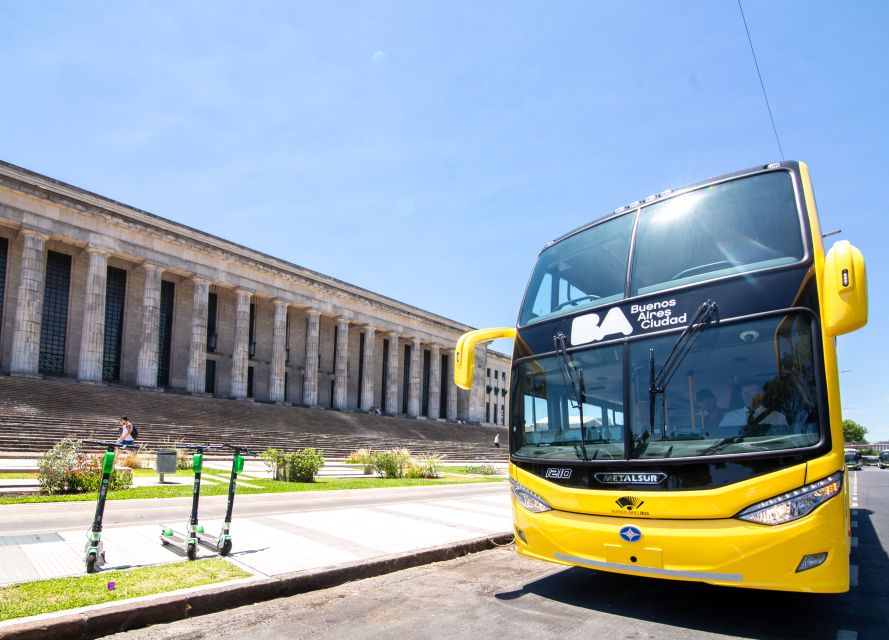
The buses offer an upper deck for broad city views, along with enclosed panoramic seating on some buses. The open top is best for photographs, but wind and traffic noise can make the commentary hard to hear. On a cold or rainy day, the enclosed upper deck is a welcome option.
Plaza de Mayo, the Obelisk, and the city center
The central part of the route introduces you to Buenos Aires at its most monumental. Plaza de Mayo is the place to get off if you want to see the city’s political heart and walk among major civic buildings.
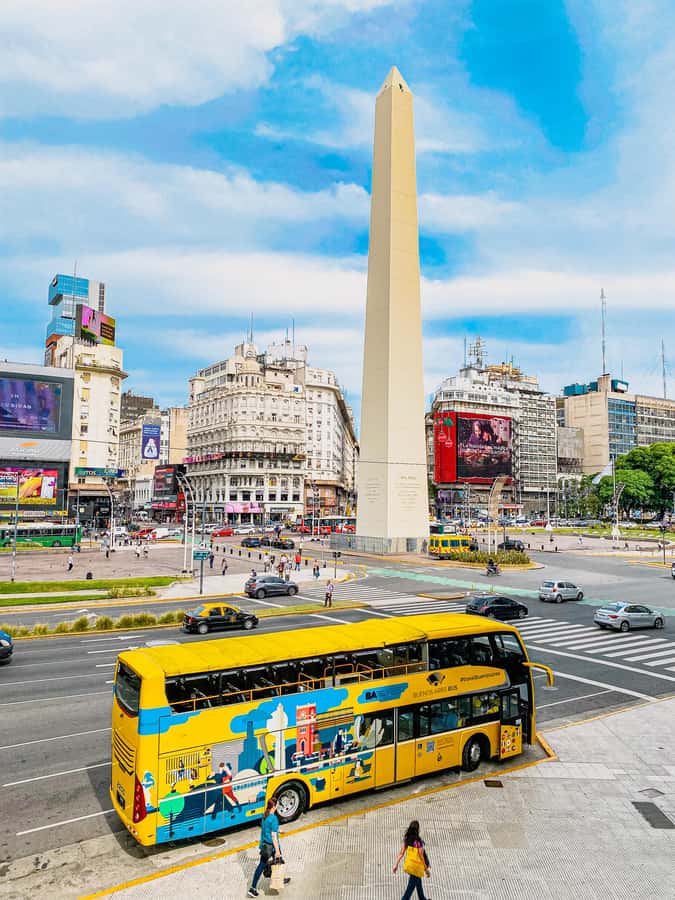
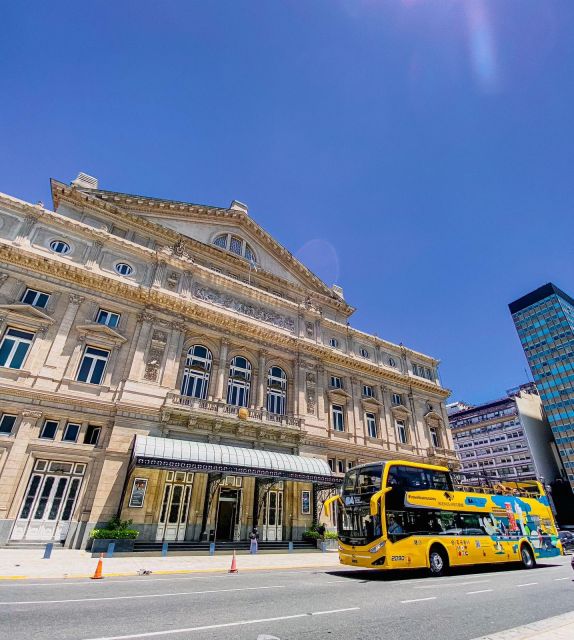
The Obelisk provides the classic Buenos Aires landmark view, rising from the busy Avenida 9 de Julio. Teatro Colón is another important stop or nearby sight, especially if architecture and music interest you. Even from the bus, this stretch gives you a strong sense of the city’s grand scale.
The central stops are useful for orientation, but they are not simply photo points. You can use them to break up the long circuit with a walk through the downtown streets. If you are visiting for only one day, this is one of the easiest areas to combine with a short independent walk.
The audio guide adds historical notes and local stories in your chosen language. English, Spanish, French, German, Italian, Portuguese, Russian, Chinese, and Japanese are available. The commentary includes music between sections, which some people enjoy, but the music has sometimes been louder than the spoken information.
La Boca and Caminito
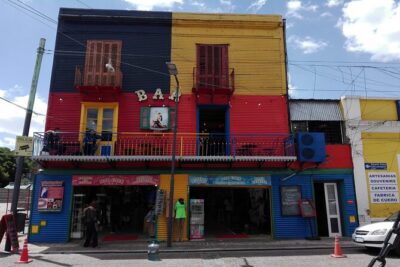
La Boca is the stop with the clearest visual character. Caminito is known for its colorful buildings, compact streets, and strong connection to Buenos Aires tango culture.
This is a good place to hop off rather than simply photograph from the upper deck. You can walk through the colorful squares and streets, then return to the route when you are ready. One useful plan is to stop here around lunchtime, though food and drinks are not part of the bus ticket.
Allow time for the walk from the stop to the sights. The route does not always leave you directly at an attraction’s entrance, and the distance can be longer than a quick glance at the map suggests.
La Boca also shows the limits of a sightseeing bus. The bus gives you access and context, but the neighborhood makes more sense on foot. The ride is the practical link; your own walk supplies the detail.
A different sort of afternoon, still in Buenos Aires:
- Buenos Aires: Piazzolla Tango Show with Optional Dinner
★ 4.4 · 2,122 reviews - Buenos Aires: La Boca Guided Walking Tour in English
★ 4.8 · 1,587 reviews - Buenos Aires: La Recoleta Cemetery Guided Tour in English
★ 4.8 · 1,359 reviews - Buenos Aires: 9-Course Argentine Meat Tasting at Fogón Asado
★ 4.9 · 826 reviews
Puerto Madero and Puente de la Mujer
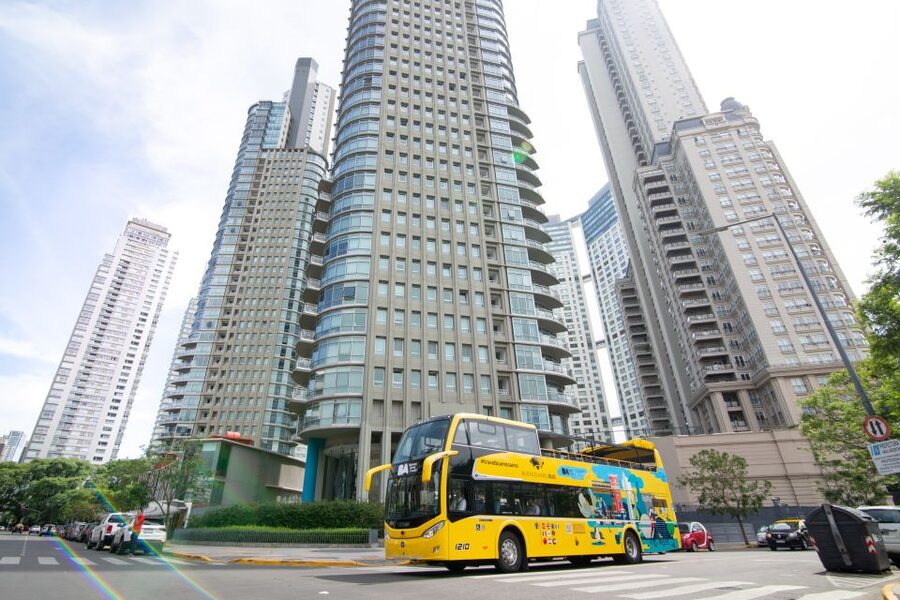
Puerto Madero offers a sharp change from the older central districts. The route passes the modern waterfront and the distinctive Puente de la Mujer, one of the city’s most photographed contemporary structures.
The area is especially good from the upper deck, where you can frame the bridge and waterfront without constantly looking around traffic. You may want to hop off for a stroll, but remember that the bus route is long and every stop costs you time.
The ticket’s restaurant discounts can be useful here, provided the participating offers match your plans. Check the current discounts at the ticket counter rather than assuming every restaurant along the route is included.
Recoleta, Palermo, and the Rose Garden

The northern part of the circuit moves into Recoleta and Palermo, two areas that reward a slower look. Recoleta is known for formal architecture and major city sights, while Palermo brings broad green spaces and a more relaxed feel.
The Rose Garden, or El Rosedal, is one of the better views from the top deck. The bus gives you a quick sense of its scale, but a walk is worthwhile if you want more than a passing photograph.
Palermo is also a sensible place to plan a coffee stop or a longer break. You can use the bus to reach the area, then return later to another stop. The route’s flexibility is most useful here because you are not forced to see everything in one continuous ride.
Some stops are not directly beside the attraction you want. Check the map before getting off, and leave extra time for walking. The printed map can be hard to read, with small writing and road details that are not especially helpful. It also may not match the audio stop numbers perfectly, so listen for the stop announcement and confirm your location before leaving the bus.
The audio guide: useful, but not always polished
The audio guide is included, and headphones are supplied. You select one of nine languages, then listen to commentary, local stories, and music as the bus moves through the city.
At its best, the guide fills the ride with useful context. It helps you understand why Plaza de Mayo matters, recognize major buildings, and put Buenos Aires neighborhoods into a larger picture. It is especially helpful when you ride the whole loop as an introduction.
The quality is not perfectly consistent. Some English commentary has been criticized for awkward translation and an artificial-sounding voice. Other sections can be sparse, with music taking the place of historical detail. Audio connections have also occasionally been crackly, and not every headset or socket may work perfectly.
On the open upper deck, wind and traffic create another problem. If the commentary matters to you, sit inside or on the enclosed upper deck when available. Keep the volume comfortable and ask staff for help if the equipment is not working.
Timing your ticket: one day, two days, or three
The 24-hour option suits a visitor with limited time who wants an overview and a few carefully chosen stops. If you only have a short stay, ride the full loop early, then get off at one or two places that matter most to you.
The 48-hour ticket is the most practical choice for many people. Use the first day to learn the route and identify your priorities. On the second day, return to La Boca, Recoleta, Palermo, or another district for a less hurried visit.
The 72-hour ticket makes sense if you want to use the bus as part sightseeing and part transportation. You can ride between districts, take breaks, and avoid trying to fit every major area into a single long day.
The ticket lasts for the selected period from your first boarding, not necessarily from the start of the morning. You do not need to rush to the first stop at 9 a.m. simply to get full value, though you should confirm current operating times before setting your plan.
Is the $35 price good value?
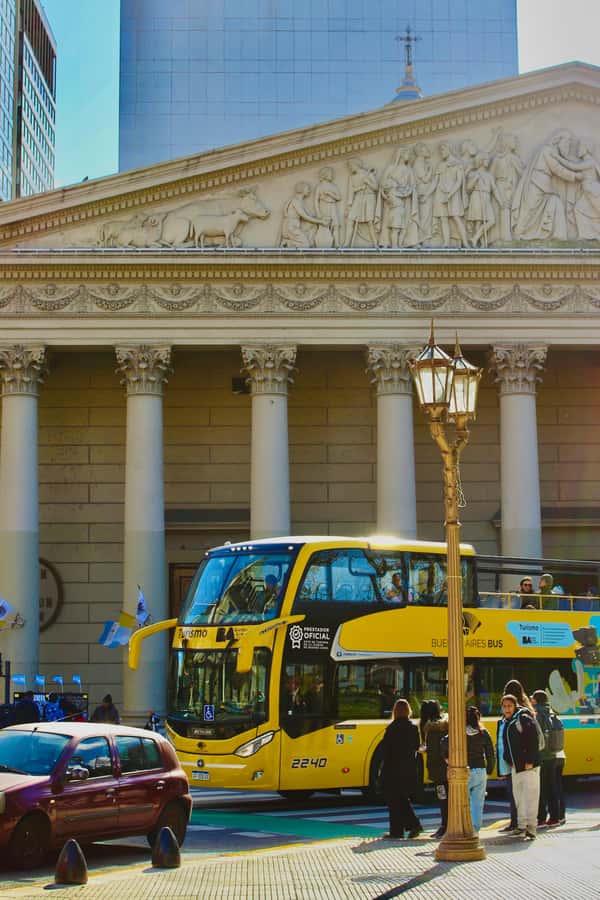
At $35 per person, the bus is fairly priced if you use it for more than one long ride. The value comes from three places: city coverage, transport between distant districts, and flexibility to return to areas that interest you.
A single continuous ride is still useful, particularly if you are new to Buenos Aires or have only a few hours. But if you never get off, you are paying mainly for orientation and panoramic views. The ticket becomes stronger value when you use it to replace several taxis or rides across the city.
The included discounts may improve the deal, but treat them as a bonus rather than the main reason to book. Offers apply at selected restaurants, shops, and attractions, and food, drinks, and entrance fees remain separate.
For a solo visitor moving quickly, one day may be enough. For a couple or family that wants to stop often, two days gives you breathing room. The 72-hour option is best for a slower schedule, not because the route itself is short.
Who will enjoy it most
I would choose this bus if you are visiting Buenos Aires for the first time, have limited time, or want a simple way to understand the city before exploring independently.
It also suits anyone who prefers not to navigate local public transport right away. The buses are wheelchair accessible, and the ability to choose between open and enclosed seating helps in changing weather.
You may want another plan if you prefer detailed guiding at every stop, dislike long vehicle rides, or want every attraction directly beside the bus stop. The commentary is serviceable but uneven, and traffic can make the advertised loop considerably longer.
Staff are generally helpful and friendly, though the voucher exchange experience may depend on the person assisting you. Once aboard, drivers and bus staff can help with stops and equipment.
Practical ways to get more from the ride
- Ride one full circuit first, without getting off, so you understand the route.
- Use the online tracking feature before waiting at a stop.
- Keep your headphones handy, but sit inside if wind makes the audio difficult.
- Compare the printed map with the live stop announcements.
- Allow a full day if you plan to leave the bus at several attractions.
- Check current closures before visiting a museum, planetarium, or other paid sight.
- Look at the discount board when exchanging your voucher.
- Keep the ticket safe, since it is your access for the selected 24, 48, or 72-hour period.
Should you book the Buenos Aires Bus?
I would book it for a first visit, a short stay, or a trip where you want a broad view before choosing where to spend your walking time. The route covers the city’s major districts, buses generally come often, and the ticket can save money compared with repeated taxis.
Choose the 24-hour pass for a fast introduction, the 48-hour pass for a balanced sightseeing plan, and the 72-hour pass if you want to use the bus at an easy pace. Just plan around traffic, expect some walking from stops, and regard the audio guide as helpful background rather than a full guided tour.
FAQ
How long does the full Buenos Aires Bus route take?
The complete route takes approximately 3 hours and 20 minutes without stops. Traffic, demonstrations, and special events can make the journey longer.
How often do the buses run?
Buses operate at an average frequency of about every 15 minutes, although traffic conditions can cause delays.
Which ticket durations are available?
You can choose a 24-hour, 48-hour, or 72-hour ticket, depending on the option available when you book.
Which languages are available for the audio guide?
The audio guide is available in Chinese, English, French, German, Italian, Japanese, Portuguese, Russian, and Spanish.
Where do I exchange the voucher?
You must exchange your voucher at the ticket counter at 466 Córdoba Avenue before boarding. After receiving the bus ticket, you can board at any bus stop.
Is the bus wheelchair accessible?
Yes, the Buenos Aires Bus service is wheelchair accessible. Food, drinks, attraction admission, and hotel pickup are not included.
Just added around Buenos Aires
- Unique Tigre and Delta Private Day Cruise Navegation★ 5.0 · 3 reviews
- Buenos Aires: Customizable City Tour in Polish★ 4.7 · 3 reviews
- Velez Sarsfield Football Match★ 5.0 · 3 reviews
- Tango Show at: MichelAngelo★ 4.5 · 3 reviews
- From Colonialism to Eclecticism, Buenos Aires arquitectonica★ 5.0 · 3 reviews
- Enjoy a Rural Experience in a Vineyard near Buenos Aires★ 4.7 · 3 reviews
- Guided tour Boca Juniors Museum & Stadium + Caminito★ 3.3 · 3 reviews
- Buenos Aires: Private City Tour by Car with Hotel or Pickup★ 5.0 · 3 reviews
Buenos Aires City Tours, compared.
Best of Buenos Aires: Guided Sightseeing City Tour
Read our review →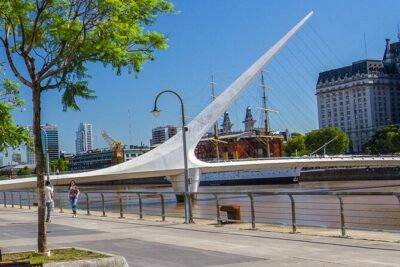


Classic City Tour of Buenos Aires: Neighborhoods and Emblems
Read our review →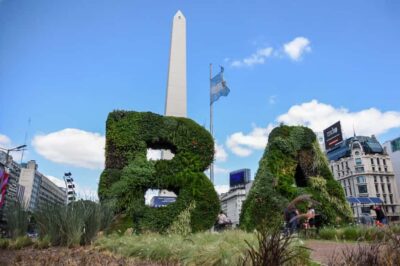
Browse the lists this tour appears in