
Reviewed · RECOLETA CEMETERY TOURS
Buenos Aires: La Recoleta Cemetery Guided Tour in English
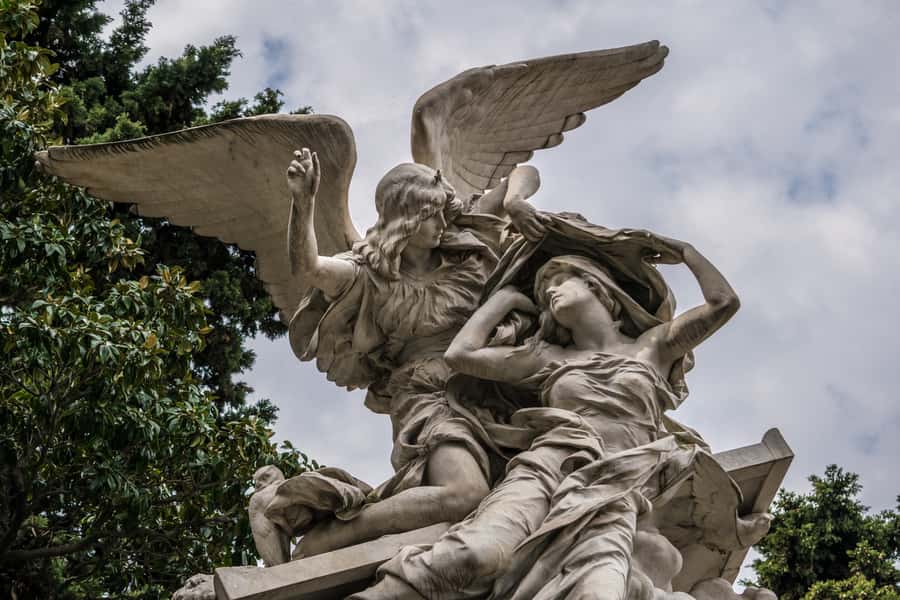
La Recoleta Cemetery is not a quiet field of headstones. It is a compact city of marble mausoleums, dramatic statues, narrow paths, and famous names, including Eva Perón. I like that this English walking tour turns a beautiful but confusing place into a readable story, and I like the way guides connect individual graves to Argentina’s politics, culture, and social life. The tales of Evita, the Sailor and his daughter, and the Wild Bull of the Pampas give the visit more bite than a simple architectural stroll.
The main drawback is the entry arrangement. The advertised tour costs $13 per person, but the mandatory cemetery ticket is extra, roughly $13 to $15 for foreign visitors and payable to the City of Buenos Aires. Buy it before the meeting time, since delays at the ticket booth can hold up the whole group.
In This Review
- Key points to know before you go
- Why Recoleta Cemetery deserves two hours
- Meeting the guide at Junín 1760
- The first steps inside the cemetery
- Evita’s resting place and the power of a famous name
- Legends that keep the walk lively
- Architecture, statues, and the city behind the tombs
- A compact lesson in Argentine history
- Pace, group size, heat, and accessibility
- What the $13 tour price really buys
- Who should book this English cemetery tour
- Booking details and final advice
- FAQ
- How long does the Recoleta Cemetery guided tour last?
- Where is the meeting point?
- Is the cemetery entrance ticket included?
- How can I pay the cemetery entrance fee?
- Is the tour conducted in English?
- Is the tour wheelchair accessible?
Key points to know before you go
- Evita’s family mausoleum: Learn why Eva Perón’s final resting place is less grand from the outside than many first-time visitors expect, yet remains the cemetery’s biggest draw.
- A two-hour story walk: The 110-minute guided route gives you far more context than wandering among more than 4,000 mausoleums alone.
- Guides who make the difference: Victoria, Mariano, Vito, Maru, Mariana, and Marietta are among the guides praised for clear English, humor, and strong storytelling.
- The entrance fee is separate: You must pay the government fee yourself by credit or debit card, either online or at the cemetery.
- Shade matters in hot weather: Guides such as Mariano and Mariana have been careful about pacing, keeping the group moving, and finding shade when possible.
- Good value for history fans: For $13 before admission, you get a live English guide and a useful introduction to Buenos Aires history and Argentine society.
Why Recoleta Cemetery deserves two hours
Recoleta Cemetery works best when you understand that it is both an art site and a record of power. Buenos Aires’ leading families built imposing mausoleums here, creating a place where architecture, grief, ambition, and public memory sit side by side.
The cemetery contains more than 4,000 mausoleums. That number sounds impressive, but it also points to the problem with visiting alone: after a few minutes, the carved angels, polished stone, iron doors, and family names can begin to blur together. A guide gives the place a route and a human voice.
I would not book this tour only to take photographs. The statues and facades are striking, but the best part is hearing why certain people are remembered, how Argentine society was shaped, and how the cemetery still functions today. Mariano, Victoria, Vito, and the other English-speaking guides bring those links into focus without turning the walk into a dry lecture.
The experience is also a useful first look at Buenos Aires. You hear about presidents, prominent families, Eva Perón, political conflict, social customs, and the city’s changing relationship with its dead. It is a small area with a surprisingly broad reach.
More Recoleta walks:
- Buenos Aires Bike Tour: North Districts, Recoleta and Palermo
★ 4.5 · 91 reviews - Recoleta Cemetery – Small Group Tour of History & Secrets
★ 5.0 · 53 reviews - Buenos Aires: Recoleta and Retiro Tip Based Walking Tour
★ 4.7 · 50 reviews
Meeting the guide at Junín 1760
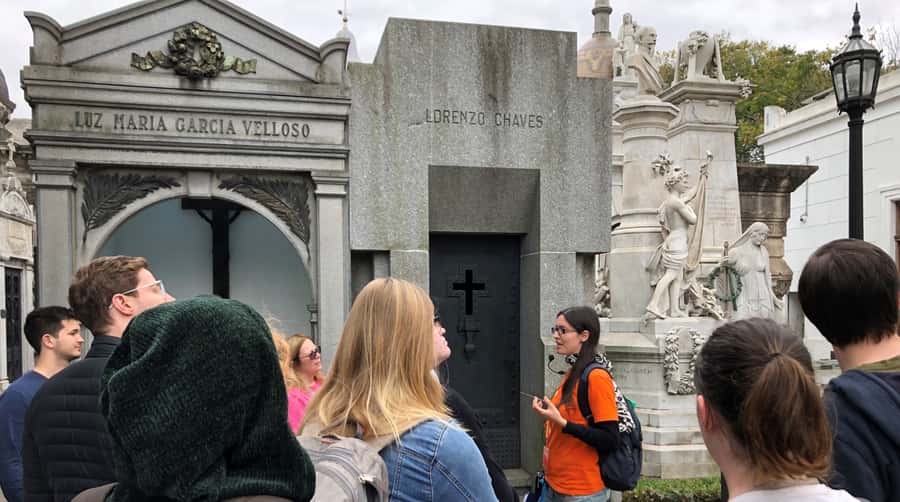
The meeting point is at the gate of Recoleta Cemetery, at Junín 1760, C1113 CABA. Look for the guide wearing an orange shirt. The starting location is also given as Junín 1801, so check your booking details and keep your attention on the cemetery entrance and ticket booth rather than relying on a street number alone.
The guide waits next to the ticket booth. This matters because you need to sort out admission before joining the walk. The tour price does not include the cemetery ticket, and that fee is paid to the government of the City of Buenos Aires, not to Buenos Aires Free Walks.
I recommend arriving early enough to handle the ticket before the stated start time. One practical complaint has come up several times: people who already bought their tickets sometimes still wait while others queue at the booth. You can reduce that frustration by having your admission ready before the group gathers.
The tour can include English and Spanish groups around the same starting area. On some days, getting everyone organized takes a little time, especially when several groups meet together. Once inside, the walk becomes more orderly.
The first steps inside the cemetery
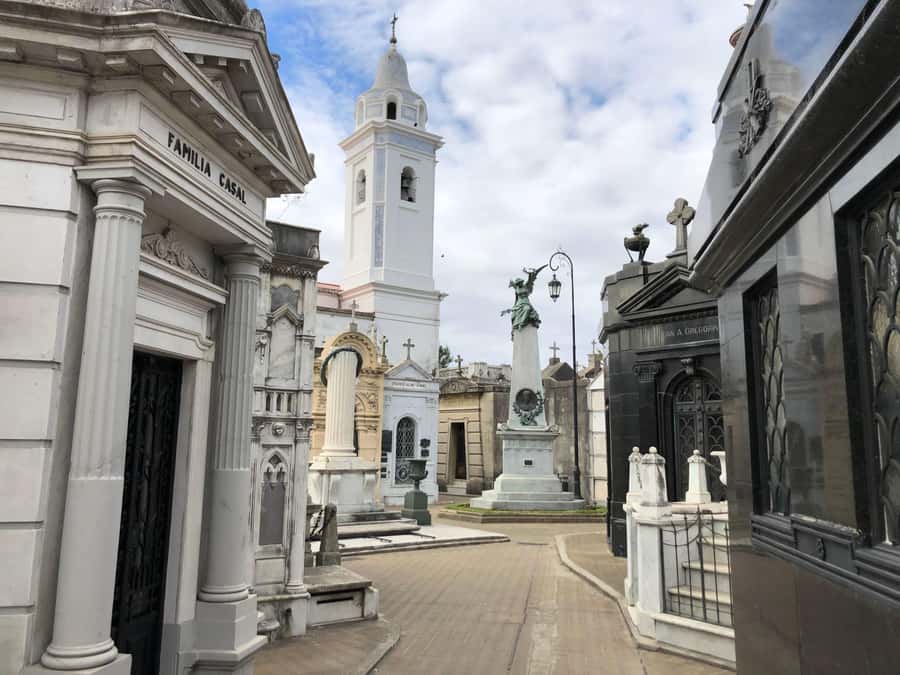
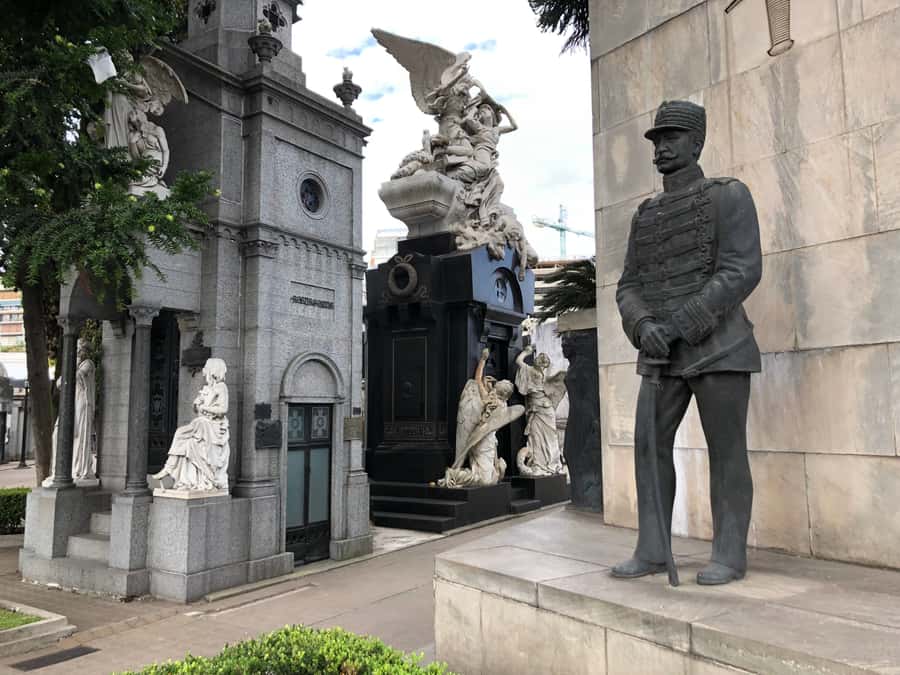
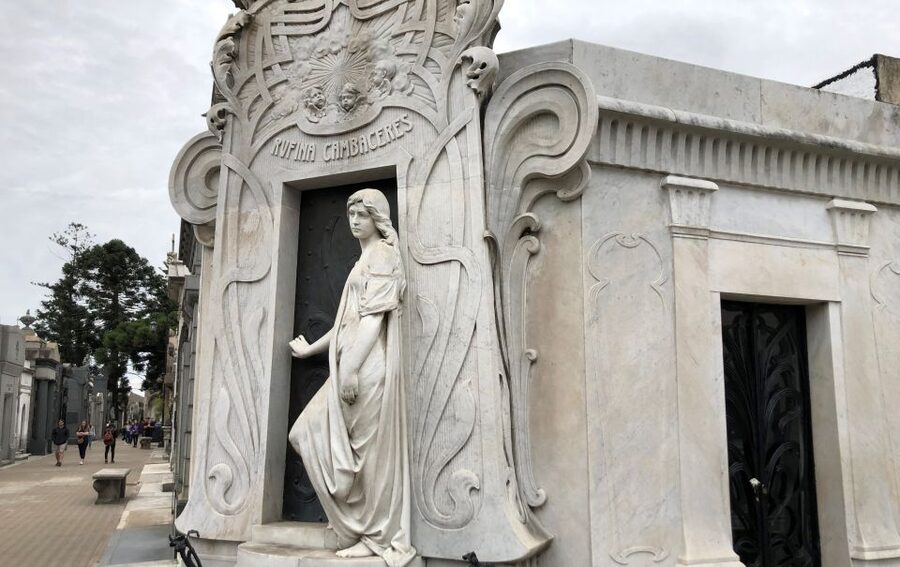
Your first impression is architectural. Recoleta feels more like a formal quarter than a traditional cemetery, with paths lined by mausoleums and decorative details competing for attention. The buildings range from restrained family tombs to elaborate structures with columns, sculptures, metalwork, and carefully composed facades.
The guide helps you read those details. A mausoleum was not simply a place to store remains. Its design could show a family’s wealth, taste, status, religious outlook, or connection to European artistic fashions. The cemetery becomes a portrait of the people who shaped Buenos Aires and the society that wanted to remember them in public.
This is also where a guide’s speaking style matters. You are often standing near a busy cluster of people, with other groups moving through the paths. Victoria has been praised for clear English and for answering questions in detail. Marietta has also been singled out for exceptionally easy-to-understand English and for including the whole group.
The route is a walking tour, not a private visit. On one occasion, a group was described as too large, and another start was slow because multiple language groups were being organized. Still, the guides generally keep people moving and make room for photographs at each stop.
Evita’s resting place and the power of a famous name
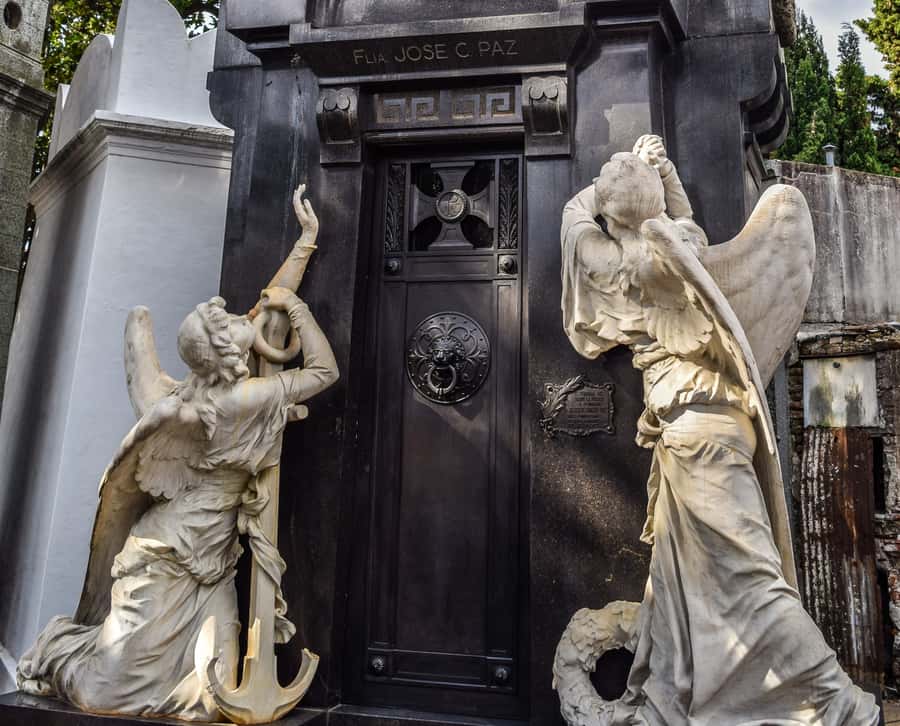
The most famous stop is the mausoleum of Eva Perón, known to Argentines as Evita. Her story is central to modern Argentine identity, and her grave draws people who know her from politics, film, history, or popular culture.
A guide can explain why this particular family tomb matters and how Evita’s public image continues to carry political and emotional weight. Her resting place is not simply another stop on a list of famous graves. It is a doorway into the divisions, loyalties, and myths that surround twentieth-century Argentina.
The tour does not treat Evita as an isolated celebrity. Her story fits into the wider account of presidents, powerful families, working people, political movements, and the changing role of Buenos Aires. That broader context is one reason I prefer the guided visit to a solo walk.
Expect other people to be interested in the same stop. The cemetery is a popular attraction, and the area around a famous mausoleum can become crowded. A good guide will position the group, speak clearly, and give you a chance to see the details. Victoria has been praised for arranging stops so people can hear the story and take photographs without losing the group.
A few more Buenos Aires outings worth weighing up
- Buenos Aires: City Highlights Guided Tour with Transfer
★ 4.7 · 1,946 reviews - Buenos Aires: La Boca Guided Walking Tour in English
★ 4.8 · 1,587 reviews - Palermo: Graffiti and Street Art Guided Tour in English
★ 4.8 · 684 reviews - Buenos Aires: Teatro Colon Guided Tour
★ 4.3 · 571 reviews
Legends that keep the walk lively
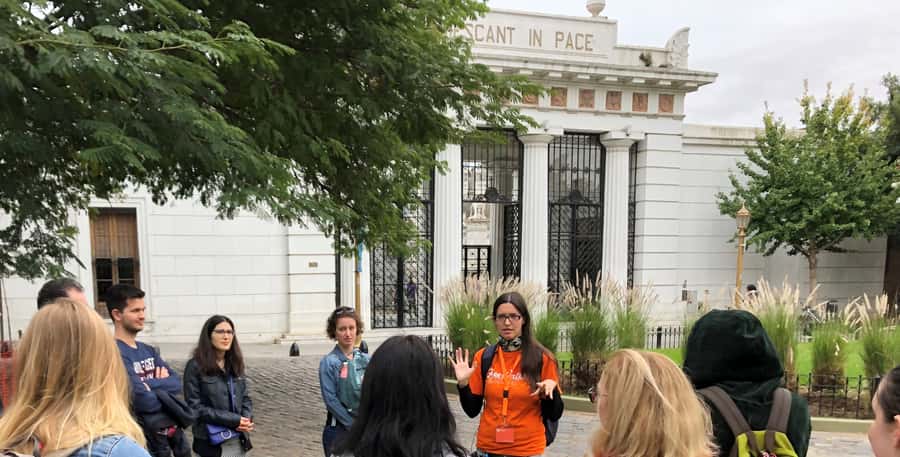
The experience is not only about official history. The guide also shares cemetery legends, including the story of the Sailor and his daughter and the tale of the Wild Bull of the Pampas. These stories add mystery and local character to the formal architecture.
I like this mix. A tour made up only of dates and political biographies could feel heavy after two hours. Legends give the walk a change of pace, while the setting itself encourages you to think about how stories survive around graves and memorials.
The guides use humor, romance, tragedy, and unusual details to keep the route moving. Vito has been praised for energetic storytelling and a clear love of history. Juan is described as entertaining, and Maru has used the cemetery to give a compact account of Argentina’s past. These individual styles vary, but the tour depends on the guide doing more than reciting names.
You should still expect the subject matter to include death, political conflict, and family tragedy. That is part of the appeal, but it may not suit someone looking for a light sightseeing stop. The cemetery is beautiful, yet the stories often have darker turns.
Architecture, statues, and the city behind the tombs
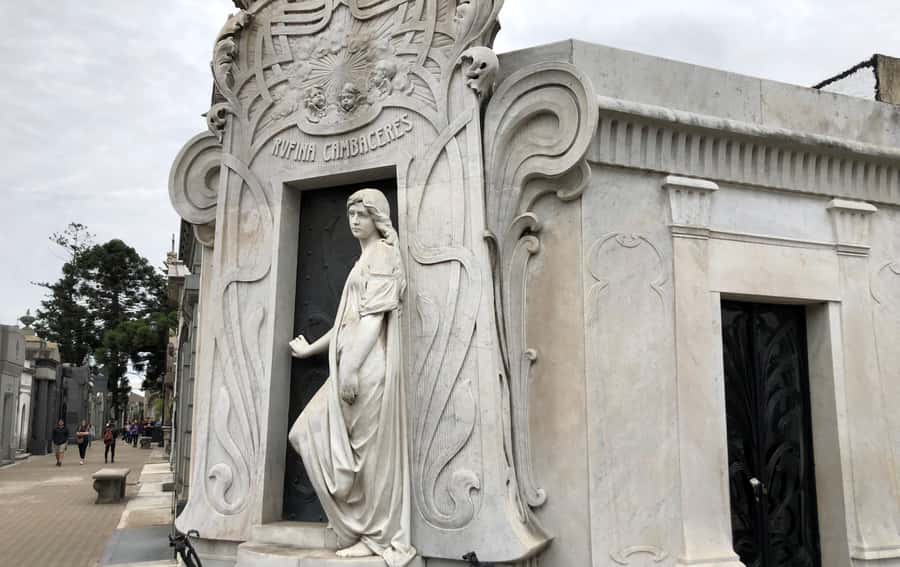
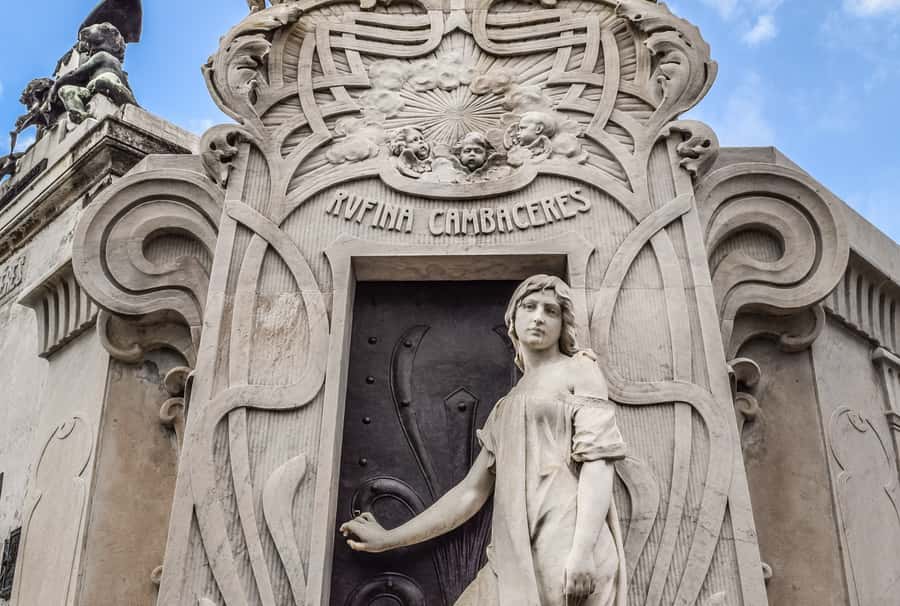
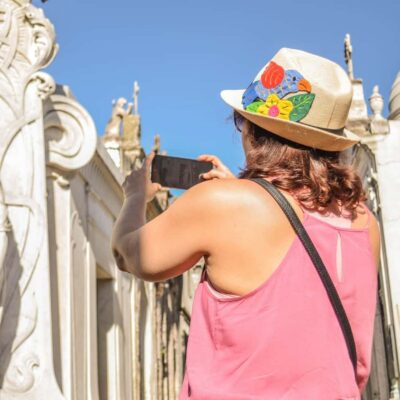
Recoleta’s visual appeal is easy to understand. Mausoleum fronts create a series of small architectural scenes, and statues add human and religious figures to the paths. Decorative flourishes reward a slow look, especially when a guide points out details you might otherwise pass without noticing.
The value here is not just identifying the most ornate building. The cemetery lets you compare styles and see how Buenos Aires’ elite families presented themselves. You can look at the scale of a tomb, the quality of its materials, and the symbols used to express family identity.
Guides also explain how the cemetery operates in the present day, not only what happened in the past. Mariano has included information about maintenance, renovation work, and the current role of the cemetery. That practical angle helps you see Recoleta as a working burial place rather than a frozen museum.
The condition of individual mausoleums can vary, and renovation is not uniform. That may disappoint anyone expecting every structure to be perfectly maintained. I find the unevenness useful, though, because it shows the ongoing cost and difficulty of caring for such a large historic site.
A compact lesson in Argentine history
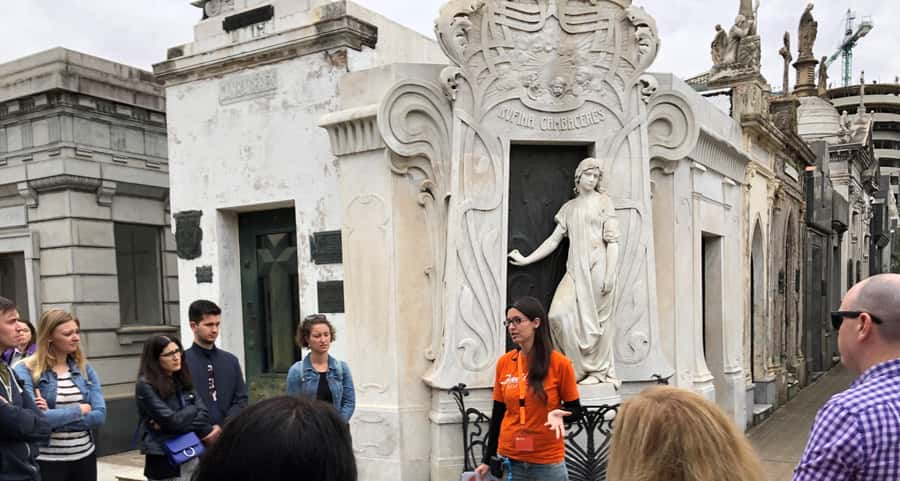
One of the strongest features of this tour is its reach beyond the cemetery walls. The people buried here connect to Argentina’s presidents, political movements, wealthy families, cultural life, and national myths.
You do not need a background in Argentine history to follow the tour. Guides such as Victoria and Mariano have been praised for pitching their explanations at a clear level, while still answering detailed questions. The best version of the tour gives you enough information to understand the main figures without burying you in dates.
The stories also help explain Argentine culture. A family mausoleum can raise questions about class, public memory, immigration, religion, and the way Argentina relates to Europe. The route gives you an introduction rather than a full history course, but it can send you back into Buenos Aires with better questions.
I would especially recommend it early in your stay. The tour can provide context for other sights, including political landmarks and neighborhoods associated with Argentina’s public figures. You may not remember every name, but you will begin to recognize the forces behind the city’s past.
Pace, group size, heat, and accessibility
The advertised duration is two hours, with about 110 minutes inside the cemetery. That is long enough to cover many important stops, but not so long that the visit becomes an all-day commitment.
The pace is generally steady. Guides have been praised for keeping large groups together, moving at a comfortable speed, and allowing time for photographs. On hot days, Mariano and Mariana have made a point of finding shade and checking that people are comfortable.
You are outdoors for the walk, so weather affects the experience. Wear comfortable shoes, bring water, and consider sun protection on warm days. The route involves walking and standing on cemetery paths, even though the activity is listed as wheelchair accessible.
Large groups are possible. One person found the group too big, and several people experienced a slightly confusing start while everyone assembled. The tradeoff is price: a $13 guided visit gives you access to a live English explanation without the cost of a private guide.
What the $13 tour price really buys
At $13 per person, this is a modestly priced guided experience for a major Buenos Aires attraction. You are paying for roughly two hours of interpretation, route planning, historical context, and the chance to ask questions.
The separate admission fee changes the final budget. Foreign visitors should expect an additional government ticket of approximately $13 to $15, though you should check the official cemetery website for the current amount. The cemetery accepts credit and debit cards at the entrance, and tickets can also be bought online.
Even after adding admission, the tour makes sense if you would otherwise wander without knowing who or what you are seeing. The cemetery itself is visually accessible, but its meaning is not always obvious. A guide turns a collection of impressive structures into a connected account of Buenos Aires.
The value is lower if you want complete freedom to linger at one tomb or move at your own pace. You will follow a group route and spend time at selected stops. For most first-time visitors, that is a fair exchange.
Who should book this English cemetery tour
I would book this tour if you enjoy history, architecture, biography, politics, or unusual city sights. It is also a smart choice if you want an introduction to Argentina that goes beyond the standard plazas and museums.
It suits solo visitors and couples who want structure, as well as families with older children who can manage a two-hour walking tour. The stories give younger listeners something to follow, although the subject matter includes death and political conflict.
You should think twice if you dislike group walks, standing outdoors, or stories about famous people. The route is not designed as a quiet personal visit. Also reconsider it if you cannot arrive early enough to arrange the separate entrance ticket.
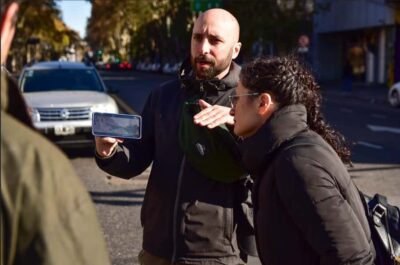
Guide quality is important, and the named guides have different styles. Victoria is repeatedly praised for precise English, detailed answers, and calm organization. Mariano is known for humor, historical detail, and attention to shade and pacing. Vito brings energy and passion, while Maru, Mariana, and Marietta have also been praised for clear, engaging storytelling.
Booking details and final advice
You can cancel up to 24 hours in advance for a full refund, and the reserve-now-pay-later option lets you hold a place without paying immediately. The listed tour language is English, and Spanish may also be available in the wider cemetery tour arrangement, so confirm your selected language when booking.
I recommend booking this tour, with one condition: handle the cemetery admission before the meeting time. Once that small detail is sorted, the walk offers a clear, affordable way to understand Recoleta’s architecture, Evita’s legacy, Argentine society, and the cemetery’s stranger stories.
Skip it only if you prefer to explore completely alone or have limited tolerance for group pacing. For nearly everyone else visiting Buenos Aires for the first time, a guided visit is much more rewarding than simply opening the gate and wandering among the mausoleums.
FAQ
How long does the Recoleta Cemetery guided tour last?
The experience lasts two hours, with the guided cemetery walk listed at approximately 110 minutes.
Where is the meeting point?
Meet at the gate of Recoleta Cemetery at Junín 1760, C1113 CABA. Look for the guide wearing an orange shirt. The guide waits next to the ticket booth.
Is the cemetery entrance ticket included?
No. You must buy the mandatory cemetery admission separately. The fee is approximately $13 to $15 for foreign visitors, but you should check the official website for the current price.
How can I pay the cemetery entrance fee?
The cemetery entrance accepts credit and debit cards. You can also purchase the ticket through the cemetery website.
Is the tour conducted in English?
Yes. This experience includes a live English-speaking guide. Spanish tours may also operate at the cemetery, so confirm that you select English when booking.
Is the tour wheelchair accessible?
Yes. The activity is listed as wheelchair accessible.
Just added around Buenos Aires
- Unique Tigre and Delta Private Day Cruise Navegation★ 5.0 · 3 reviews
- Buenos Aires: Customizable City Tour in Polish★ 4.7 · 3 reviews
- Velez Sarsfield Football Match★ 5.0 · 3 reviews
- Tango Show at: MichelAngelo★ 4.5 · 3 reviews
- Enjoy a Rural Experience in a Vineyard near Buenos Aires★ 4.7 · 3 reviews
- Guided tour Boca Juniors Museum & Stadium + Caminito★ 3.3 · 3 reviews
- From Colonialism to Eclecticism, Buenos Aires arquitectonica★ 5.0 · 3 reviews
- Buenos Aires: Private City Tour by Car with Hotel or Pickup★ 5.0 · 3 reviews
Recoleta Cemetery Tours, compared.
Buenos Aires Bike Tour: North Districts, Recoleta and Palermo
Read our review →
Recoleta Cemetery – Small Group Tour of History & Secrets
Read our review →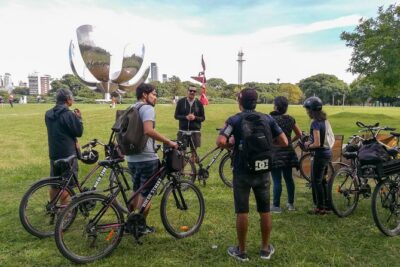
Cultural Experience by Bike around Palermo and Recoleta Max 6 ppl
Read our review →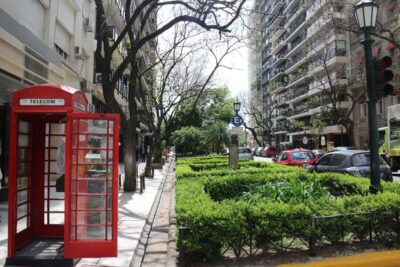
Full Day City Tour Buenos Aires, Recoleta Cemetery and Tigre
Read our review →
Browse the lists this tour appears in