
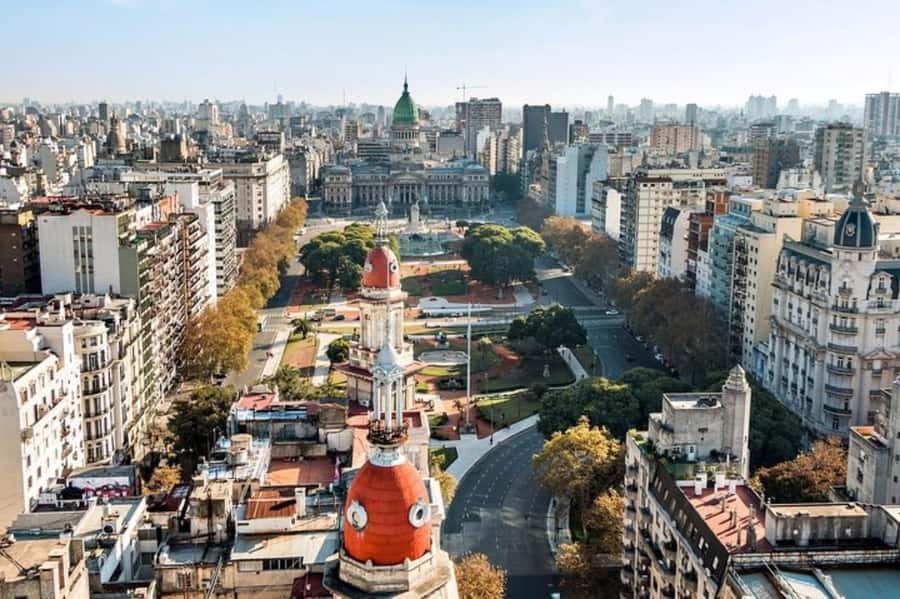
Reviewed · LA BOCA & CAMINITO TOURS
Buenos Aires: Montserrat, San Telmo, La Boca, and Puerto …
Buenos Aires reveals itself in layers on this four-hour route, from the political heart of Plaza de Mayo to the immigrant streets of La Boca and the polished waterfront of Puerto Madero. You get four very different neighborhoods in one outing, with history, football, tango, and modern architecture all in the mix.
I like the focus on small details, such as the city’s oldest pharmacy, its smallest house, the Mafalda statue, and the old ships in Puerto Madero. I also like the human touch: guide Alejandra is specifically praised for her clear, friendly way of bringing the city’s past to life, while Sebastian helps keep the outing running smoothly.
The main consideration is pace. Four hours is enough for a strong first look, but not enough for long museum visits or unhurried meals. You’ll walk a lot, and the tour is not suitable for wheelchair users. Wear good shoes and expect some transfers between neighborhoods.
In This Review
- Key points to know before you book
- From the cathedral to Plaza de Mayo
- Avenida de Mayo and Café Tortoni
- Calle Defensa and Montserrat’s small surprises
- San Telmo Market and Plaza Dorrego
- What to expect in La Boca
- Puerto Madero’s new skyline and old ships
- How the four-hour timing works
- Is $100 per person a fair price?
- Who should choose this Buenos Aires route?
- Should you book it?
- FAQ
- How long does the Buenos Aires neighborhood tour last?
- Where does the tour begin?
- Where does the tour finish?
- Which languages are available?
- Are meals and drinks included?
- Is a visit to Café Tortoni guaranteed?
- Is the tour suitable for wheelchair users?
Key points to know before you book
- Plaza de Mayo begins the story: See the Casa Rosada, Cabildo, Metropolitan Cathedral, and the center of Argentina’s political life.
- Calle Defensa rewards slow eyes: Look for the oldest bookstore, church, pharmacy, first two-story building, smallest house, and Mafalda statue.
- San Telmo adds food and local character: The 1897 market, Plaza Dorrego, Ezeiza’s house, and French Passage give you several photo and snack stops.
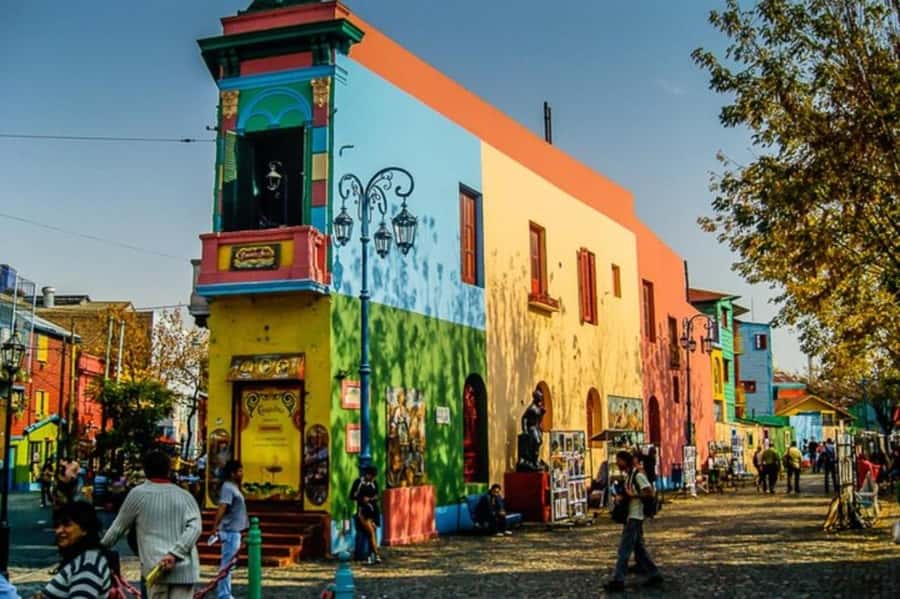
- La Boca brings football and tango: You’ll see the Boca Juniors Stadium and the colorful Caminito open-air museum.
- Puerto Madero changes the mood: Finish beside Puente de la Mujer, modern towers, old naval vessels, and the Costanera Sur Ecological Reserve.
- The price buys structure and context: At $100 per person, this makes the most sense if you want a guided overview rather than four hours of independent wandering.
From the cathedral to Plaza de Mayo
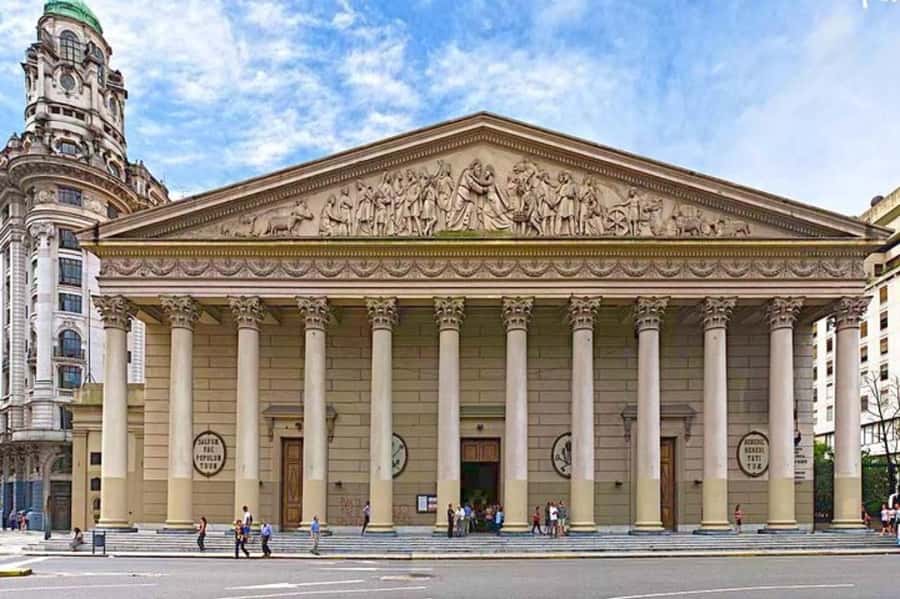
The tour begins at Buenos Aires’ Metropolitan Cathedral, a fitting place to start because Montserrat is where the city’s oldest civic and religious stories gather. From here, you move toward Plaza de Mayo, the city’s oldest major square and its political center.
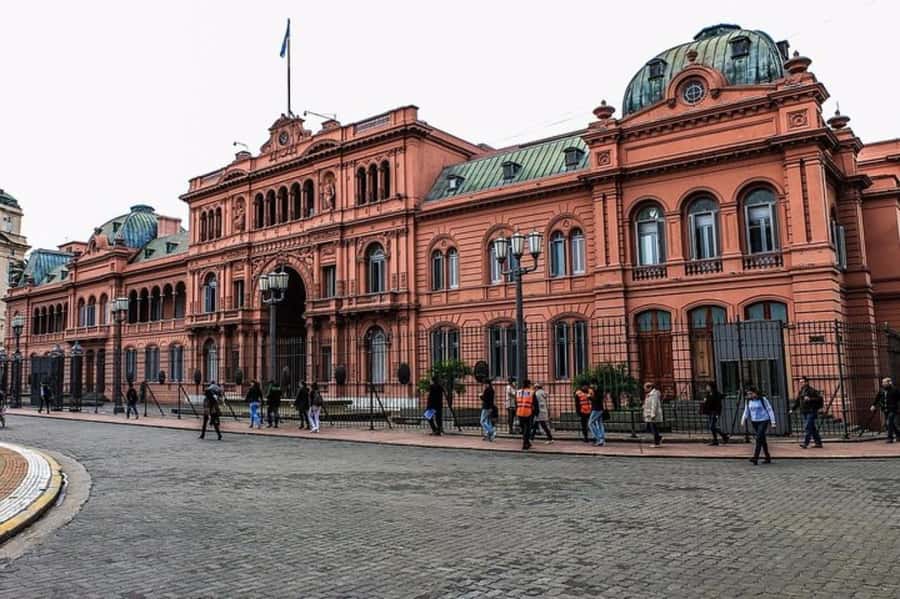
The square is framed by the Casa Rosada, the pink executive office; the Cabildo, a surviving colonial-era building; the Metropolitan Cathedral; and government ministries, including Economy and Defense. This is not simply a pretty plaza for photographs. It is the place to understand how Buenos Aires connects national power, public protest, religion, and civic memory.
I appreciate having a guide here because the buildings can blur together when you first arrive. A good explanation gives the square a clear shape. Look at how the Casa Rosada faces the open space, then notice the cathedral’s formal presence and the Cabildo’s older colonial character.
The stop in Montserrat is listed as about one hour. That is long enough to hear the main story and take photographs, though you should not expect a full interior tour of every building. The value is in the overview and in the way the guide links the square to the streets that follow.
More La Boca and Caminito walks:
- Buenos Aires: La Boca Guided Walking Tour in English
★ 4.8 · 1,587 reviews - Buenos Aires: Navigation from Pto. Madero to La Boca
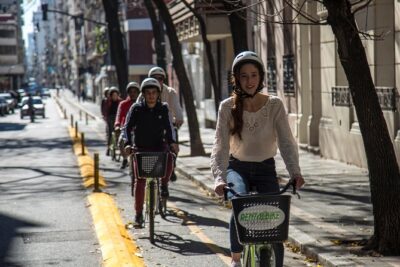
★ 4.1 · 147 reviews - Buenos Aires Bike Tour: San Telmo and La Boca Districts
★ 4.5 · 74 reviews
Avenida de Mayo and Café Tortoni
At the western end of Plaza de Mayo begins Avenida de Mayo, described as the first boulevard in the city and the first avenue in South America. It links the executive power of Casa Rosada with the legislative power of the National Congress.
That connection gives the avenue more meaning than a simple city walk. You are following a grand civic axis, one that joins the two main branches of national government. The avenue also carries the city’s café tradition, with Café Tortoni halfway along the route.
Café Tortoni is identified as the oldest café in Argentina and South America. If access is available during your visit, it is a worthwhile stop for anyone interested in Buenos Aires’ literary and artistic café culture. The important caveat is that a visit depends on availability, so treat it as a possibility rather than a guaranteed part of the experience.
I would not book this tour solely for Café Tortoni. The walk remains worthwhile if the café cannot receive the group. You still get Avenida de Mayo, Plaza de Mayo, and the surrounding historic streets, while the guide can explain why cafés matter so much to the city’s social life.
Calle Defensa and Montserrat’s small surprises
The route then uses Calle Defensa to show you the less grand side of old Buenos Aires. Here, the interest comes from specific claims and oddities: the oldest bookstore, the oldest church, the oldest pharmacy, and the city’s first two-story building.
These details are easy to miss on your own. A plain doorway may look unimportant until someone tells you why it matters. That is one of the strongest reasons to take this tour with a live guide rather than simply walk between the major squares.
The route also includes the smallest house in Buenos Aires and stories connected with sailors, immigrants, slaves, and urban legends. These subjects add texture to the polished official version of the city. You hear about the people who arrived, worked, traded, worshiped, and lived in cramped conditions.
The claims about oldest and first buildings should be understood as part of the guide’s interpretation of the city’s heritage. If you care about architectural detail, keep your eyes open for façades, narrow entrances, old signs, and the way newer businesses occupy older structures.
San Telmo Market and Plaza Dorrego
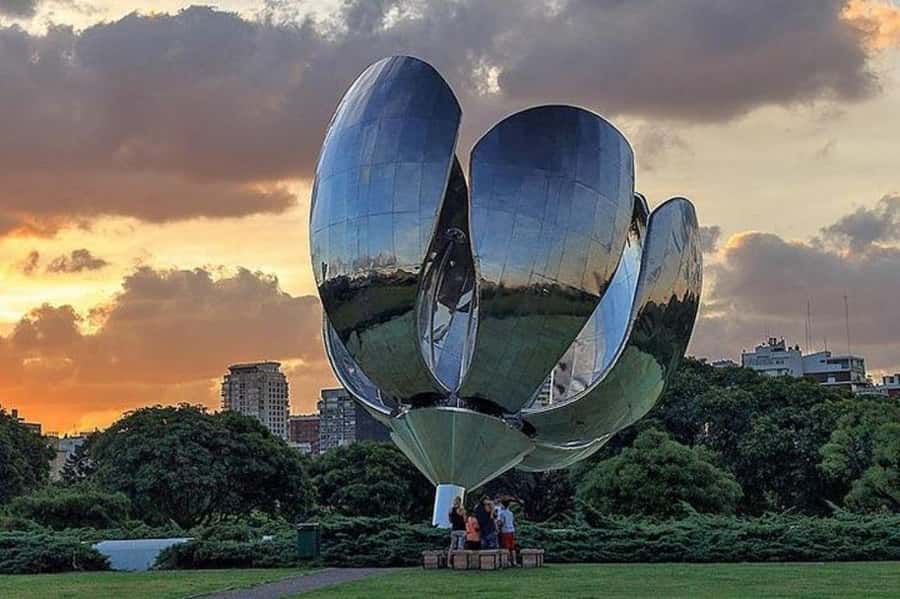
San Telmo is Buenos Aires’ second-oldest neighborhood, and the mood shifts quickly once you arrive. Calle Defensa continues as the main thread, but the surroundings become more associated with antiques, small food spots, traditional produce stalls, and street culture.
The San Telmo Market opened in 1897. It has changed over time, but it still combines fruit and vegetable stalls with antique shops and small restaurants. That mixture is useful for understanding the neighborhood: San Telmo is not only a preserved historic quarter. It is also a place where daily shopping and tourism share the same roof.
You should have enough time to look around, but not enough for a long meal. Food and drinks are not included, so bring money if you want to stop for something along the way. The market is also a good place to note what you would like to revisit later at your own pace.
Before the route reaches San Juan Avenue, you visit Plaza Dorrego, the city’s second-oldest square. Nearby is Ezeiza’s house, and the French Passage offers a particularly photogenic setting. These stops give the San Telmo section some visual variety: a square, an old house, a passage, and a market rather than one long stretch of similar streets.
The Mafalda statue is another small but memorable stop. Mafalda is an Argentine comic character and cultural ambassador, so the statue connects the neighborhood to modern popular culture. You may find a short wait for photographs, but it is an easy place to pause and enjoy a distinctly Argentine reference.
More San Telmo and old-town walks:
- Buenos Aires: San Telmo and Market Guided Walking Tour
★ 4.8 · 102 reviews - San Telmo: Historical Guided Tour with Street Food & Drinks
★ 5.0 · 87 reviews - BA Flavors Food Tour in San Telmo and Boca With Local Guide
★ 5.0 · 67 reviews - Experience The Essence of Buenos Aires in San Telmo
★ 5.0 · 51 reviews
What to expect in La Boca
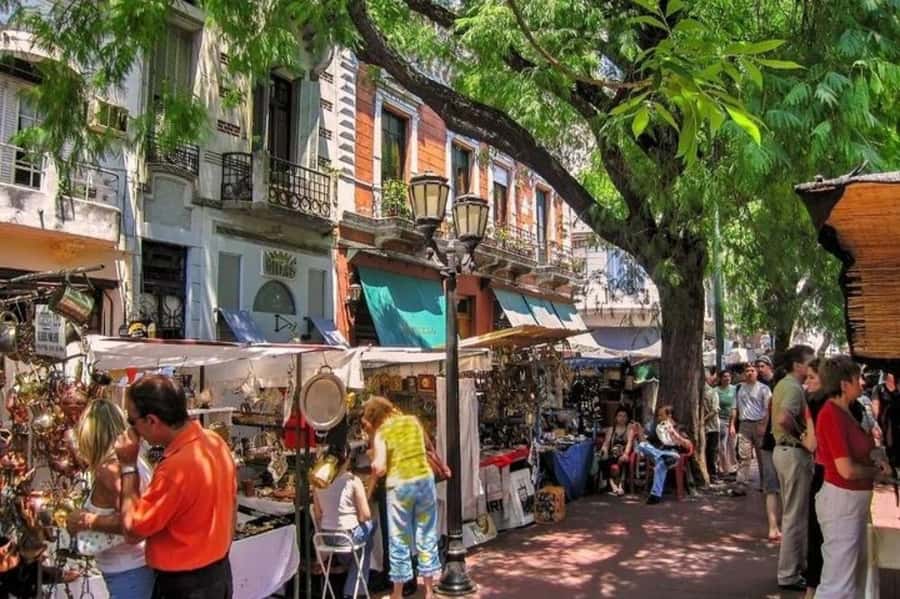
A transfer of about 10 minutes takes you from San Telmo to La Boca. This short ride matters because the neighborhoods are not arranged as one continuous walking route. You get a break from walking, then begin the next section in one of Buenos Aires’ most recognizable districts.
La Boca is tied closely to Boca Juniors, one of Argentina’s best-known football clubs. The tour includes the iconic Boca Juniors Stadium, giving you a look at the club’s place in local identity. This is a useful stop even if you are not a serious football fan, since the club is part of the city’s cultural vocabulary.
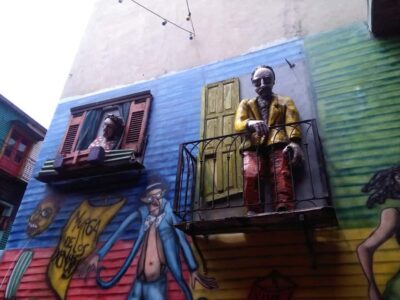
The route continues to Caminito, an open-air museum filled with colorful buildings and souvenir shops. The area is also linked with tango, and you may see dancers performing in traditional restaurants. It is a strong visual contrast with the formal government buildings of Montserrat.
Caminito is built for atmosphere and photographs, so have your camera ready. At the same time, you should keep expectations realistic. The stop is about one hour, and it is not a full exploration of every corner of La Boca. You will see the famous core of the neighborhood, hear why it matters, and have time to browse.
Meals are not included. If you want to eat in a traditional restaurant or stop for a drink, the cost is yours. Since the tour has a set schedule, a leisurely lunch is better saved for after the activity unless the guide allows enough time.
Puerto Madero’s new skyline and old ships
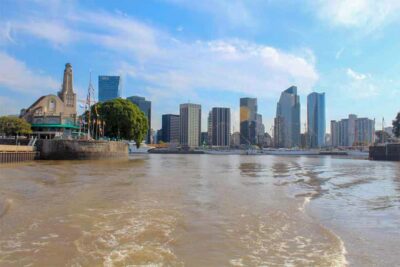
Another transfer, again about 10 minutes, brings you to Puerto Madero. This is the sharpest change in scenery on the tour. The area began as an abandoned port project and later became a modern district of high-rise buildings, restaurants, bars, and a riverside promenade.
The contrast is the point. In a single afternoon, you move from colonial-era streets and immigrant neighborhoods to a contemporary waterfront shaped by redevelopment. Puerto Madero shows how Buenos Aires has repeatedly changed its relationship with the river and its working port.
The main architectural stop is Puente de la Mujer, designed by Santiago Calatrava. Its sweeping form makes it one of the city’s most recognizable modern landmarks. The bridge is a natural place to finish because it gives you a clear visual ending and space for photographs.
You also get a chance to see the frigate Sarmiento and the corvette Uruguay, two historic naval vessels with stories of their own. The information provided does not promise an interior visit, so think of these as waterfront historical sights rather than guaranteed ship tours.
The tour also includes the Costanera Sur Ecological Reserve, a natural area near the city center. The route does not specify a long walk or separate reserve visit, so you should regard it as part of the Puerto Madero area rather than expect a full nature excursion. Its inclusion helps show that Buenos Aires is not only streets and towers.
How the four-hour timing works
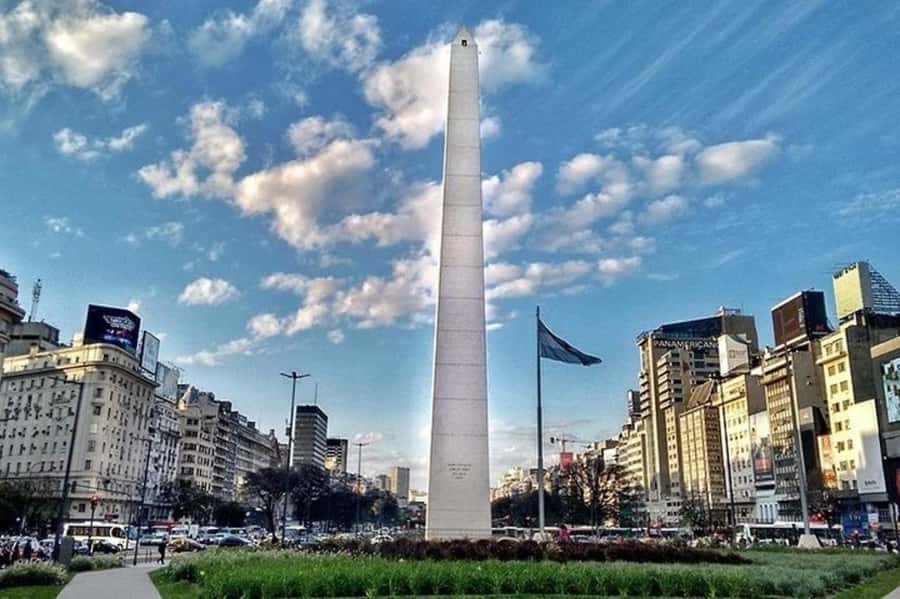
The schedule gives roughly one hour each to Montserrat, San Telmo, La Boca, and Puerto Madero, with two short transfers between neighborhoods. That is a sensible design for a first day in the city when you want orientation more than depth.
You will probably spend the most time walking in Montserrat and San Telmo. La Boca and Puerto Madero allow more time for viewing, photographs, and a brief look around. The route covers a lot, so comfortable footwear is essential.
The guide language options are English, Spanish, and Portuguese. Recent booking feedback specifically names Alejandra as the guide and describes her as friendly and clear in explaining Buenos Aires’ culture and past. Sebastian is also credited with helping make the outing run smoothly. Guide assignments can change, but these names indicate the kind of personal service associated with the experience.
Weather will affect your comfort. Check the forecast and dress accordingly, since much of the activity takes place outdoors. Sunny weather will make Caminito and Puerto Madero more enjoyable, while heat or rain will make the walking feel harder.
Is $100 per person a fair price?
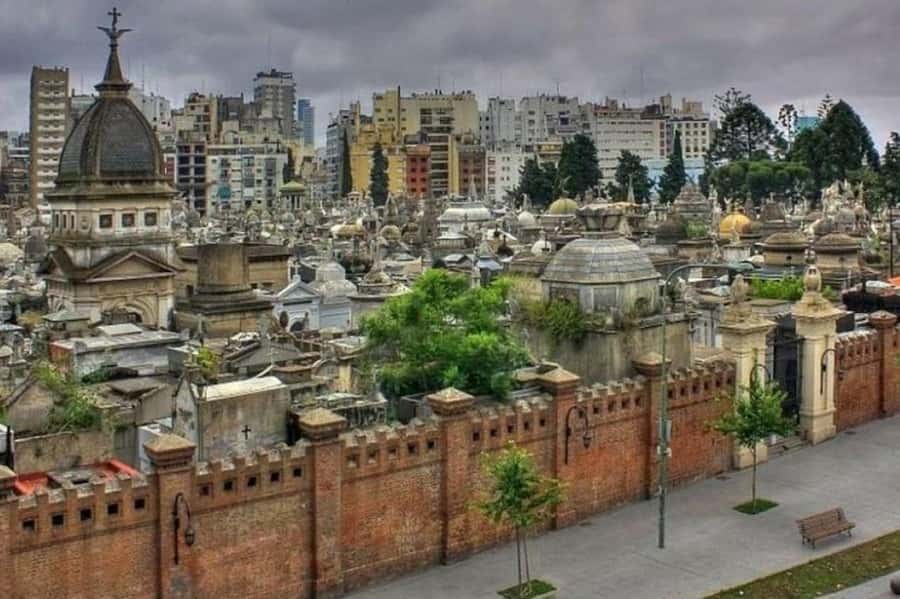
The cost is $100 per person. That is not a bargain-priced city stroll, so the value depends on how you use it.
If you independently visit Plaza de Mayo, San Telmo, La Boca, and Puerto Madero, you may spend less on transport and food. You would also have more freedom to linger. But you would need to organize the route, understand the connections between neighborhoods, and research the smaller sites yourself.
This tour earns its price through structure and explanation. You get a guide, a carefully connected route, short transfers, and access to a wide range of subjects: colonial buildings, political history, immigration, football, tango, architecture, old ships, and ecology.
I would consider it good value for a first visit, especially if you have only a few days in Buenos Aires. It is less useful for someone who already knows these neighborhoods and prefers to spend an entire afternoon in one market, museum, or café.
Free cancellation up to 24 hours before the start and the option to reserve now and pay later make the booking less rigid. Those policies are helpful when weather or arrival plans remain uncertain, but they do not change the tour’s basic pace or walking demands.
Who should choose this Buenos Aires route?
I would recommend it to first-time visitors who want a clear introduction without spending several days piecing together separate outings. It also suits people who enjoy local stories, architecture, public squares, football, and street scenes more than formal museum interiors.
Families with older children may like the range of subjects. The Boca Juniors Stadium, colorful Caminito, Mafalda statue, old ships, and unusual buildings give younger travelers several concrete things to look for.
You should think twice if you use a wheelchair, since the activity is not suitable for wheelchair users. You should also reconsider it if you want a slow food tour or extended time at Café Tortoni, because meals are not included and café access depends on availability.
The guide’s language matters, too. Choose English, Spanish, or Portuguese according to the option available when you book. A shared language will make the short historical stories and urban legends far more rewarding.
Should you book it?
Book this tour if you want Buenos Aires in broad strokes, with enough detail to make the city’s major neighborhoods feel connected. The route’s best feature is its range: Plaza de Mayo’s government buildings, San Telmo’s market and old houses, La Boca’s football and tango, then Puerto Madero’s bridge and ships.
Do not book it expecting deep time in any one place. Four hours moves quickly, and some highlights, especially Café Tortoni, depend on access. Still, for a well-organized first look led by a guide such as Alejandra, this is a practical way to get your bearings and choose where to return on your own.
FAQ
How long does the Buenos Aires neighborhood tour last?
The tour lasts four hours, including the guided visits to Montserrat, San Telmo, La Boca, and Puerto Madero, plus two transfers of about 10 minutes each.
Where does the tour begin?
The starting point is the Metropolitan Cathedral of Buenos Aires.
Where does the tour finish?
The activity finishes at Puente de la Mujer in Puerto Madero.
Which languages are available?
Live guides are available in English, Spanish, and Portuguese.
Are meals and drinks included?
No. Meals, drinks, and personal expenses are not included.
Is a visit to Café Tortoni guaranteed?
No. The Café Tortoni visit depends on availability.
Is the tour suitable for wheelchair users?
No. The activity is listed as unsuitable for wheelchair users.
Just added around Buenos Aires
- Unique Tigre and Delta Private Day Cruise Navegation★ 5.0 · 3 reviews
- Buenos Aires: Customizable City Tour in Polish★ 4.7 · 3 reviews
- Velez Sarsfield Football Match★ 5.0 · 3 reviews
- Tango Show at: MichelAngelo★ 4.5 · 3 reviews
- From Colonialism to Eclecticism, Buenos Aires arquitectonica★ 5.0 · 3 reviews
- Enjoy a Rural Experience in a Vineyard near Buenos Aires★ 4.7 · 3 reviews
- Guided tour Boca Juniors Museum & Stadium + Caminito★ 3.3 · 3 reviews
- Buenos Aires: Private City Tour by Car with Hotel or Pickup★ 5.0 · 3 reviews
La Boca & Caminito Tours, compared.
Buenos Aires Bike Tour: San Telmo and La Boca Districts
Read our review →
La Boca, a collective creation: Port, immigrants, arts and football
Read our review →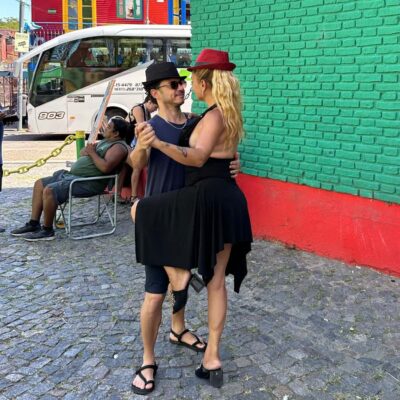
Browse the lists this tour appears in