
Reviewed · RECOLETA CEMETERY TOURS
Recoleta & Cemetery for curious people
Buenos Aires’ Recoleta is more than pretty buildings and famous graves. This 150-minute walk connects grand avenues, elite homes, political power, and the cemetery where Argentina’s most important families built miniature palaces for the dead. The central idea is compelling: a city’s monuments reveal who held power, and who was left out.
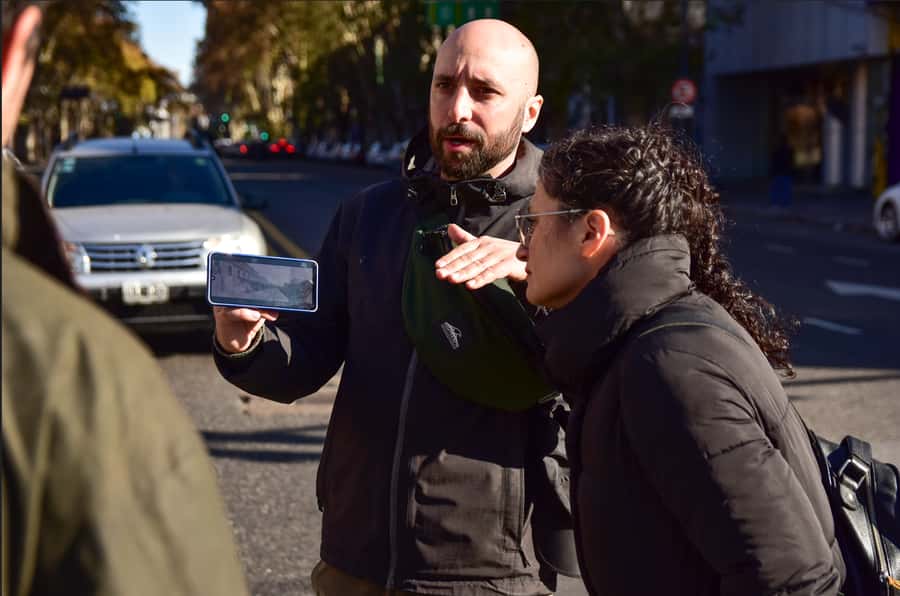
I like the way the tour moves beyond a simple cemetery visit. You get architecture, politics, social history, and spirited discussion along the route. I also like the flexible guide-led format, especially if you enjoy asking questions. Nicolas is praised for his historical detail and humor, while Ignacio is described as an excellent guide who adapts the visit to the group.
The main consideration is pace. You cover many stops in 150 minutes, with much of the experience outdoors and on foot. The cemetery entrance fee is separate, and entry is optional, so confirm the current ticket price if you want the full final section.
In This Review
- Key points to know before you go
- Why Recoleta tells Argentina’s bigger story
- From Rapa Nui to Plaza San Martín
- Edificio Kavanagh and Buenos Aires’ architectural ambition
- Torre Monumental and the city’s public face
- Mansión Estrugamou and the world of elite homes
- Palacio San Martín and the role of power
- A short break before the Recoleta stretch
- The French Embassy and the Parisian illusion
- Jockey Club and the social machinery of the elite
- Palacio Duhau and a modern luxury setting
- Entering Recoleta Cemetery
- What the guide adds to the walk
- Is $34 a fair price?
- Who should book this experience?
- Who may want a different Recoleta visit?
- My call: book it for the connections
- FAQ
- How long does the Recoleta and Cemetery tour last?
- Where does the tour begin?
- Where does the tour end?
- Is the cemetery entrance ticket included?
- What languages are available?
- Is the tour wheelchair accessible?
- Can I book a private or small-group experience?
Key points to know before you go
- The walk begins at Rapa Nui and ends at Recoleta Cemetery, linking Plaza San Martín with one of Buenos Aires’ best-known neighborhoods.
- The focus is social and political, not just architectural, with discussion of landowners, Argentina’s former world-power hopes, and the country’s capital today.
- The cemetery visit lasts about 45 minutes, but admission is not included and can be bought at the entrance or online.
- Guides speak Spanish, English, and French, with university-trained guides leading the discussion.
- The experience works best in a private or small group, where you can stop to ask about side stories and local details.
- The $34 price is reasonable for a guided city walk, provided you value interpretation and conversation more than a quick list of sights.
Why Recoleta tells Argentina’s bigger story
Recoleta can look like a polished postcard of European Buenos Aires. Mansions line broad streets, prestigious institutions occupy impressive buildings, and the cemetery contains some of the country’s most recognizable names.
This tour asks you to look twice. The elegance is not accidental. It grew from enormous fortunes, powerful families, imported styles, and an ambitious city project that wanted Buenos Aires to resemble Paris. That ambition earned the capital its famous European nickname, but it also raises uncomfortable questions about inequality and political power.
I find that approach more useful than a standard sightseeing walk. You are not simply told that a building is beautiful. You are encouraged to ask who paid for it, who benefited, and what kind of Argentina it represented.
The discussion covers the country’s rise and fall as a potential world power. That gives the grand architecture a sharper edge. Behind the polished façades is a story about landowners, wealth, political influence, and a national future that did not unfold as many elites expected.
More Recoleta walks:
- Buenos Aires: La Recoleta Cemetery Guided Tour in English
★ 4.8 · 1,359 reviews - Buenos Aires Bike Tour: North Districts, Recoleta and Palermo
★ 4.5 · 91 reviews - Recoleta Cemetery – Small Group Tour of History & Secrets
★ 5.0 · 53 reviews
From Rapa Nui to Plaza San Martín
The meeting point is the Rapa Nui store, a straightforward place to find your guide before setting off. From there, the walk reaches Plaza General San Martín, one of the important public spaces in central Buenos Aires.
The plaza is a sensible starting point because it helps frame the city before you enter Recoleta. Expect about 10 minutes of guided explanation here, with attention to the square’s setting and its role in the city.
There are two scheduled stops at Plaza San Martín, each listed for about 10 minutes. That suggests the guide may use the area for more than one angle on Buenos Aires, perhaps moving from public space and national identity toward the surrounding architecture. Since this is an interactive tour, you should use the pause to ask questions rather than treating it as a quick photo stop.
The plaza section is also a useful test of the tour’s style. If you prefer a guide who explains context and invites discussion, you will likely settle into the format quickly. If you want constant movement and a rapid checklist of sights, the conversational approach may feel slower.
Edificio Kavanagh and Buenos Aires’ architectural ambition
The walk continues to Edificio Kavanagh, with around 10 minutes for guided commentary. Its inclusion matters because the route is not limited to old mansions or cemetery monuments. Buenos Aires’ elite story also includes ambitious modern architecture and the changing shape of the city.
The building helps show how the capital’s image developed over time. The tour’s larger theme is not simply that wealthy people built grand homes. It is that the city repeatedly used architecture to express status, confidence, and connection to Europe.
You will get more from this stop if you pay attention to the contrast between private wealth and public urban identity. The guide may connect the building to the larger discussion of the Parisian illusion, a useful phrase for the city’s effort to project itself as a sophisticated European capital.
Torre Monumental and the city’s public face
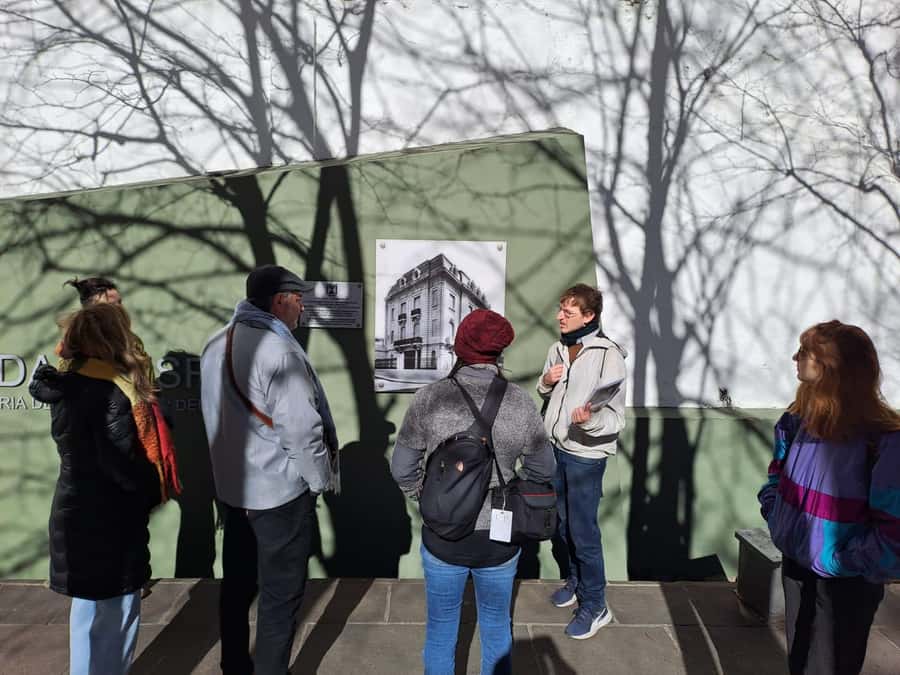
Torre Monumental receives another 10-minute explanation. This is one of the route’s public landmarks, and it shifts the conversation from private residences to civic symbols.
I like the balance here. A walk focused only on mansions can make Buenos Aires’ past seem like a private family affair. A landmark such as the tower brings the city itself into the picture. It gives the guide a chance to discuss how Buenos Aires presents its identity through monuments and grand public works.
The stop is brief, so do not expect a long architectural lecture. Think of it as one piece in a larger argument about how the city communicates power. The value comes from the connection between stops, not from spending a long time at any single monument.
A different sort of afternoon, still in Buenos Aires:
- Buenos Aires Hop-On Hop-Off Bus, Free Walking Tours & Discounts
★ 4.5 · 2,218 reviews - Buenos Aires: Piazzolla Tango Show with Optional Dinner
★ 4.4 · 2,122 reviews - Buenos Aires: City Highlights Guided Tour with Transfer
★ 4.7 · 1,946 reviews - Buenos Aires: Hop-On Hop-Off City Bus Tour
★ 4.2 · 1,855 reviews
Mansión Estrugamou and the world of elite homes
At Mansión Estrugamou, also identified as Casa Basavilbaso, the tour turns directly toward the homes of the wealthy. The building represents the kind of urban opulence associated with Argentina’s Gilded Age.
This is where the tour’s central questions become easier to see. Grand residences were not just places to live. They announced rank, money, taste, and a family’s place within Buenos Aires society. The guide uses the architecture as evidence, encouraging you to read façades and scale as signs of social order.
You may find this stop especially useful if you are interested in architecture but do not want a purely technical tour. The emphasis is on what buildings meant to the people who commissioned them and to the city that had to accommodate them.
The name Casa Basavilbaso also reflects a recurring feature of Buenos Aires: buildings can carry several identities at once, depending on the family, period, or historical reference being discussed. Ask your guide how the names relate if that question interests you.
Palacio San Martín and the role of power
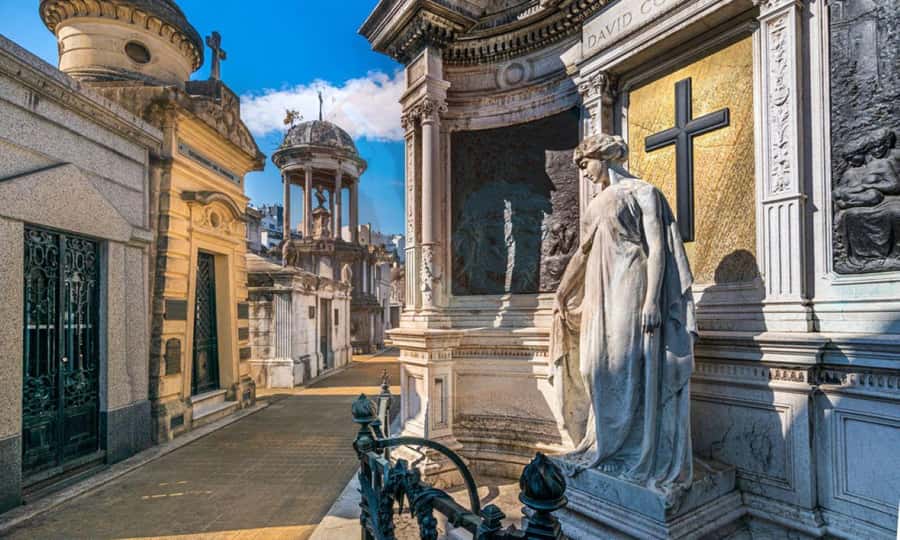
Palacio San Martín brings diplomacy and political influence into the route. The tour allows about 10 minutes here, enough to place the palace within the story of Argentina’s elite and its outward-facing ambitions.
This stop helps explain why Recoleta and nearby districts became associated with prestige. Wealth did not operate alone. It connected with government, foreign relations, clubs, embassies, and institutions that shaped national life.
I would pay attention to the difference between decorative grandeur and actual influence. The tour is at its best when it uses beautiful buildings to start a discussion about how Argentina was governed and how its ruling class understood the country’s place in the world.
The palace also supports the tour’s three-part structure: past, present, and future. The past appears in the buildings, the present in the city around you, and the future in the question of what Buenos Aires wants to become.
A short break before the Recoleta stretch
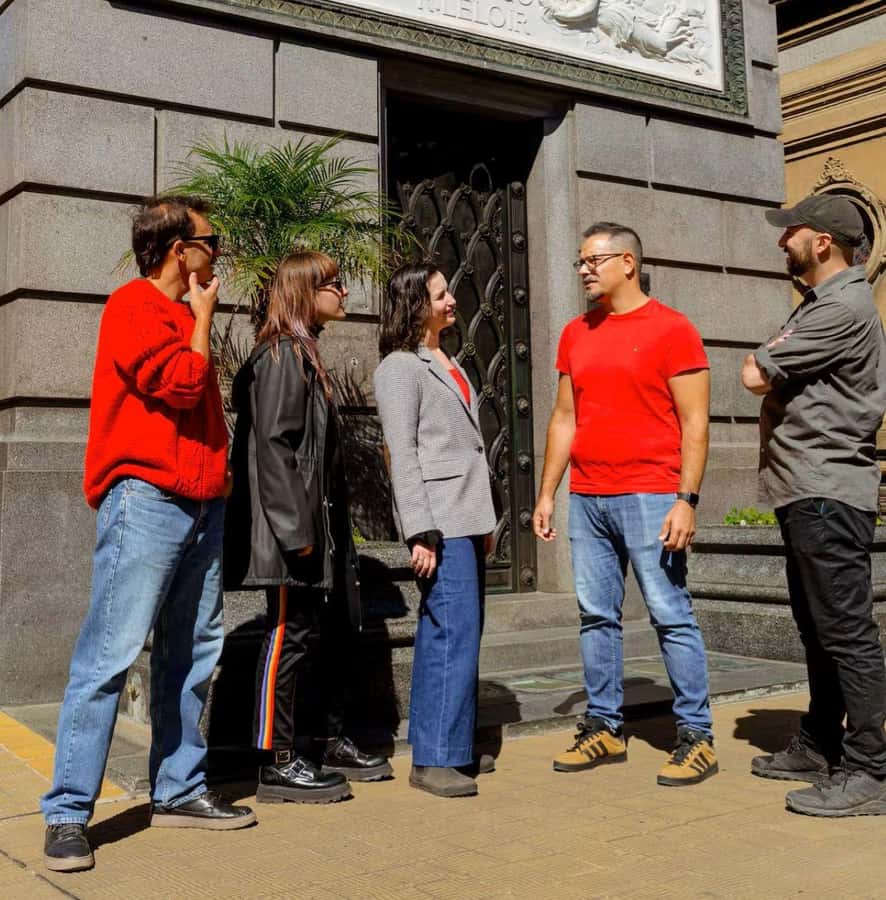
A five-minute break is scheduled at a Carrefour Express. This is not a sightseeing stop, but it is practical. You can take a quick pause during the walk, especially on a warm day.
Because the break is short, do not count on a leisurely snack or a long rest. If you need water, plan to buy it quickly or carry some with you. The experience remains a walking tour, and this brief stop does not change that.
The French Embassy and the Parisian illusion
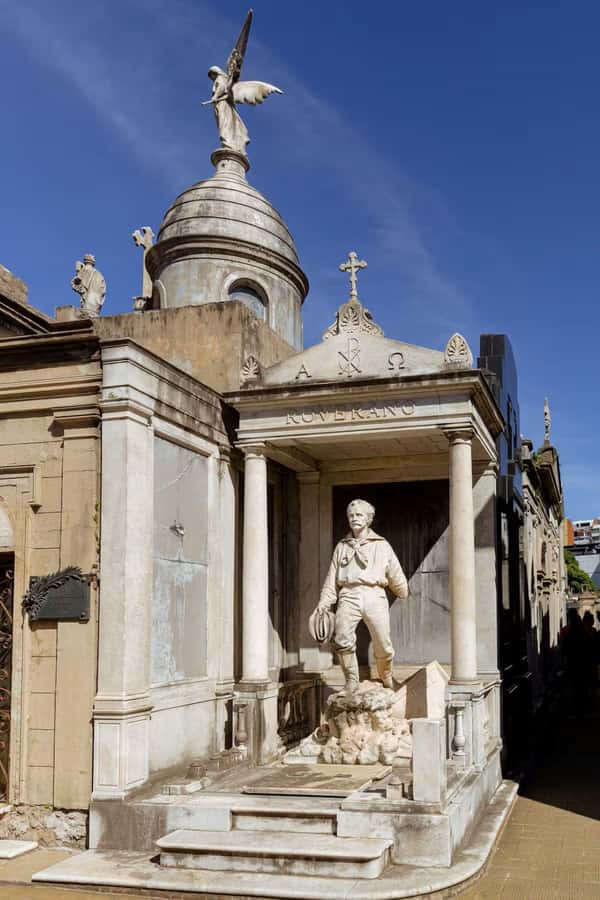
The Embassy of France receives another 10-minute guided stop. Its presence makes the city’s European ambitions visible in a particularly direct way.
The tour uses places like this to examine Buenos Aires’ desire to look and feel Parisian. That desire was tied to wealth and international confidence, but it was also a carefully built image. The French connection is not simply about style. It points to the cultural preferences of the powerful families who helped shape the district.
I appreciate that the tour does not treat the Paris comparison as a compliment without a footnote. The same ambition that produced elegant avenues and palaces also reflected a society with sharp divisions. You can admire the architecture while asking who had access to this world.
Jockey Club and the social machinery of the elite
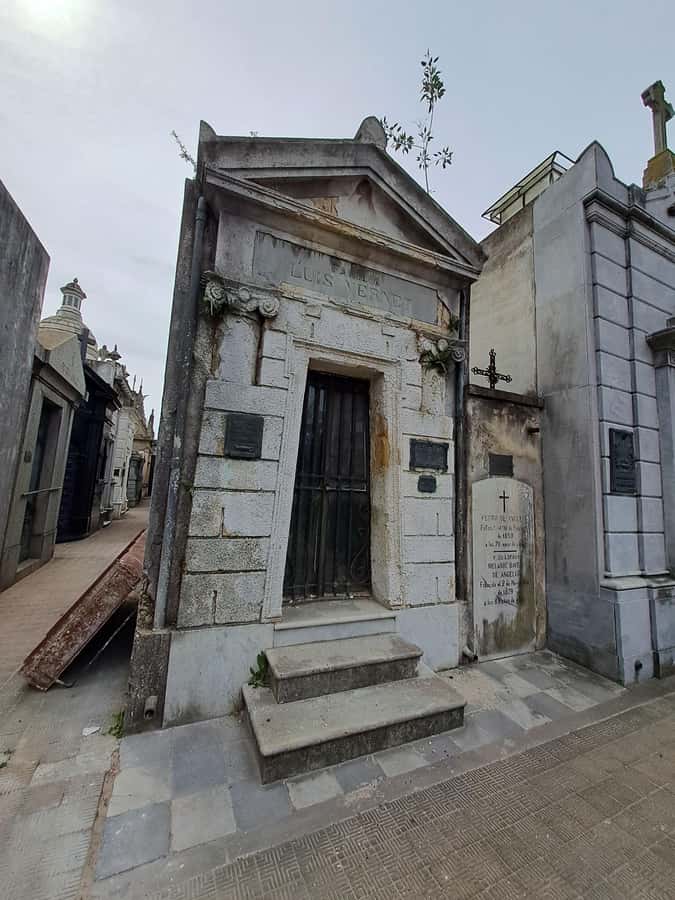
The Jockey Club is one of the most revealing stops because it points toward the social networks behind Buenos Aires’ upper class. The scheduled discussion lasts about 10 minutes.
A club can tell you a great deal about a society. It shows where influential people met, how they formed relationships, and how privilege could reinforce itself outside official government offices. In this setting, the Jockey Club becomes part of the story of landowners and elite institutions.
This is also a good place to ask about Argentina’s economic high point and its later difficulties. The tour presents the country’s past as a rise-and-fall story rather than a simple tale of former greatness. That makes the walk more honest and more useful.
Palacio Duhau and a modern luxury setting
Palacio Duhau, now associated with Park Hyatt Buenos Aires, receives a shorter five-minute stop. The building offers another view of elite life, this time with a direct link to present-day luxury.
The brief timing makes sense. You do not need a long stop to understand the contrast between historic aristocratic residence and its modern use. The palace remains part of the city’s high-end identity, but its function has changed.
This is a strong moment for thinking about continuity. Buenos Aires has changed, yet certain buildings still signal exclusivity. The tour encourages you to consider what survives when the original families, fortunes, or political conditions are gone.
Entering Recoleta Cemetery
The final major section lasts about 45 minutes inside or around Recoleta Cemetery, depending on your admission choice. The cemetery ticket is not included, and entering is optional. You can buy a ticket at the entrance or arrange one online in advance.
That separate admission is worth noting when you compare the $34 tour price with other city walks. The guide’s route reaches the cemetery either way, but the full experience depends on whether you want to go inside and examine the tombs more closely.
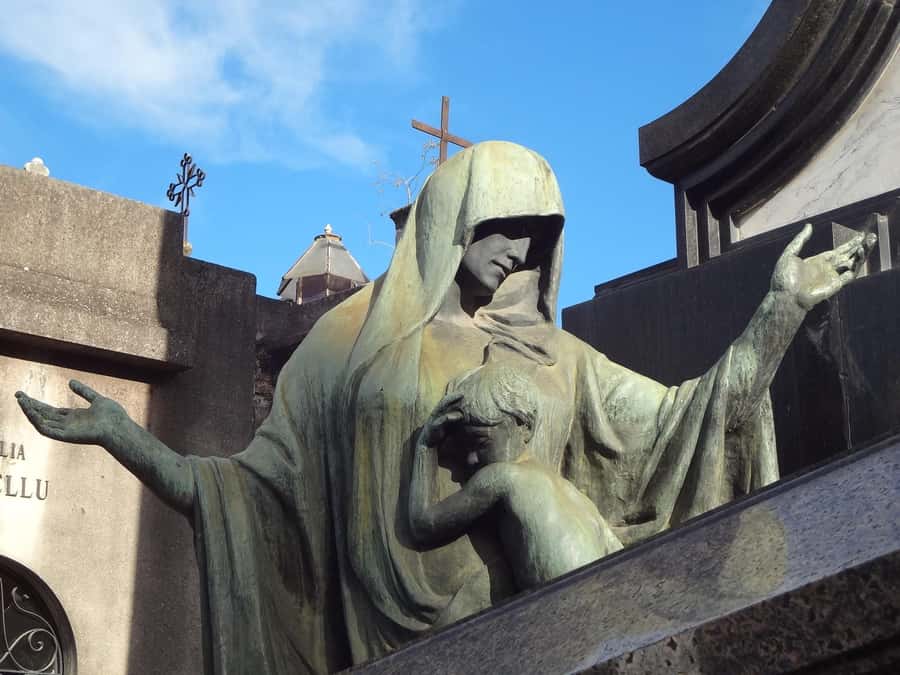
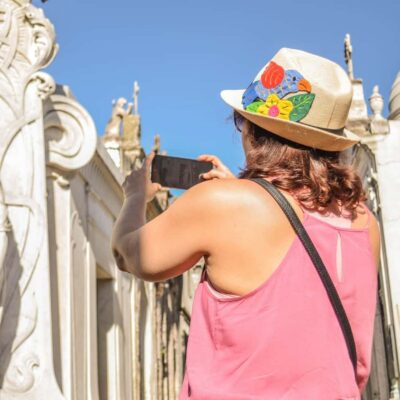
The cemetery is treated as a city of the dead, but not in a spooky or sensational way. The guide uses it as a mirror of Argentine society. Who receives a monumental tomb? Whose name remains visible? Which stories receive attention, and which fade away?
This approach gives the cemetery more meaning than a hunt for famous names. You will learn about people buried there, but the point is also to understand how families used burial architecture to preserve status and memory.
The scale and decoration reflect Argentina’s Gilded Age in concentrated form. Tombs can function like miniature residences or public statements. They show how the living wanted the dead to be remembered, and how families used memory to keep social importance alive.
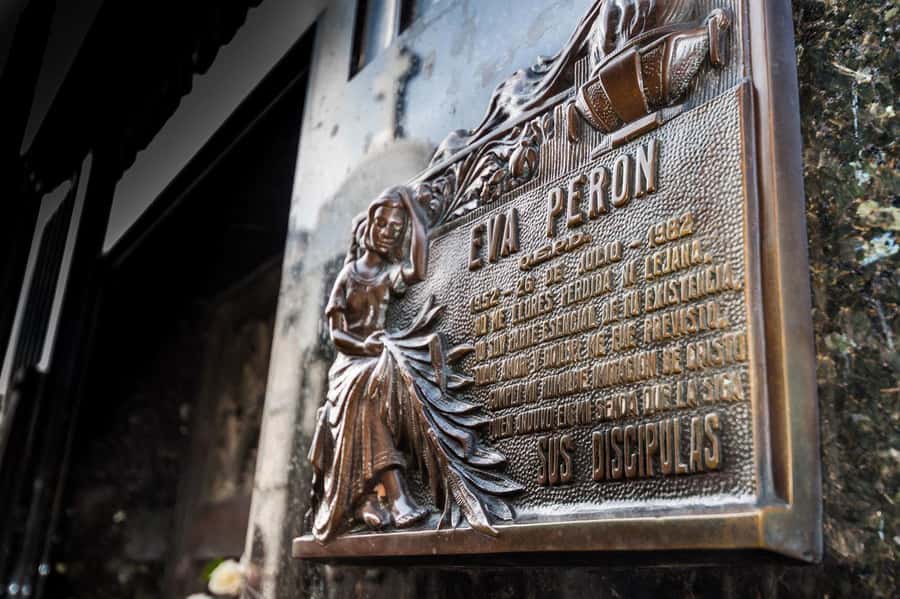
One famous figure may draw your attention, but I would resist making the visit only about celebrity graves. The stronger experience comes from comparing different tombs and asking what their design says about family position, public reputation, and national identity.
Because the cemetery section is 45 minutes, it is substantial but not exhaustive. You will get a guided introduction and interpretation, not every corner of the site. If the cemetery is your main reason for booking, check the start time and allow yourself extra time afterward if your schedule permits, though the tour itself lasts 150 minutes.
What the guide adds to the walk
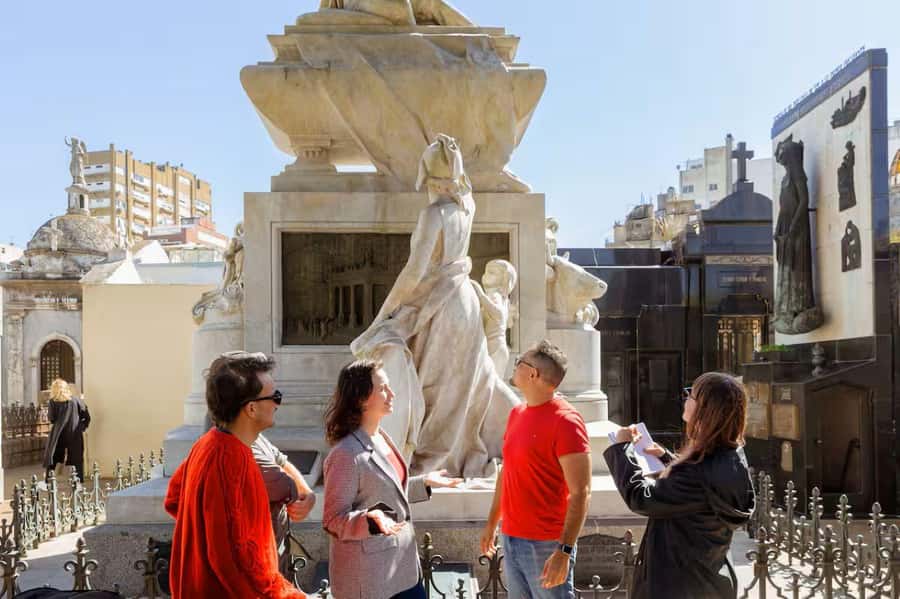
The guide is central to the value here. This is not a self-guided route with a few memorized facts. The activity is led by a university-degree guide, and the format encourages questions and discussion.
Nicolas is repeatedly described in the supplied material as an historian with strong command of lesser-known stories, humor, and the ability to answer individual questions. One account also notes that he allowed the group to shape the length and focus of the walk. Ignacio is singled out as an excellent guide who helped make Buenos Aires easier to understand.
Those names may not indicate which guide you will receive, so treat them as examples rather than a guarantee. The important point is the expected style: informed, personable, and open to follow-up questions.
The language options are Spanish, English, and French. That makes the tour useful for a broad range of visitors, especially if you want to discuss complex political or social subjects in a language you handle comfortably.
Private and small-group options are available. I would choose a smaller format if you want to ask about family names, architecture, Argentina’s economic past, or the meaning of specific cemetery monuments. A larger group may still work, but it gives you less room to steer the conversation.
Is $34 a fair price?
At $34 per person, the price is fair for a 150-minute guided walk that combines central Buenos Aires, Recoleta architecture, and the cemetery. You are paying for interpretation and a connected story, not simply access to a site.
The value improves if you appreciate guides who explain causes and consequences. You receive a walking route, a university-trained guide, several substantial stops, a short break, and roughly 45 minutes devoted to the cemetery.
The separate cemetery ticket slightly reduces the all-in value, but the optional entry also gives you choice. You do not have to pay for admission if you only want the exterior route and discussion. If you do enter, include that extra cost in your budget.
I would not book this expecting a private car, long indoor visits, or a relaxed café-style pace. The strength is the walking and conversation. Its price makes less sense for someone who wants only a quick introduction to Recoleta Cemetery.
Who should book this experience?
I recommend it to you if you want to understand how Buenos Aires was built, not just photograph its most famous buildings. It is particularly suited to people interested in architecture, political history, social class, urban development, or cemetery traditions.
It also fits a first visit to Buenos Aires because the route provides a framework for later independent exploring. After hearing how elite neighborhoods developed, you may look at the city’s grand façades with more curiosity.
The tour is a good match for solo visitors and couples who like conversation. Private or small-group availability makes it easier to ask direct questions and follow an unexpected topic.
Families with older children may also find it useful, provided everyone is comfortable with a walking tour focused on history and social inequality. Younger children may find the discussion of architecture and burial customs slow.
The route is wheelchair accessible, which is an important practical advantage. Still, ask for current route details when booking if you have specific mobility needs, since the experience takes place across city streets and a cemetery.
Who may want a different Recoleta visit?
You may prefer another option if you want a short, celebrity-focused cemetery tour. This experience spends substantial time on the city before reaching the graves, and its purpose is to connect Recoleta to Argentina’s larger story.
You may also want a different plan if you dislike open-ended discussion. The guide can adapt the focus, and the experience is designed to be interactive. That is a strength for curious visitors, but it may feel less predictable than a tightly scripted walk.
Finally, check the timing if you are visiting during very warm weather. The route includes outdoor walking, and the break is only five minutes. Bring water and wear comfortable shoes.
My call: book it for the connections
I would book this tour if you want Recoleta to make sense beyond its grand façades and famous tombs. The best feature is the connection between places: the plaza, tower, mansions, embassy, club, palace, and cemetery all become parts of one story about ambition and power.
Choose it especially if you value a guide who can answer questions and add side stories. Nicolas and Ignacio are names associated with the experience, but guide assignments can vary. Choose the cemetery entry option if you want to examine the tombs from inside, and budget for the separate ticket.
Skip it if you want a fast photo walk or a tour devoted only to famous burials. For curious visitors who want to understand Buenos Aires’ elite past and its uncertain future, $34 buys a thoughtful and well-shaped introduction.
FAQ
How long does the Recoleta and Cemetery tour last?
The experience lasts 150 minutes, or two and a half hours.
Where does the tour begin?
The meeting point is the Rapa Nui store.
Where does the tour end?
The route ends at Recoleta Cemetery.
Is the cemetery entrance ticket included?
No. Cemetery admission is separate and optional. You can buy a ticket at the entrance or online in advance.
What languages are available?
The tour is available in Spanish, English, and French.
Is the tour wheelchair accessible?
Yes, the activity is listed as wheelchair accessible.
Can I book a private or small-group experience?
Yes. Private and small-group options are available.
Just added around Buenos Aires
- Unique Tigre and Delta Private Day Cruise Navegation★ 5.0 · 3 reviews
- Buenos Aires: Customizable City Tour in Polish★ 4.7 · 3 reviews
- Velez Sarsfield Football Match★ 5.0 · 3 reviews
- Tango Show at: MichelAngelo★ 4.5 · 3 reviews
- Enjoy a Rural Experience in a Vineyard near Buenos Aires★ 4.7 · 3 reviews
- Guided tour Boca Juniors Museum & Stadium + Caminito★ 3.3 · 3 reviews
- From Colonialism to Eclecticism, Buenos Aires arquitectonica★ 5.0 · 3 reviews
- Buenos Aires: Private City Tour by Car with Hotel or Pickup★ 5.0 · 3 reviews
Recoleta Cemetery Tours, compared.
Buenos Aires Bike Tour: North Districts, Recoleta and Palermo
Read our review →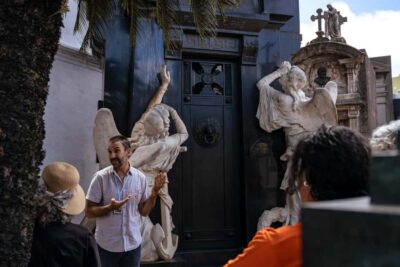
Recoleta Cemetery – Small Group Tour of History & Secrets
Read our review →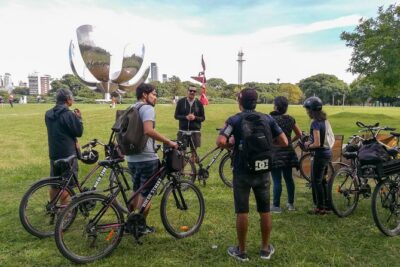
Cultural Experience by Bike around Palermo and Recoleta Max 6 ppl
Read our review →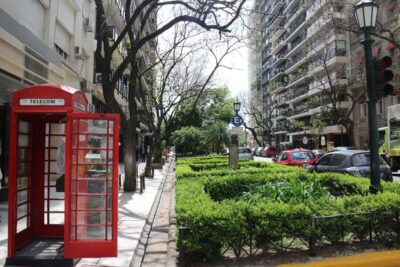
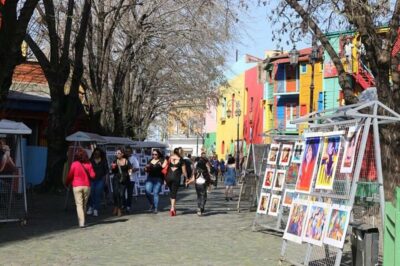
Full Day City Tour Buenos Aires, Recoleta Cemetery and Tigre
Read our review →
Browse the lists this tour appears in