
Reviewed · 1-DAY TOURS
Tour Buenos Aires in one day on Electric Scooters
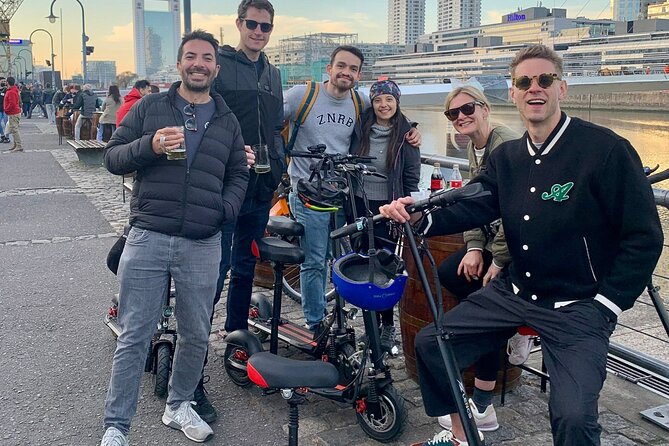
Buenos Aires reveals itself quickly from an electric scooter. In about five hours, you cover 16 kilometers, linking the Obelisco, Puerto Madero, Recoleta, Palermo, and several major monuments without spending the day underground or walking long blocks. I especially like the mix of fast city sightseeing and small food tastings: mate with alfajor, then fernet with chipa. The guides, including Rita, Mike, and Miguel, keep the history lively and explain the Argentine habits behind the sights.
I also like the small group limit of nine, which gives you room to ask questions and get help with the scooter. The main consideration is simple: you need to ride a bicycle comfortably, and a scooter may not suit anyone with balance or knee problems. At $89 per person, this is not a bargain transport ride, but it can be good value if you want a broad first look at Buenos Aires with a guide and several included tastings.
In This Review
- Key points to know before you book
- Why an electric scooter works well in Buenos Aires
- Starting near the Teatro Colón at 10 a.m.
- Plaza Estado del Vaticano and the first taste of Argentina
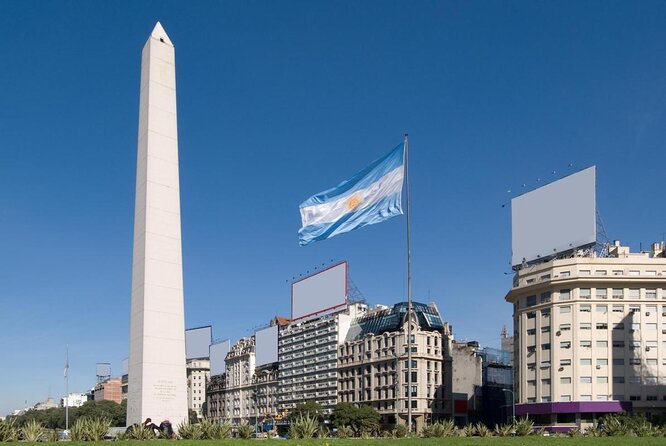
- The Obelisco and Buenos Aires in full public view
- The pink question, Banco Nación, and Argentina’s economic memory
- CCK, Luna Park, and the riverfront route
- Plaza San Martín and the fernet and chipa pairing
- UBA, Floralis Genérica, and the city’s modern side
- Recoleta Cemetery and the Basilica del Pilar
- Finishing in Palermo with choripán at @Chori
- Is $89 a fair price?
- Who should book this ride?
- Should you book the Buenos Aires e-scooter tour?
- FAQ
- How long does the electric-scooter tour last?
- How far does the route travel?
- Where does the tour start?
- Where does the tour end?
- What food and drinks are included?
- Are choripán and beer included in the price?
- Is safety equipment provided?
- Can I cancel for a full refund?
Key points to know before you book
- Sixteen kilometers in five hours: You see a wide sweep of central Buenos Aires, Puerto Madero, Recoleta, and Palermo in one outing.
- Three food moments: Mate and alfajor are included, as are fernet and chipa. Choripán and beer at the finish cost extra.
- Small groups of up to nine: You get a more personal outing than on a large bus tour.
- A practical first-day choice: The route covers major landmarks and gives you local ideas for the rest of your stay.
- You must already ride a bicycle: The tour is not recommended if you are unsure on two wheels.
- Weather matters: Poor weather can lead to a new date or a full refund.
Why an electric scooter works well in Buenos Aires
Buenos Aires is a city of grand avenues, separated districts, leafy squares, and attractions spread over a large area. A walking tour gives you more street-level detail, but it cannot easily connect the Obelisco, Plaza San Martín, Floralis Genérica, Recoleta Cemetery, Puerto Madero, and Palermo in one morning and afternoon.
This electric-scooter route solves that problem. You still stop often enough to hear a story and look around, but you do not spend most of your time crossing wide streets on foot. The ride covers about 16 kilometers, so you get a useful sense of the city’s shape as well as its famous sights.
The tone is informal. Along the way, you hear about soccer, barbecue, protests, attitudes toward authority, and the colorful ways Argentines express themselves. That cultural layer matters. A monument can be impressive, but understanding why soccer and asado carry such weight makes your later time in Argentina more rewarding.
The scooters also add a playful element. You will need to pay attention to traffic and your own balance, but the ride is designed as a relaxed sightseeing experience rather than a race. At the start, the guides explain how the scooters work and give you time to practice. That introduction is important, especially if you have not used an electric scooter before.
A few more Buenos Aires outings worth weighing up
- Electric Scooter Tour: North Buenos Aires
★ 5.0 · 67 reviews - Buenos Aires Night Tour on Electric Scooter
★ 5.0 · 33 reviews
Starting near the Teatro Colón at 10 a.m.
The meeting point is at Tres Sargentos 463, with a 10 a.m. start. The tour begins near public transportation, which makes the morning meeting easier to reach, though you should allow time to arrive, check in, and get comfortable with the scooter before the group moves out.
The guides have received strong praise for clear instruction and friendly explanations. Rita is noted for excellent English and a warm manner. Mike is praised for mixing useful history with a light tone that works for families, including a 10-year-old. Miguel is also described as attentive and pleasant.
The group can have as many as nine people. That is small enough for the guide to watch the riders and answer questions, but the experience still depends on everyone being comfortable on a scooter. If you are bringing a child or an older family member, think honestly about balance, coordination, and the ability to ride for several hours.
You receive a helmet and reflective belt. Wear practical clothes and shoes that make it easy to stand, turn, and control the scooter. The tour requires good weather, so keep some flexibility in your schedule if rain or poor conditions are forecast.
Plaza Estado del Vaticano and the first taste of Argentina
The first main stop is Plaza Estado del Vaticano. The surrounding area introduces the city’s formal center and sets up the tour’s larger theme: Buenos Aires is best understood through both its buildings and its habits.
The first food experience pairs mate with an alfajor. Mate is a traditional yerba mate infusion, while an alfajor is a sweet cookie filled with dulce de leche. This is a useful introduction because food here is not treated as a side note. It is part of how people socialize, pause during the day, and welcome one another.
You may hear the guides discuss Argentine cuisine and its origins as you move through the route. The portions are tasting portions, not lunch. That is helpful early in the day because you get a taste without slowing the ride or replacing the final meal.
The Obelisco and Buenos Aires in full public view
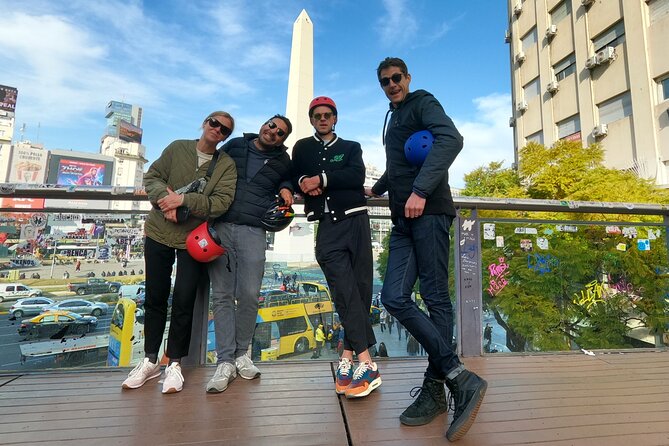
The Obelisco is one of the city’s great reference points. You stop for about 10 minutes to hear why this monument matters and to see the avenue around it.
The tour calls it a great witness, which is a fitting idea. The Obelisco has watched public celebrations, demonstrations, and major city events unfold around it. You are not simply stopping for a photograph. The guide uses the monument to explain how Buenos Aires gathers its civic life in public spaces.
A short stop also means you should not expect an extended architectural lecture. This is a sightseeing route with many stops, so the explanations are focused. If you like moving through a city and collecting context along the way, the pace works well. If you prefer one site explored in great depth, a dedicated walking tour may suit you better.
A different sort of afternoon, still in Buenos Aires:
- Buenos Aires Hop-On Hop-Off Bus, Free Walking Tours & Discounts
★ 4.5 · 2,218 reviews - Buenos Aires: Piazzolla Tango Show with Optional Dinner
★ 4.4 · 2,122 reviews - Buenos Aires: City Highlights Guided Tour with Transfer
★ 4.7 · 1,946 reviews - Buenos Aires: Hop-On Hop-Off City Bus Tour
★ 4.2 · 1,855 reviews
The pink question, Banco Nación, and Argentina’s economic memory
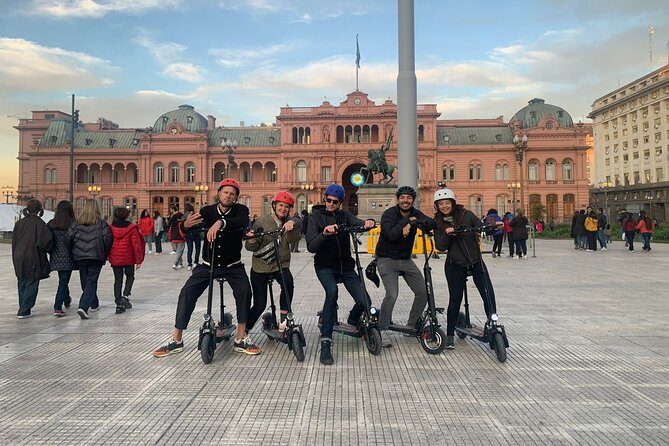
The next central stops connect politics, architecture, and national memory. The itinerary raises the question of why a major building is pink, then moves to Banco de la Nación Argentina and the story of El Corralito.
The color question gives the guide a chance to explain a familiar Buenos Aires symbol rather than simply point at it. At Banco Nación, the subject becomes more serious. El Corralito refers to the restrictions placed on bank withdrawals during Argentina’s 2001 financial crisis. Even if economics is not your favorite travel topic, this is valuable context for understanding why money, government decisions, and public trust remain important subjects in Argentina.
You spend about 10 minutes at each of these stops. The short format keeps the day moving, but you may want to ask follow-up questions while riding or during the longer food breaks.
CCK, Luna Park, and the riverfront route
The Centro Cultural Kirchner, or CCK, is presented as a place at the forefront of culture. Its inclusion gives the route a modern, public-facing counterpoint to the historic monuments.
Nearby Luna Park brings a different story, centered on records and major events. Together, these stops show how Buenos Aires uses large public buildings for culture, sport, entertainment, and civic life. You get a sense of the city’s scale without having to enter each building.
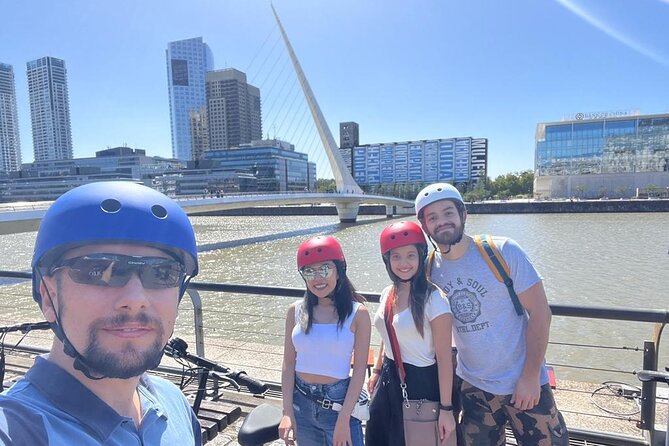
The route then reaches Puerto Madero and the Puente de la Mujer. This is one of the most visually memorable sections of the ride. The bridge, designed by Santiago Calatrava, is shaped to suggest a couple dancing tango. The guide encourages you to think about what the design is trying to express rather than treating it as just another photo stop.
The bridge stop lasts about 25 minutes and includes the mate and alfajor tasting in the listed itinerary. Having time to pause here makes the food experience more pleasant. You can look at the bridge, enjoy the dulce de leche, and ask about the Argentine habit of sharing mate.
Plaza San Martín and the fernet and chipa pairing
From Puerto Madero, the route moves toward Torre Monumental, also called the Tower of the English. You hear why the name has changed and what the monument represents. The stop is short, around 10 minutes, so it works as a compact piece of local background rather than a full visit.
The Monumento a los Caídos en Malvinas introduces the Falklands War. The itinerary uses a strongly patriotic description, so expect the guide to present the subject from an Argentine point of view. The topic can be politically and emotionally charged, making it a useful reminder that national memory differs from country to country.
At Plaza General San Martín, the focus turns to protests. Argentina has a strong tradition of public demonstrations, and the guide explains why the country ranks highly for protest activity according to the International Labour Organization. This is one of the more useful cultural discussions on the tour because it links what you see on city streets with the country’s political life.
The second tasting here is fernet with chipa. Fernet is an herbal amaro, usually associated with Fernet-Branca in Argentina. Chipa is a small cheese bread made with cassava and cheese. The pairing gives you two very Argentine tastes, one bitter and herbal, the other warm and savory. The fernet may be an acquired taste, so take it slowly.
UBA, Floralis Genérica, and the city’s modern side
The route continues to the Faculty of Law at the University of Buenos Aires. The discussion centers on free, quality education and access for everyone. Even a short stop here adds an important social subject to the tour. You are seeing more than façades. You are hearing how Argentines think about public institutions and opportunity.
At Floralis Genérica, a large metal flower brings the conversation to modernity and resilience. Its moving petals are a familiar Buenos Aires image, and the stop offers a change from the formal monuments and historic buildings earlier in the day.
These stops are spaced through the longer ride, so expect a blend of brief talks, scooter travel, and photo opportunities. The route is active, but it is not a nonstop ride. You regularly get off, listen, and reset before moving on.
Recoleta Cemetery and the Basilica del Pilar
Recoleta Cemetery is one of Buenos Aires’s best-known sights, famous for elaborate family mausoleums and the people buried there. The tour frames it as luxury even in death, which captures the striking contrast between a cemetery and the ornate structures inside it.
You spend about 15 minutes here. That is enough for an introduction and a look around, but not enough for a detailed cemetery exploration. If you want to study individual tombs or learn more about particular figures, plan a separate visit.
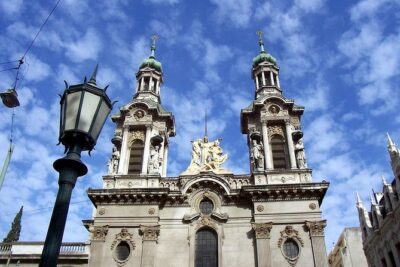
The nearby Basilica de Nuestra Señora del Pilar shifts the subject to Argentine faith, the Pope, and the national habit of linking religion with soccer through the nickname D10S. The stop gives the guide room to explain how spiritual and popular culture overlap in Argentina.
The Recoleta section is one of the strongest parts of the route for first-time visitors because it combines famous sights with subjects that explain Argentine identity. It also gives you a break from the more heavily trafficked central avenues.
Finishing in Palermo with choripán at @Chori
The tour ends at Feria Honduras Plaza Serrano in Palermo. Plaza Serrano is associated with a bohemian side of Buenos Aires, with writers, painters, philosophers, and psychoanalysts tied to the area’s cultural life.
The final stop lasts about an hour, giving you more breathing room than most earlier stops. You visit @Chori, a choripanería near the plaza, where choripán with chimichurri and Argentine craft beer are available.
This food is not included in the $89 price. That distinction matters when comparing the tour with other food-and-sightseeing outings. Your included tastings are mate with alfajor and fernet with chipa. You pay separately for the choripán and beer at the end.
I like the finish because it gives the day a proper Argentine meal rather than ending beside a monument. Choripán is grilled chorizo in bread, usually dressed with chimichurri. It is casual, filling, and closely tied to the country’s barbecue culture. You can continue exploring Palermo after the tour, or use the meal as a relaxed endpoint.
Is $89 a fair price?
At $89 per person, the tour costs more than a basic walking route or a self-guided visit to the major squares. The price includes the scooter, safety equipment, a five-hour guide-led route, and several tastings. You are also paying for the ability to cover a large section of Buenos Aires in one day.
The value is strongest if you have limited time or are visiting early in your stay. The guide can help you get oriented, explain local customs, and offer practical ideas for the rest of your visit. The small group size adds value, especially if you want to ask about food, soccer, history, or neighborhoods.
The value is weaker if you already know Buenos Aires, dislike riding in city traffic, or want long visits inside museums and monuments. The route takes you to many sites, but most stops last 10 to 15 minutes. Think of it as a broad city introduction, not a series of full site visits.
Who should book this ride?
I would choose this tour for a first visit, especially if you enjoy active sightseeing and want to see several districts in one day. It also works well for families with older children who can ride safely and stay focused in an urban setting.
The tour suits you if you like learning through stories and food rather than through long formal lectures. The guides are praised for friendly instruction, clear English from Rita, and an easy style that can keep a family group interested.
You should think twice if you do not know how to ride a bicycle. The tour specifically says it is not recommended for people in that situation. One participant with replaced knees had difficulty during the practice session, while her husband continued and enjoyed the ride. That experience points to a real issue: balance, leg comfort, and confidence matter more than the scooter’s motor.
Free cancellation is available up to 24 hours before the start time. Changes or cancellations inside that window are not accepted for a refund. The tour can also be canceled because of poor weather or because the minimum group size is not met, with a different date or full refund offered in those cases.
Should you book the Buenos Aires e-scooter tour?
Book it if you want an efficient, sociable introduction to Buenos Aires that covers far more ground than a walking tour. The combination of the Obelisco, Puerto Madero, Recoleta, Palermo, local stories, mate, alfajor, fernet, and chipa gives you a useful first-day framework.
Skip it if you need a slow pace, have trouble balancing, or prefer spending an hour inside each major attraction. For the right rider, though, $89 buys a full half-day of movement, context, and local flavor, ending with an optional choripán in Palermo.
FAQ
How long does the electric-scooter tour last?
The tour lasts approximately five hours, beginning at 10 a.m.
How far does the route travel?
The route covers about 16 kilometers through Buenos Aires.
Where does the tour start?
The meeting point is Tres Sargentos 463, C1054ABC, Buenos Aires, Argentina.
Where does the tour end?
The experience ends in Palermo at @Chori near Plaza Serrano, on Serrano, C1414, Buenos Aires.
What food and drinks are included?
The tour includes a yerba mate infusion with a chocolate alfajor filled with dulce de leche, plus Fernet-Branca with chipa.
Are choripán and beer included in the price?
No. Choripán and craft beer at @Chori are optional and are not included.
Is safety equipment provided?
Yes. A helmet and reflective belt are provided, along with the electric scooter.
Can I cancel for a full refund?
Yes, if you cancel at least 24 hours before the experience start time. Poor weather or failure to meet the minimum number of participants can also lead to an alternate date or full refund.
Just added around Buenos Aires
- Unique Tigre and Delta Private Day Cruise Navegation★ 5.0 · 3 reviews
- Buenos Aires: Customizable City Tour in Polish★ 4.7 · 3 reviews
- Velez Sarsfield Football Match★ 5.0 · 3 reviews
- Tango Show at: MichelAngelo★ 4.5 · 3 reviews
- From Colonialism to Eclecticism, Buenos Aires arquitectonica★ 5.0 · 3 reviews
- Enjoy a Rural Experience in a Vineyard near Buenos Aires★ 4.7 · 3 reviews
- Guided tour Boca Juniors Museum & Stadium + Caminito★ 3.3 · 3 reviews
- Buenos Aires: Montserrat, San Telmo, La Boca, and Puerto …★ 5.0 · 3 reviews
1-Day Tours, compared.

Gaucho Day Trip from Buenos Aires: Santa Susana Ranch
Read our review →
Gaucho Experience: A Day Trip to Don Silvano Ranch
Read our review →
Iguazu Falls Private Day Trip from Buenos Aires with Airfare
Read our review →

Iguazu Falls Private Day Trip from Buenos Aires
Read our review →
Browse the lists this tour appears in