
Reviewed · BUENOS AIRES
Buenos Aires for curious people
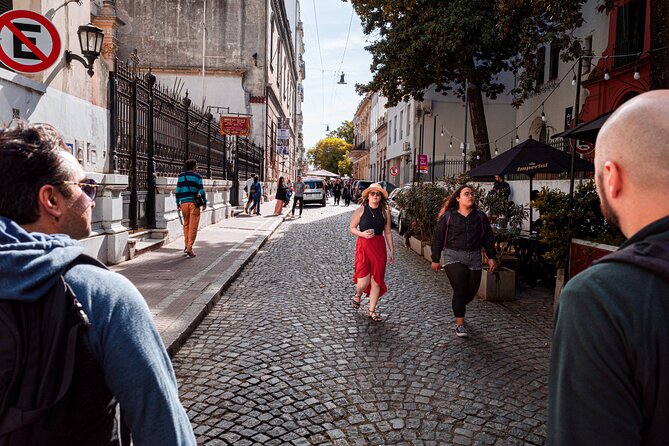
Buenos Aires for Curious People takes you beyond the standard postcard route. In two to three hours, you walk from old San Telmo through sites tied to Argentina’s founding, immigration, dictatorship, religion, food, and politics, ending near Casa Rosada. I like the small group of no more than eight and the way the guides connect buildings to the larger story of Argentina.
I also like that the route includes places many city tours skip, such as the Memory Walk and the Swedish church, while still covering Plaza Dorrego, Mercado San Telmo, Puente de la Mujer, and Casa Rosada. The main consideration is pace: this is a serious walking tour, and one person found it less satisfying when an elderly couple needed frequent stops. The subject matter can also be disturbing.
In This Review
- Key points at a glance
- Why this is not a routine Buenos Aires sightseeing walk
- Starting at Bar Britanico and Parque Lezama
- A Swedish church and a difficult memory site
- San Pedro González Telmo and the old parish quarter
- Plaza Dorrego and Mercado San Telmo
- Crossing to Puente de la Mujer
- Finishing at Casa Rosada and Plaza de Mayo
- What the $33 price gets you
- Pace, language, and group size
- Who should book this Buenos Aires walk?
- Booking and weather notes
- Should you book Buenos Aires for Curious People?
- FAQ
- How long does the tour last?
- How many people can join the tour?
- Where does the tour start?
- Where does the tour end?
- Is Casa Rosada admission included?
- What places does the route visit?
- Can service animals participate?
- What happens if the tour is canceled because of bad weather?
Key points at a glance
- A history-first walk: Expect political, social, architectural, and cultural context, not just photo stops.
- San Telmo with more depth: Parque Lezama, a colonial church, Plaza Dorrego, and Mercado San Telmo form the heart of the route.
- Small-group format: With a maximum of eight people, you can ask questions and hear the guide clearly.
- Guides with different strengths: Nicolás, also called Nico, is described as a Buenos Aires local and history museum employee. Ignacio is a history professor, while Sophia and Santiago have also led the walk.
- A sober look at Argentina: The Memory Walk concerns a former detention, torture, and extermination center from the 1976 to 1979 dictatorship.
- Good value for curious visitors: At $33 per person, the tour gives you several hours of guided walking and a useful framework for exploring the city on your own.
Why this is not a routine Buenos Aires sightseeing walk
Many first visits to Buenos Aires focus on grand avenues, tango, cafés, and famous cemeteries. This tour takes a different route. It uses San Telmo and the old city as a classroom, then links local places to the country’s larger political and social story.
I like this approach because Buenos Aires makes more sense once you understand how its neighborhoods, buildings, immigrants, presidents, churches, markets, and periods of violence fit together. You are not simply told that a building is old. You hear why it matters and how it connects to the city around it.
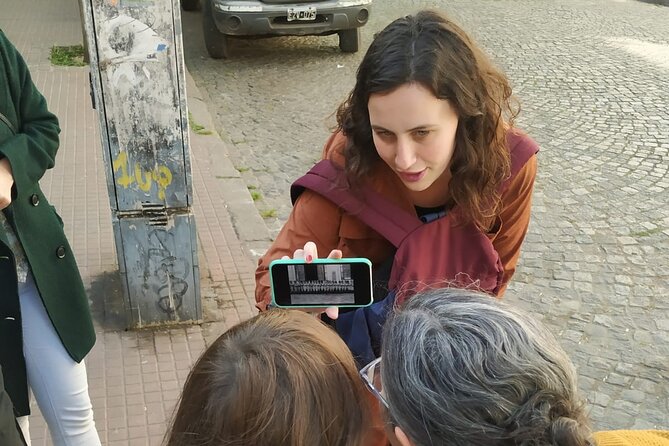
The guides also leave room for questions. Nicolás, often called Nico, has been described as a Buenos Aires local whose family has lived in the city for at least three generations. He has a background with a history museum and brings maps, old photographs, architecture, politics, and personal experience into the conversation.
Ignacio brings a more academic angle. He is described as a history professor who explains difficult subjects clearly and gives the tour a strong factual base. Sophia and Santiago have also led tours, so the exact personality and style will depend on your guide. The common thread is a focus on explanation rather than quick snapshots.
That makes this a strong choice if you want to understand Argentina, not just photograph it. If you prefer a brisk walk with only short facts at each stop, this may feel too serious or loosely structured.
Other Buenos Aires outings people book alongside this one:
- Buenos Aires Hop-On Hop-Off Bus, Free Walking Tours & Discounts
★ 4.5 · 2,218 reviews - Buenos Aires: Piazzolla Tango Show with Optional Dinner
★ 4.4 · 2,122 reviews - Buenos Aires: City Highlights Guided Tour with Transfer
★ 4.7 · 1,946 reviews
Starting at Bar Britanico and Parque Lezama
The listed meeting point is Bar Britanico, at Brasil 399, close to Parque Lezama. The bar is described as part of old Buenos Aires, and it gives the walk an immediate neighborhood feel rather than a hotel-lobby start.
Parque Lezama is the main opening point. The park is tied to the first fort established in Buenos Aires in 1536, giving the guide a useful place to discuss the city’s early beginnings. This is not just a patch of greenery on the route. It helps explain why this part of the city matters and how the old settlement developed.
You spend about 30 minutes here. That is enough time for the guide to set up the story without rushing through it. Maps and old photographs may be part of the explanation, depending on your guide.
Pay attention to the meeting instructions. The tour information names Bar Britanico as the start and Parque Lezama as the first substantial stop, so confirm the exact meeting point and timing when you book. Both are in the same general area, but you will want to begin the walk without confusion.
A Swedish church and a difficult memory site
The stop at Club Sueco Restaurante introduces a less expected part of Buenos Aires. The Swedish church dates from 1944, and the stop lasts about 10 minutes. It is a small detail, but that is precisely the point. The city’s story is not only Spanish colonial buildings and Argentine political icons. Immigration and international communities also shaped its streets.
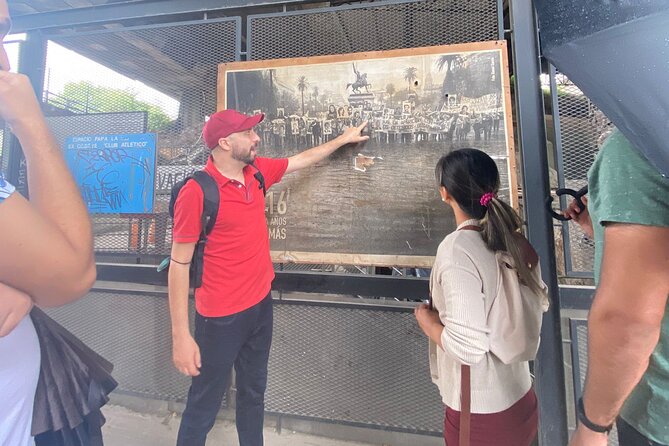
Next comes the Memory Walk, which takes about 20 minutes. This site was a clandestine center for detention, torture, and extermination between 1976 and 1979 during Argentina’s military dictatorship. The subject is painful, and the guide’s role is important here. Expect historical explanation rather than a light sightseeing stop.
This section can change the tone of the afternoon. It asks you to look at Buenos Aires with more care and to understand that the city’s past includes recent trauma, not only colonial charm and elegant architecture.
I would not choose this tour if you want an entirely cheerful introduction to Buenos Aires. I would choose it if you believe a city visit should include difficult chapters as well as attractive ones.
San Pedro González Telmo and the old parish quarter
The Parroquia de San Pedro González Telmo is a colonial Catholic church, with about 15 minutes allocated to the stop. It adds an architectural and religious layer to the route and helps explain the identity of San Telmo.
The church is especially useful in the sequence of the tour. After the early settlement story and the darker modern history at the Memory Walk, you return to the older structures that shaped daily life in the neighborhood.
Do not expect a long church visit. The schedule allows a short stop, so the value comes from the guide’s explanation and the connection to the surrounding district. If you want extended time inside religious buildings, this will feel brief.
A different sort of afternoon, still in Buenos Aires:
- Buenos Aires: Hop-On Hop-Off City Bus Tour
★ 4.2 · 1,855 reviews - Buenos Aires Hop-On Hop-Off Bus and Exclusive Benefits
★ 4.4 · 1,714 reviews - Buenos Aires: La Boca Guided Walking Tour in English
★ 4.8 · 1,587 reviews - Buenos Aires: La Recoleta Cemetery Guided Tour in English
★ 4.8 · 1,359 reviews
Plaza Dorrego and Mercado San Telmo
Plaza Dorrego is San Telmo’s main square and receives about 15 minutes. This is one of the most recognizable parts of the neighborhood, but the tour treats it as more than a photo backdrop. The guide can place the square within the story of old Buenos Aires and explain how public spaces shaped local life.
The route then moves to Mercado San Telmo, with about 30 minutes. The market was built by Italian immigrants, giving you a direct link between food, migration, architecture, and neighborhood identity.
This is one of the most practical parts of the walk. You get a chance to look around, notice the local character, and possibly buy a snack. The tour has included planned breaks for food and bathroom stops, which matters on a walk lasting several hours.
The market is also where the tour’s mix of history and daily life works best. You are not only hearing about immigration in the abstract. You are standing in a place shaped by immigrant communities and still connected to eating, shopping, and social life.
If you want to linger over food or browse every stall, the 30-minute stop may not be enough. Treat it as an introduction, then return later if the market catches your interest.
Crossing to Puente de la Mujer
Puente de la Mujer is the modern contrast to the older sites. The pedestrian bridge was designed by Spanish architect and structural engineer Santiago Calatrava, and the stop lasts about 15 minutes.
Its inclusion shows that the tour is not locked in the colonial past. Buenos Aires is a city of old churches, markets, political buildings, and newer public works. The bridge also gives the route a change of scale and style after the close streets of San Telmo.
The itinerary places this stop before Casa Rosada, so the final stretch shifts toward the central political core of the city. You may find the contrast useful: old neighborhood history on one side, contemporary design and national government on the other.
Finishing at Casa Rosada and Plaza de Mayo
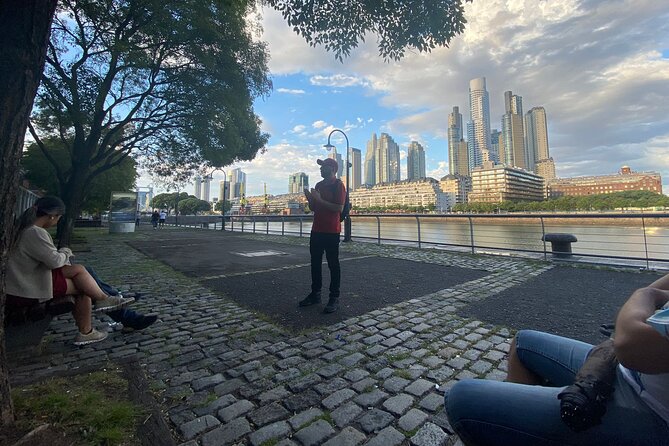
The walk ends at Casa Rosada, the president’s office, at Balcarce 78. About 25 minutes are set aside for the stop. Plaza de Mayo and Casa Rosada are among Buenos Aires’ essential political landmarks, and they give the tour a clear ending.
The listed admission ticket for Casa Rosada is not included. The information does not promise an interior visit, so you should think of this as a guided stop at the presidential building and its setting unless your booking details say otherwise.
This ending is valuable because the earlier subjects lead naturally toward Argentina’s political center. By the time you reach Casa Rosada, you have discussed early settlement, immigration, religion, dictatorship, neighborhood life, architecture, and modern public space.
The tour ends here rather than returning you to Bar Britanico. That is convenient if you want to continue around Plaza de Mayo, but plan your next move from the central endpoint.
What the $33 price gets you
At $33 per person, this is a reasonable price for a two to three-hour small-group walking tour. The group limit of eight is important. You are paying not only for a route, but for the chance to ask questions without competing with a large crowd.
The strongest value comes from the guide’s interpretation. You can walk past Parque Lezama, San Telmo Market, Plaza Dorrego, or Casa Rosada on your own, but you will not automatically understand the links among them. A good guide gives you the background needed to keep exploring after the tour ends.
The tour also offers a useful starting framework for the rest of a Buenos Aires visit. You can ask for suggestions, clarify political or cultural questions, and use the guide’s explanations to make sense of later neighborhoods and museums.
There are limits. Food, drinks, and Casa Rosada admission are not included. This is also not a polished bus tour that covers a large section of the city without much walking. Its value depends on your interest in history and conversation.
Pace, language, and group size
The walk lasts roughly two to three hours, with several stops lasting between 10 and 30 minutes. The distance is not provided, but the format clearly involves sustained walking through city streets, so wear comfortable shoes and be ready to spend the afternoon on foot.
The small group helps with sound and conversation. One guide made a point of ensuring that people could hear and stay comfortable, and planned breaks helped divide the walk into manageable sections. Still, the pace cannot be guaranteed to suit everyone.
The guides have been praised for clear English. Some are also comfortable handling Spanish questions, and one tour arranged an additional guide so one participant could practice Spanish while a partner followed in English. That arrangement may not be standard, so treat it as a possibility rather than a promised feature.
You can expect an informed, conversational style, but the exact balance may vary. One person found the structure somewhat loose, while others valued the open discussion. If you want to ask questions, this is a plus. If you want a tightly timed script, it may require patience.
Who should book this Buenos Aires walk?
I would recommend it most strongly to:
- First-time visitors who want historical context before exploring more of the city
- People interested in Argentine politics, society, and recent history
- Visitors who prefer small groups and direct conversation
- Solo visitors, couples, and families who enjoy asking questions
- Anyone who wants San Telmo beyond its best-known market and square
- People comfortable with a serious stop focused on dictatorship-era abuses
I would think twice if you have limited mobility, dislike walking, or want a light tour centered on food and photographs. Most people can participate, and service animals are allowed, but the experience still requires walking between several sites.
The tour is also best for people who enjoy learning in layers. You will hear about architecture, food, immigration, religion, economics, culture, and politics. That range is a strength, though it can feel like a lot if you want one narrow theme.
Booking and weather notes
Confirmation is provided at booking. The tour operates in small groups with a maximum of eight people, and it is often reserved well ahead of time, with average bookings made about 35 days in advance.
Free cancellation is available if you cancel at least 24 hours before the local start time. Cancellations made later are not refunded, and changes within that period are not accepted.
The experience requires good weather. If poor weather causes cancellation, you are offered another date or a full refund. Since this is an outdoor walking route, check the forecast and bring suitable clothing.
Should you book Buenos Aires for Curious People?
Book it if you want a thoughtful introduction to Buenos Aires that treats the city as a living story rather than a list of famous buildings. The mix of San Telmo streets, immigrant history, colonial religion, dictatorship memory, modern architecture, and national politics gives you a useful view of Argentina’s capital.
The best reason to choose it is the guide-led discussion. Nicolás, Ignacio, Sophia, or Santiago may bring different personalities, but the format gives you room to ask and follow your interests. At $33, the small group and several hours of context offer solid value.
Skip it if you want a fast, easy sightseeing loop or if a serious historical stop would make the afternoon uncomfortable. For curious people who enjoy walking, listening, and thinking about the places they visit, this is one of the more rewarding ways to begin understanding Buenos Aires.
FAQ
How long does the tour last?
The tour lasts approximately two to three hours.
How many people can join the tour?
The maximum group size is eight people.
Where does the tour start?
The listed meeting point is Bar Britanico at Brasil 399 in Buenos Aires. Parque Lezama is the first main stop.
Where does the tour end?
The tour ends at Casa Rosada, at Balcarce 78.
Is Casa Rosada admission included?
No. The admission ticket for Casa Rosada is listed as not included.
What places does the route visit?
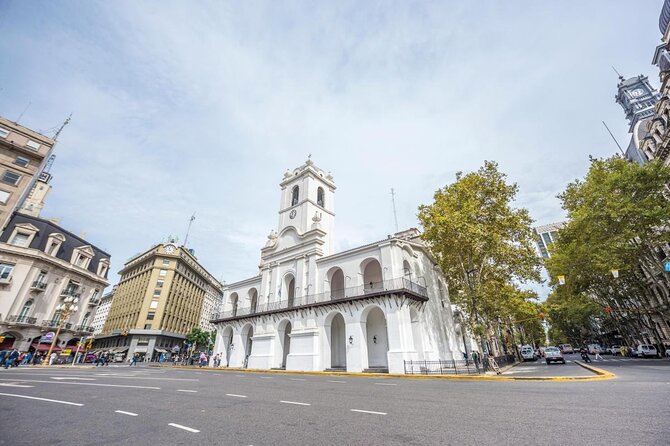
Stops include Bar Britanico, Parque Lezama, Club Sueco Restaurante, the Memory Walk, Parroquia de San Pedro Gonzalez Telmo, Plaza Dorrego, Mercado San Telmo, Puente de la Mujer, and Casa Rosada.
Can service animals participate?
Yes. Service animals are allowed.
What happens if the tour is canceled because of bad weather?
You will be offered a different date or a full refund.
Just added around Buenos Aires
- Unique Tigre and Delta Private Day Cruise Navegation★ 5.0 · 3 reviews
- Buenos Aires: Customizable City Tour in Polish★ 4.7 · 3 reviews
- Tango Show at: MichelAngelo★ 4.5 · 3 reviews
- Velez Sarsfield Football Match★ 5.0 · 3 reviews
- Enjoy a Rural Experience in a Vineyard near Buenos Aires★ 4.7 · 3 reviews
- Guided tour Boca Juniors Museum & Stadium + Caminito★ 3.3 · 3 reviews
- From Colonialism to Eclecticism, Buenos Aires arquitectonica★ 5.0 · 3 reviews
- Buenos Aires: Private City Tour by Car with Hotel or Pickup★ 5.0 · 3 reviews