
Reviewed · BUENOS AIRES COOKING CLASSES
Buenos Aires: Empanadas and Alfajores Guided Cooking Class
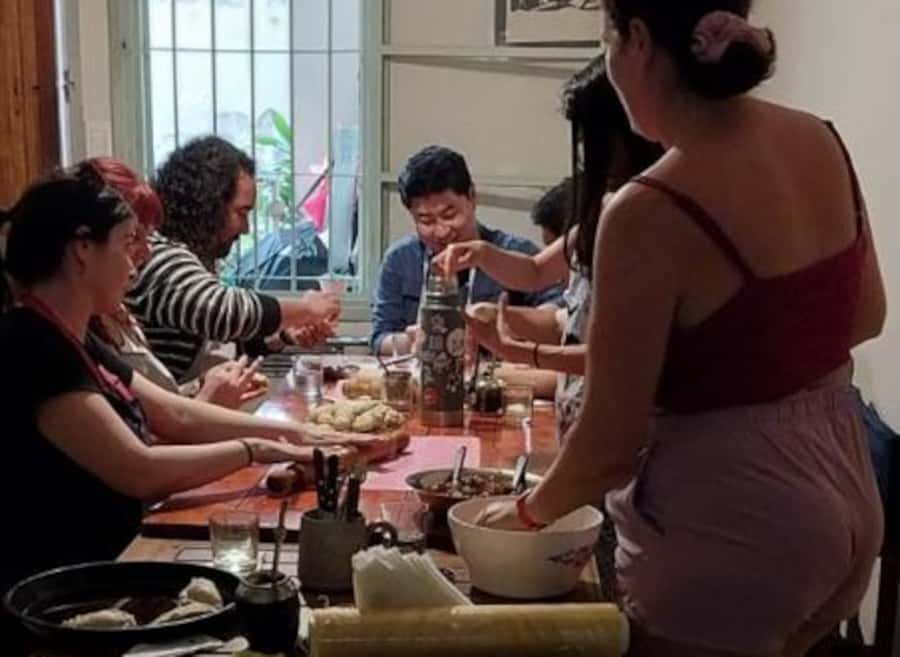
Argentina’s best food lesson may happen around a family table, not in a polished culinary school. In this three-hour San Telmo class, you make empanadas from dough to repulgue, prepare cornstarch alfajores with dulce de leche, and learn the social ritual of mate in a real Argentine home.
I like the small group of up to eight, which gives you room to work with your hands and chat with people from other countries. I also like the generous finish: you eat what you make, with water and mate included, and there is enough food to make this feel like dinner rather than a quick tasting.
The main consideration is that the class can be more social than formally instructional. A few participants wanted clearer step-by-step guidance, especially at a crowded table, and recipes have not always been handed over as directly as expected. Ask for them before leaving.
In This Review
- Key points at a glance
- Walking into an Argentine home in San Telmo
- The class begins with mate and conversation
- Making empanadas from dough to repulgue
- Cornstarch alfajores with a generous dulce de leche center
- Eating together turns a lesson into dinner
- What the $37 price really covers
- Who will enjoy this class most
- Practical details that matter
- My call: book it if food and people matter
- FAQ
- Where does the Buenos Aires cooking class take place?
- How long does the cooking class last?
- What foods will I prepare?
- Is the meal included?
- Is wine included?
- What languages are spoken?
- How many people are in the group?
- Is the activity wheelchair accessible?
Key points at a glance
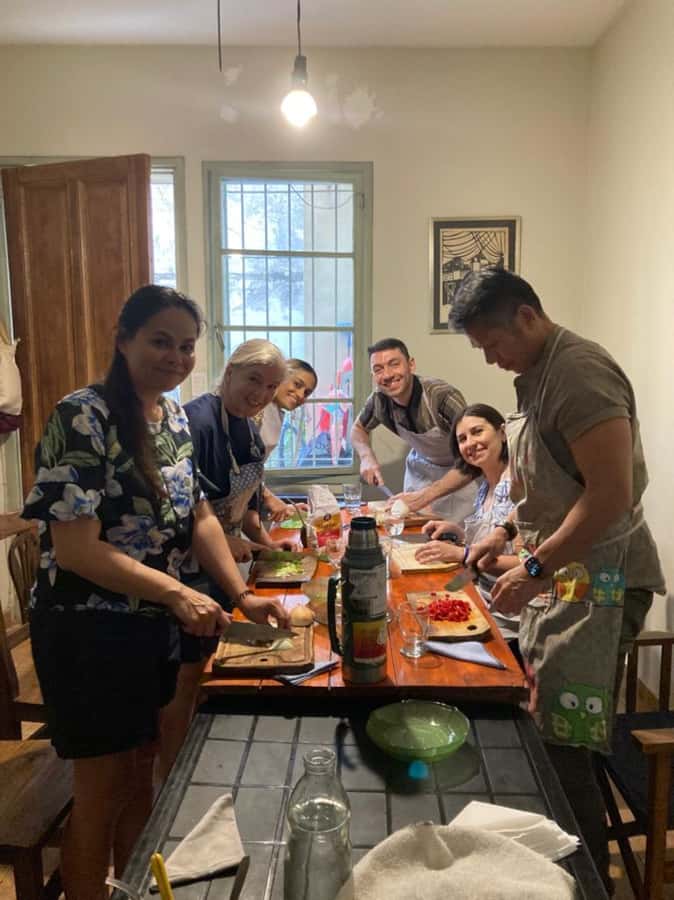
- A real home in San Telmo: You ring the bell at Paseo Colon 1355 and enter a household setting rather than a restaurant kitchen.
- Three Argentine staples: The class covers savory empanadas, dulce de leche alfajores, and traditionally prepared mate.
- Hands-on pastry work: You make dough and fillings, then practice the twisted edge that gives an empanada its classic finish.
- A friendly maximum of eight: The size suits couples, families, solo visitors, and anyone who likes conversation with their cooking.
- A full meal for $37: Ingredients, mate, water, and the food you prepare are included. Wine costs extra.
- English and Portuguese instruction: Hosts such as Thomas and Sophia have guided classes in both languages.
Walking into an Argentine home in San Telmo
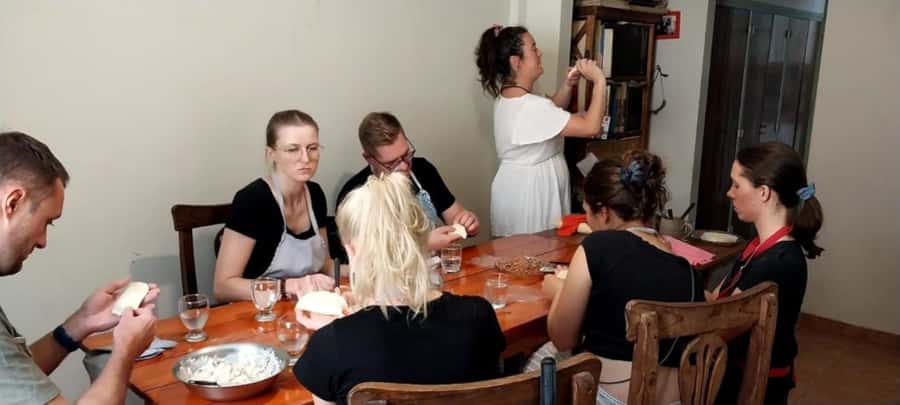
The meeting point is Paseo Colon 1355 in San Telmo. Go to the address at your booked starting time and ring the bell. This is an important detail: you are not looking for a storefront with a large cooking-school sign. The experience takes place in a lived-in home, with the warmth and limits that come with that choice.
That setting is the heart of the class. You get a sense of food as it is prepared for family and friends, not only as a dish presented to paying customers. Past sessions have taken place in a cozy home, including one described as more than 100 years old, with hosts welcoming people from several countries around one table.
The room can feel intimate in the best way. It also means sightlines are not perfect for everyone. If you sit at the end of the table, you may need to lean in or ask the instructor to repeat a demonstration closer to you. This is a small-group home workshop, not a theater-style lesson with a camera and a counter for every participant.
Hosts have included Thomas, Sophia, Maria, and Stella, with the exact team likely varying by date. Thomas is described as warm and funny, while Sophia has been praised for explaining both the recipes and Argentine customs. Maria has hosted participants in her home, and Stella has helped keep the table organized. You may meet one or more of them.
More cooking classes in Buenos Aires:
- Buenos Aires: Empanada & Alfajor Cooking Lesson in Palermo
★ 4.6 · 186 reviews - BA: Empanadas and Alfajores Cooking Experience in Palermo
★ 5.0 · 112 reviews - Argentinian Empanadas Cooking Experience in Palermo, Bs As
★ 4.8 · 50 reviews
The class begins with mate and conversation
Mate is more than a herbal drink. It is part of everyday social life in Argentina, and the class gives you a practical introduction to its preparation and use. You learn the traditional method, handle the ingredients, and share the drink while the cooking gets underway.
This is a smart opening because it gives everyone something to do while getting acquainted. You might be sitting with a family, a couple, or solo participants from several countries. The cooking provides an easy subject, while mate gives the conversation a specifically Argentine direction.
The language of instruction is English or Portuguese. The hosts have been praised for explaining local customs, food traditions, and aspects of Buenos Aires alongside the recipes. If you want only technical cooking instruction, the cultural talk may feel like extra time. I see it as one of the reasons to choose this class over simply buying empanadas at a bakery.
There is no wine included, but wine is available to purchase. Water and mate are part of the experience, so you do not need to arrange drinks for the meal.
Making empanadas from dough to repulgue
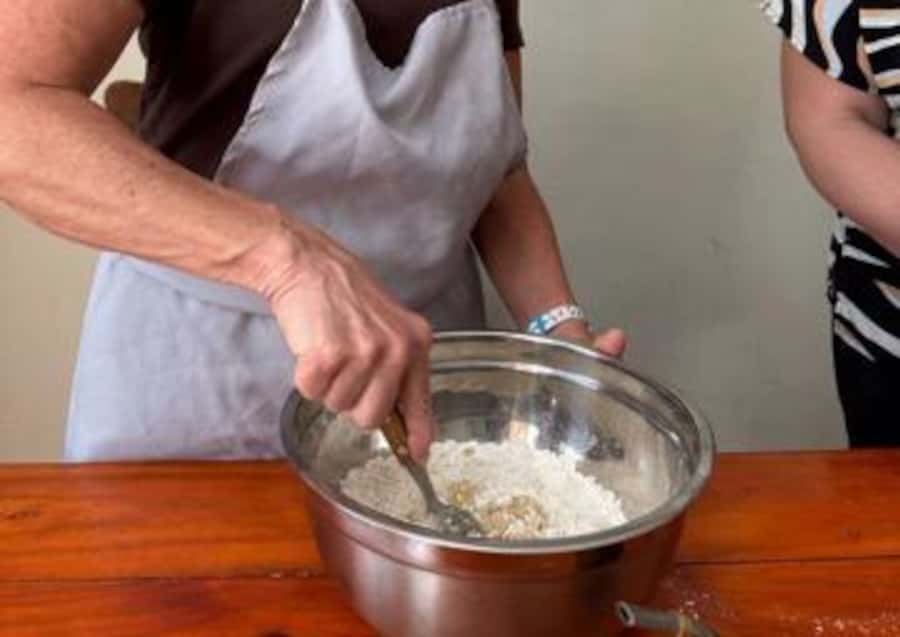
Empanadas are the main event. These stuffed pastries can be baked or fried and appear at many times of day in Argentina. The class focuses on the building blocks: preparing the dough, making the filling, putting the pastry together, and sealing it with a traditional repulgue.
The repulgue is the twisted or folded edge that keeps the filling inside and gives the empanada its familiar look. It is also the moment when a simple cooking lesson becomes a hands-on craft session. Your first fold may look uneven. That is fine. The point is to learn the motion and get a pastry that holds together.
You receive step-by-step help with the dough and fillings. Meat is part of the classic preparation, and vegetarian alternatives have been available in sessions. The exact range deserves a little caution: one participant would have preferred a second filling instead of making the same meat filling twice. If trying several flavors matters to you, ask at the start what fillings are planned that day.
This is a useful class for cooks at different levels, but the teaching style may not suit everyone equally. People who already cook will likely enjoy the freedom to shape and fold at their own pace. If you are new to pastry, stay near the demonstration area and ask questions early, before the group spreads out into its own rhythm.
The payoff is immediate. You eat the empanadas you helped prepare, so you can see how your dough, filling, and seal worked together. You also leave with a method you can repeat at home, provided you collect the recipes before you go.
Cornstarch alfajores with a generous dulce de leche center
The second cooking project is alfajores, one of Argentina’s most loved sweets. This version uses cornstarch in the cookie dough and dulce de leche for the creamy filling.
The texture is the key contrast. The cornstarch makes a delicate, tender cookie, while dulce de leche supplies the rich center. You prepare the cookies, assemble them, and save them for dessert after the savory food.
This part gives the class a good balance. Empanadas involve dough, filling, and a decorative seal. Alfajores require a different kind of care, with a softer pastry and a sweet filling. You are not spending three hours on one repetitive dish.
Families have found the class workable for teenagers and children old enough to take part, with a 12-year-old and a 16-year-old both enjoying the hands-on format. A 14-year-old participant also took part in making the food from scratch. Young cooks may especially like the clear reward at the end: the things they made become the meal.
The class is not presented as a professional pastry course. You are learning familiar Argentine recipes in a relaxed household setting. That makes it a good match for a curious home cook, but less ideal if you want advanced baking theory, precise restaurant techniques, or a long list of dessert variations.
More eating your way around Buenos Aires:
- Buenos Aires: 9-Course Argentine Meat Tasting at Fogón Asado
★ 4.9 · 826 reviews - Buenos Aires: Local Foodie Adventure with Sherpa Food Tours
★ 4.9 · 670 reviews - Buenos Aires: Authentic Argentine Asado BBQ with Live Music
★ 5.0 · 178 reviews - Buenos Aires Food Tour: Local Dishes, Steak, Empanada & More
★ 5.0 · 118 reviews
Eating together turns a lesson into dinner
Once the empanadas and alfajores are ready, everyone sits down to eat. Ingredients, the cooking class, mate, water, and the meal are included in the $37 price. Since you consume the food you make, the value is stronger than it first appears.
In Buenos Aires, you can buy inexpensive empanadas almost anywhere, so this is not the cheapest way to obtain the dish. You are paying for the instruction, the use of the home kitchen, the ingredients, the cultural explanation, and the social evening. If you want dinner alone, buy from a bakery. If you want to understand how the food comes together and spend time with people, the class makes better sense.
The amount of food can be substantial. Participants have described leaving with extra empanadas they did not manage to eat, and the combination of savory pastries and alfajores can easily function as a full evening meal. Eating with napkins rather than small plates has been a minor point of preference for some people, so do not expect formal table service.
Conversation is not a side feature here. It is built into the format. You cook in a close group, share mate, compare folds, and talk while the hosts move the meal along. A group of strangers can become comfortable quickly, but that also means the pace may depend on how talkative the room is.
What the $37 price really covers
At $37 per person, this sits in a reasonable range for a three-hour food activity in Buenos Aires, especially because the price includes the meal and all cooking ingredients. You also receive a personal introduction to mate and a chance to ask questions about Argentine food and culture.
The strongest value comes from the combination of three elements:
- You learn three local traditions: empanadas, alfajores, and mate.
- You do the work yourself: this is not a demonstration followed by a plate handed to you.
- You eat a complete result: the class replaces one meal as well as providing an activity.
Wine is extra, which is easy to manage if you know in advance. The hosts speak English and Portuguese, and the group is limited to eight. That small capacity helps justify the price, since each person has a better chance to handle dough, fillings, and the alfajores rather than simply watch.
Recipes are an area where you should be practical. Some participants received them afterward, while others had to request them or follow the guide on Instagram first. If recreating the dishes at home is important to you, confirm how the recipes will be delivered before you leave the house.
Who will enjoy this class most
I would choose this experience for several kinds of visitors:
Food-focused first-time visitors: You get a useful introduction to dishes you will see all over Argentina, with enough context to recognize what makes them local.
Couples and solo visitors: The small table setup makes it easy to talk with others without the forced feel of a large group tour.
Families with older children: The work is tactile and the meal comes from the children’s own efforts. The recorded family experiences included teenagers and younger participants.
Home cooks: You gain methods you can repeat, especially the empanada dough and repulgue. Collect the recipes and take notes if you want consistent results later.
People looking for local contact: The household setting gives you more personal exchange than a commercial kitchen normally can. Hosts have shared tips about Buenos Aires, Argentine traditions, and food customs.
I would hesitate if you dislike group meals, do not want to cook, or need a highly controlled professional lesson. The room is small, the class is social, and not every demonstration may be equally easy to see from every seat.
Practical details that matter
Plan on three hours. Check the available starting times when you book, since the schedule can vary.
The address is Paseo Colon 1355 in San Telmo. Ring the bell at the scheduled time. Since this is a home rather than a clearly marked attraction, allow enough time to reach the address without arriving flustered.
The class is wheelchair accessible. Instruction is available in English and Portuguese. It is limited to eight participants, a useful number for a cooking lesson but still large enough that sitting position can affect what you see.
You can cancel up to 24 hours ahead for a full refund, and you can reserve now and pay later. Those terms are handy if your Buenos Aires schedule is still changing.
The experience is offered by BsAs Mio Turismo. Its overall rating is 4.8 from 486 ratings, which fits the pattern of strong praise for the hosts, the food, the welcoming mood, and the cultural information. The few useful cautions concern recipe handoff, table visibility, and the possibility of repeating one filling rather than sampling several.
My call: book it if food and people matter
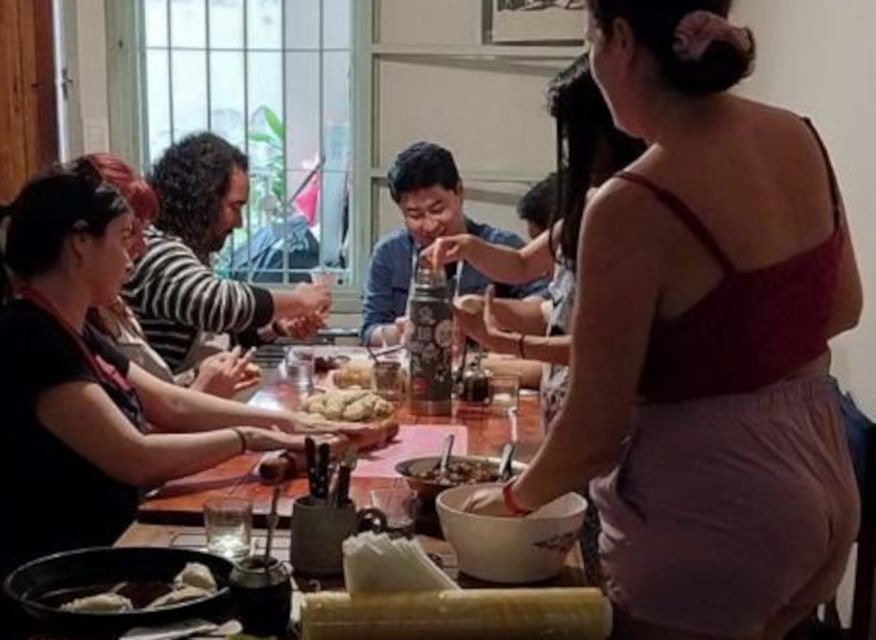
I recommend booking this class if you want more than a plate of empanadas. The best parts are the personal home setting, the chance to shape the food yourself, the mate ritual, and the relaxed meal shared with a small international group.
Go in expecting a friendly household workshop, not a precision cooking school. Ask about the empanada fillings, sit where you can see the work surface, and make sure you receive the recipes before leaving. With those small steps, $37 buys you dinner, three useful Argentine food lessons, and a memorable way to spend an evening in San Telmo.
FAQ
Where does the Buenos Aires cooking class take place?
It takes place at Paseo Colon 1355 in San Telmo. Go to the address at the class starting time and ring the bell.
How long does the cooking class last?
The activity lasts three hours. Starting times vary, so check availability when booking.
What foods will I prepare?
You will prepare Argentine empanadas with savory fillings and alfajores made with cornstarch and dulce de leche. You will also learn how to prepare traditional mate.
Is the meal included?
Yes. The cooking class, ingredients, mate, water, and the meal are included in the price.
Is wine included?
No. Wine is available for purchase but is not included.
What languages are spoken?
The instructors speak English and Portuguese.
How many people are in the group?
The class is limited to eight participants.
Is the activity wheelchair accessible?
Yes, the activity is wheelchair accessible.
More Workshops in Buenos Aires
- Buenos Aires: Private Tango Lesson
★ 4.9 · 244 reviews - Tango Porteño Show with Optional Dinner and Tango Lesson
★ 4.0 · 97 reviews - Buenos Aires – Private Tango lesson
★ 5.0 · 96 reviews - Spanish Group Course in Buenos Aires, Argentina: 20 Lessons
★ 5.0 · 72 reviews
Just added around Buenos Aires
- Unique Tigre and Delta Private Day Cruise Navegation★ 5.0 · 3 reviews
- Buenos Aires: Customizable City Tour in Polish★ 4.7 · 3 reviews
- Velez Sarsfield Football Match★ 5.0 · 3 reviews
- Tango Show at: MichelAngelo★ 4.5 · 3 reviews
- From Colonialism to Eclecticism, Buenos Aires arquitectonica★ 5.0 · 3 reviews
- Enjoy a Rural Experience in a Vineyard near Buenos Aires★ 4.7 · 3 reviews
- Guided tour Boca Juniors Museum & Stadium + Caminito★ 3.3 · 3 reviews
- Buenos Aires: Private City Tour by Car with Hotel or Pickup★ 5.0 · 3 reviews
Buenos Aires Cooking Classes, compared.
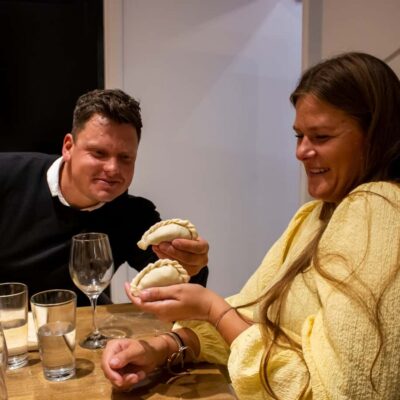

BA: Empanadas and Alfajores Cooking Experience in Palermo
Read our review →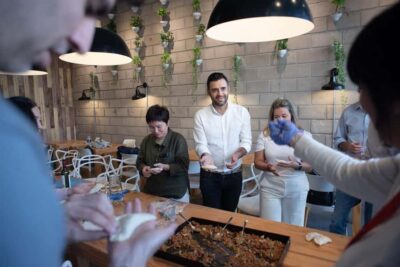
Argentinian Empanadas Cooking Experience in Palermo, Bs As
Read our review →
Private Argentine Cooking Class and Tango Lesson in Buenos Aires
Read our review →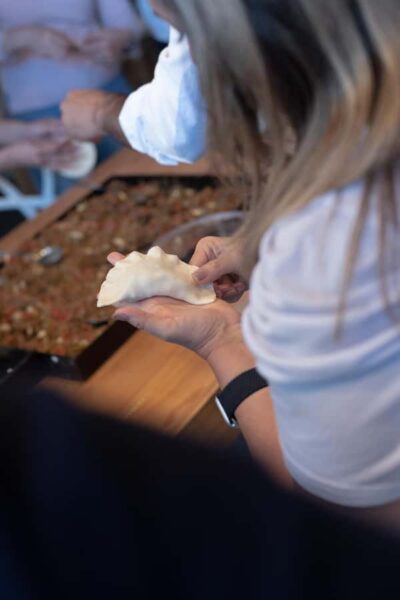
Premium Empanadas Cooking Class & Wine Tasting Experience
Read our review →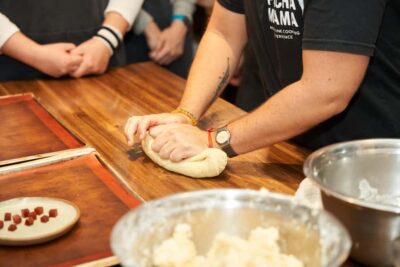
Pachamama – Argentine Cooking Experience in Buenos Aires
Read our review →Browse the lists this tour appears in