
Reviewed · BUENOS AIRES COOKING CLASSES
Pachamama – Argentine Cooking Experience in Buenos Aires
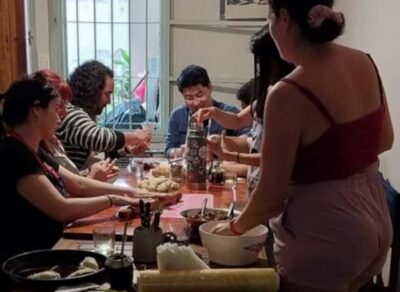
The best part of Pachamama is that you do not simply sit at a table while someone else cooks Argentine food. You help prepare chipá, beef empanadas, humita, and dulce de leche crepes, then eat the meal together with Mendoza wine. It is part cooking lesson, part cultural introduction, and part friendly supper.
I like the small-group setting, limited to 10 people, and the way the class connects each dish with Argentine customs. I also like the useful extras: a PDF recipe book, class photos, homemade preserves, pickles, local bread, vermouth, and city recommendations from the team.
The main thing to understand is that you work as a group. You may not personally make every dish from beginning to end, which can matter if you want a private, individual cooking lesson. Hotel pickup is not included, and the full session may run closer to 3.5 hours than the advertised three.
In This Review
- Key points to know before booking
- Why this cooking class is different
- The welcome picada and Argentine food customs
- Cooking chipá with sauces
- Beef empanadas and homemade chimichurri
- Humita stew gratin brings corn to the table
- Flamed dulce de leche crepes to finish
- What the three-hour schedule really means
- Is $75 a fair price?
- Dietary needs and accessibility
- Who will enjoy Pachamama most?
- Booking flexibility and useful extras
- My call: should you book Pachamama?
- FAQ
- How long does the Pachamama cooking experience last?
- What food will I prepare?
- Is wine included?
- Is this a private cooking class?
- Can the menu accommodate dietary restrictions?
- Is the experience offered in English?
- Is hotel pickup included?
- Can I cancel if my plans change?
Key points to know before booking
- Four Argentine recipes made by hand: Help prepare chipá, beef empanadas, humita stew, and flamed dulce de leche crepes.
- A meal with Mendoza wine: Durigutti wines from Las Compuertas accompany the food, with vermouth, water, and homemade lemonade also included.
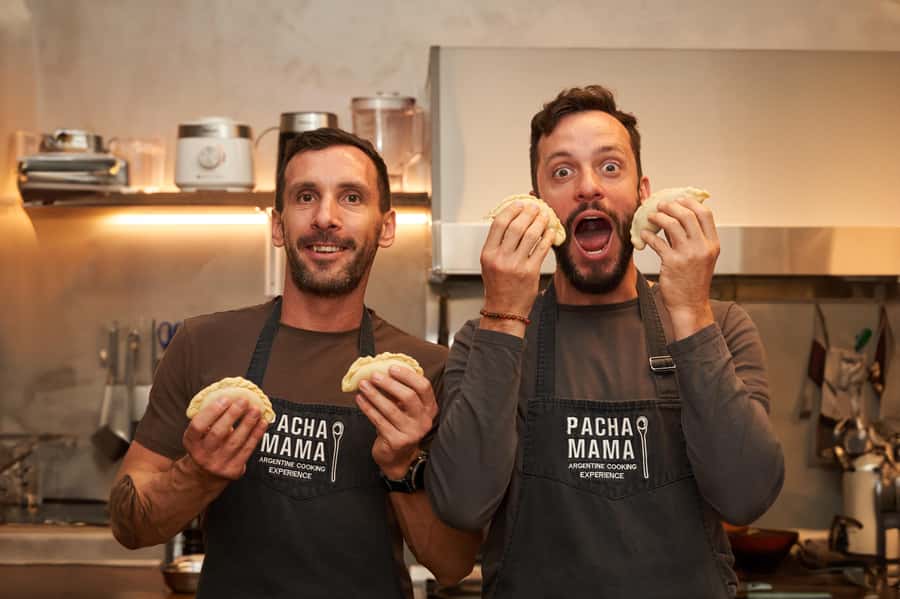
- Chef Franco leads the class: The English-speaking host and his team explain the dishes, their origins, and the customs behind them.
- Small but social: The class is limited to 10 people, creating a more personal table than a large demonstration.
- Good for dietary needs: The menu can be adapted for vegetarian, gluten-free, and lactose-free diners.
- Useful take-home extras: You receive recipes by QR code, class pictures, and recommendations for Buenos Aires.
Why this cooking class is different
Pachamama presents Argentine food as a way into the country’s culture. That matters because dishes such as empanadas and chimichurri are not just items on a restaurant menu. They are tied to regional cooking, family habits, ingredients, and the way people share food.
The class begins with a homemade picada. Think of this as an Argentine grazing plate, with local bread, homemade preserves, and pickles. You also receive a vermouth cocktail while the team explains the background of Argentine cuisine.
That opening gives you time to settle in before the cooking starts. It also avoids the common problem with short food classes, where the first 20 minutes are spent standing around waiting for instructions. Here, you begin eating and learning at once.
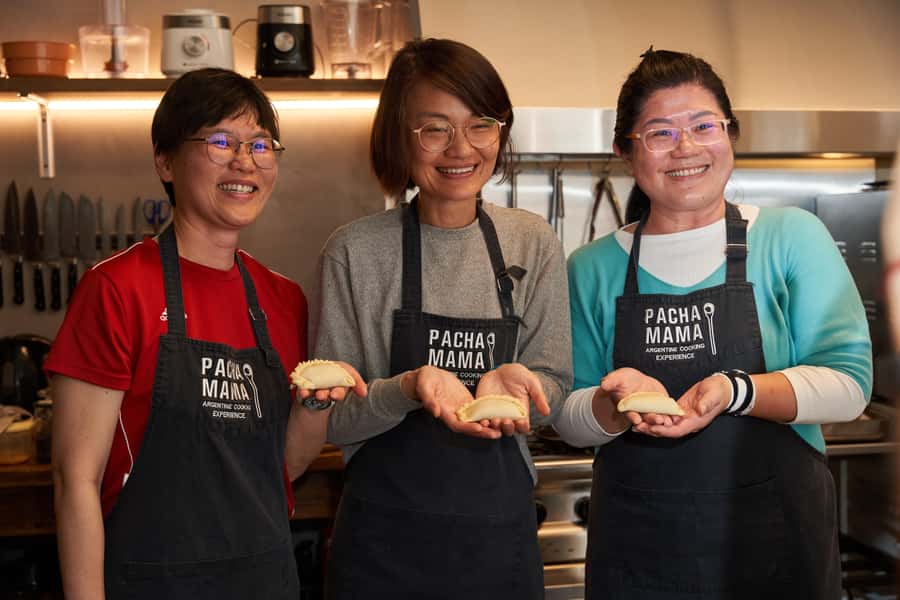
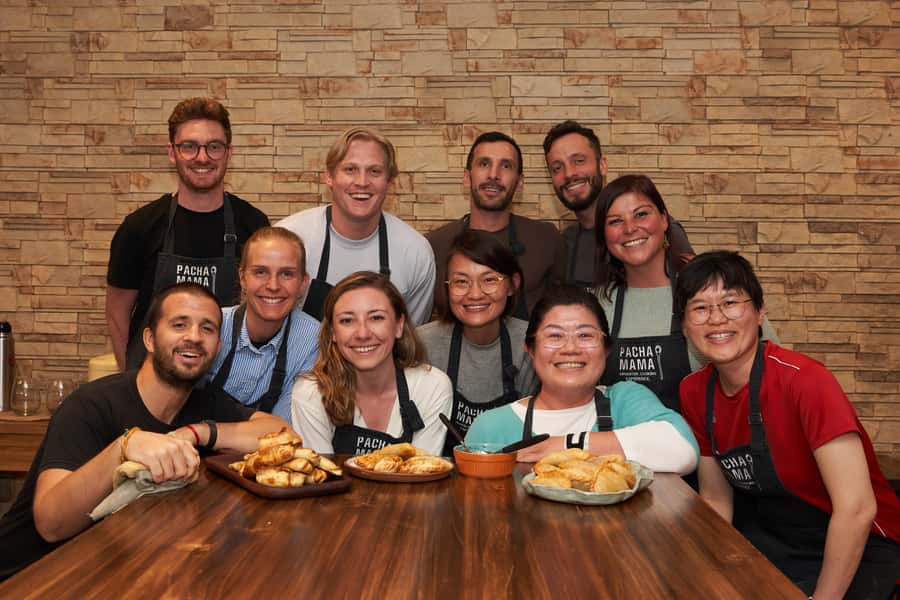
The setting is described as cozy and homey, and the format is built around sitting together at one table. If you like meeting people from different countries, the shared meal is a major part of the appeal. If you prefer a quiet, highly private lesson, a small private group may suit you better.
More cooking classes in Buenos Aires:
- Buenos Aires: Empanadas and Alfajores Guided Cooking Class
★ 4.8 · 486 reviews - Buenos Aires: Empanada & Alfajor Cooking Lesson in Palermo
★ 4.6 · 186 reviews - BA: Empanadas and Alfajores Cooking Experience in Palermo
★ 5.0 · 112 reviews
The welcome picada and Argentine food customs
The first taste is not the main event, but it sets the tone. Homemade preserves, pickles, and local bread introduce the sweet, sour, salty, and savory flavors that appear in Argentine cooking.
The team also introduces mate culture. You may already know mate as Argentina’s famous herbal drink, but the important point here is the social custom around it. Pachamama uses these food and drink moments to explain Argentine identity rather than rushing straight into recipes.
Vermouth is part of the welcome as well. A cocktail is included, along with water and homemade lemonade. This is a thoughtful touch for a class that lasts several hours, especially since you are eating and cooking rather than simply watching.
The food is paired with Durigutti wines from Las Compuertas in Mendoza. The wine is included in the price, so you are not paying extra for each glass as the meal progresses. That makes the $75 cost easier to assess, since it covers instruction, a multi-course meal, drinks, and the social setting.
Cooking chipá with sauces
The first prepared dish is chipá, a small cheese bread associated with the region. The class serves it with barbecue sauce and a fermented spicy sauce.
Chipá is a useful starting point because it introduces you to a snack rather than throwing you straight into the main course. You get to work with a familiar idea, bread and cheese, while also trying sauces that add a distinctly Argentine and regional character.
The fermented spicy sauce is especially interesting for anyone who wants more than the standard tourist menu. It brings a sharper flavor to the table and gives the class a chance to discuss the balance between traditional recipes and the cooks’ own approach.
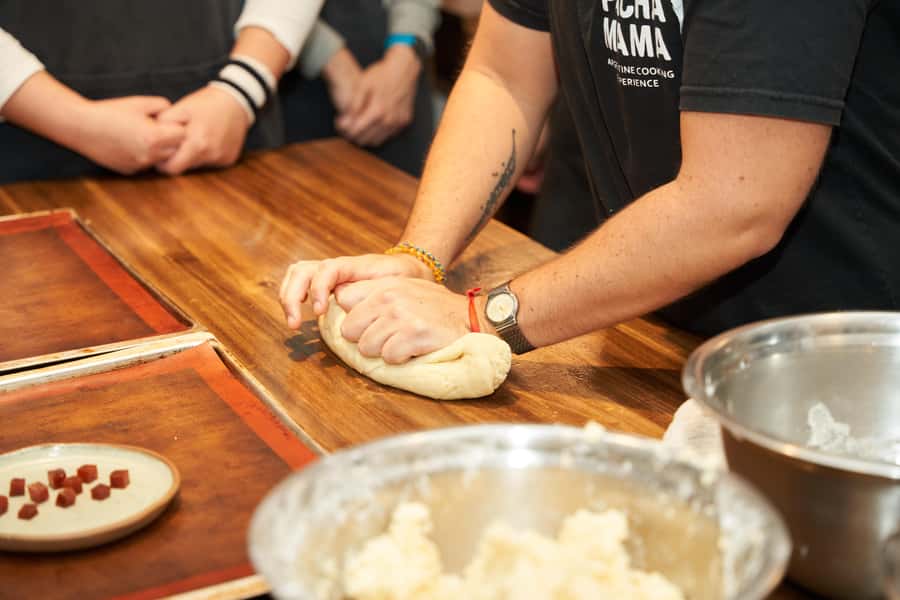
Do not expect every participant to make an entire batch alone. The class is organized as a shared effort, with people taking turns helping prepare different parts of the menu. That keeps the pace moving, but it also means your hands-on time may vary depending on the size of your group and the task assigned to you.
Beef empanadas and homemade chimichurri
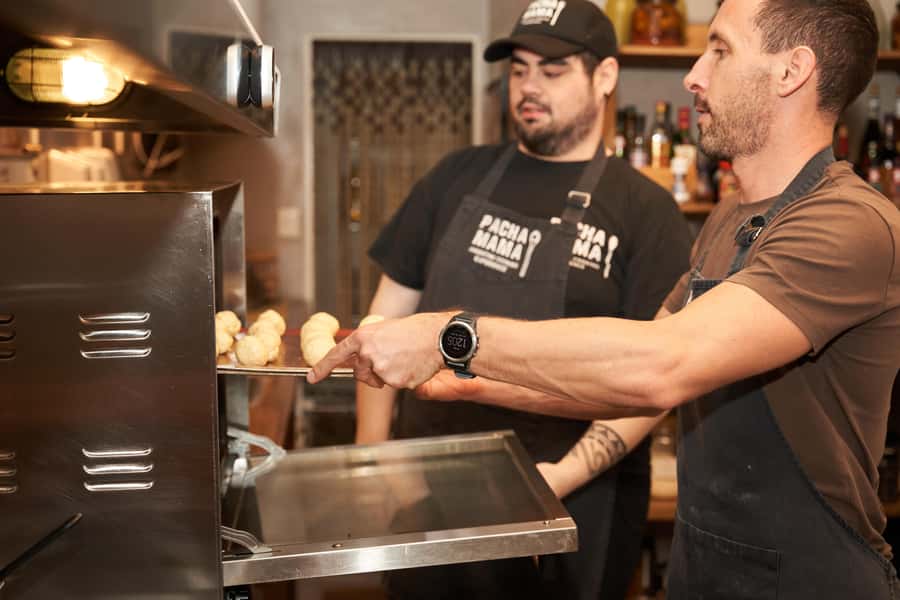
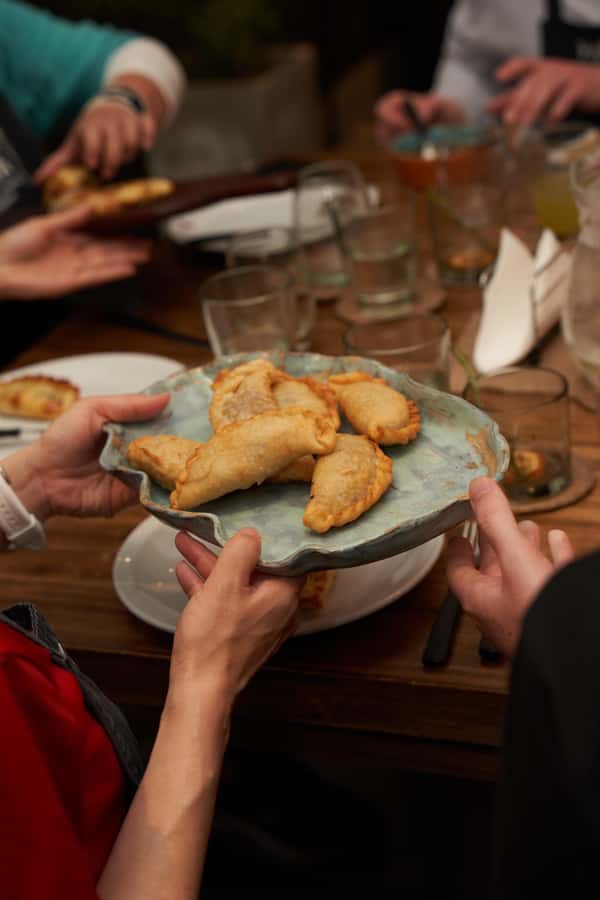
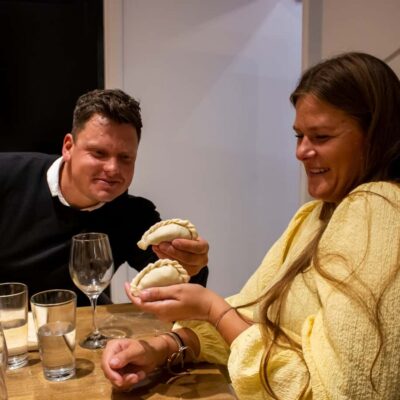
Empanadas are one of the clearest gateways into Argentine food. Pachamama focuses on beef empanadas and serves them with chimichurri, the herb and oil sauce that appears beside grilled meats and other savory foods across the country.
This part of the class has practical value. You are not only tasting a finished empanada in a restaurant. You are learning how it fits into local food culture and how chimichurri changes the flavor of the dish.
The class description places emphasis on regional empanadas and their spices. That gives you a better sense of why empanadas can differ from one part of Argentina to another. The recipe also becomes one of the easiest dishes to repeat at home, especially with the supplied PDF recipes.
For many people, this will be the most immediately useful section of the class. Empanadas are portable, familiar, and easy to connect with later in your trip. If you visit a bakery or casual restaurant after Pachamama, you will have a better idea of what you are ordering and what flavors to look for.
A different sort of afternoon, still in Buenos Aires:
- Buenos Aires Hop-On Hop-Off Bus, Free Walking Tours & Discounts
★ 4.5 · 2,218 reviews - Buenos Aires: Piazzolla Tango Show with Optional Dinner
★ 4.4 · 2,122 reviews - Buenos Aires: City Highlights Guided Tour with Transfer
★ 4.7 · 1,946 reviews - Buenos Aires: Hop-On Hop-Off City Bus Tour
★ 4.2 · 1,855 reviews
Humita stew gratin brings corn to the table
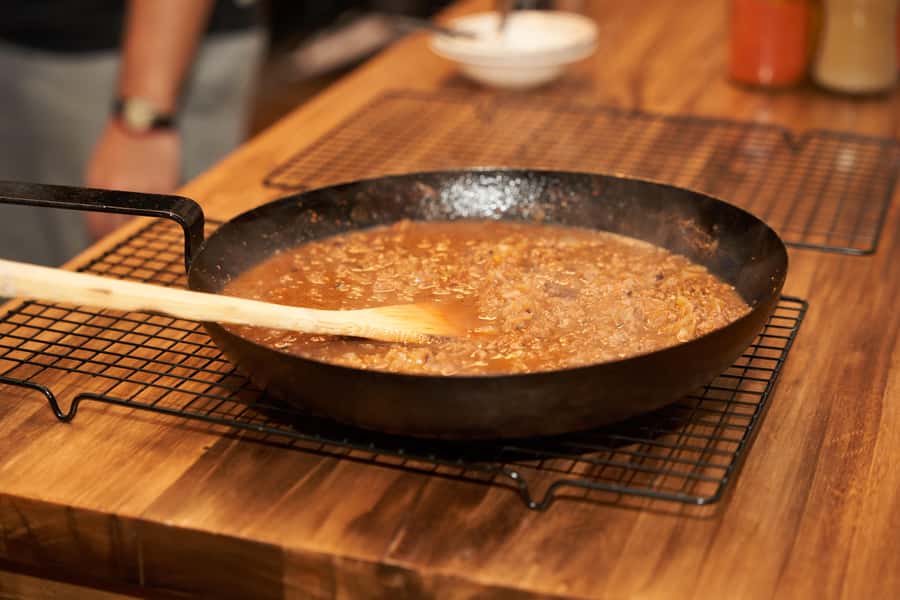
The main course is humita stew gratin. Humita is a corn-based South American preparation, and here it is served as a baked, gratinated dish.
This is a worthwhile inclusion because it moves the menu beyond meat and pastries. Argentina is often reduced to beef and wine, but the humita introduces a different side of local cooking, built around corn and a softer, more comforting texture.
The dish also gives the class some variety. You have the crisp or bread-like chipá, the filled empanadas, and then a warmer, more substantial preparation. It shows how an Argentine menu can move between snacks, shared starters, and a central dish without becoming complicated.
As with the other recipes, the value is partly in the explanation. Pachamama includes information about the history and origin of the food, not just a list of ingredients. That makes the class more useful for you if your goal is to understand what you are eating during the rest of your time in Buenos Aires.
Flamed dulce de leche crepes to finish
Dessert is flamed dulce de leche crepes with ice cream and homemade limoncello. Dulce de leche is one of Argentina’s signature flavors, and this final course gives it the attention it deserves.
The flaming presentation adds a bit of theater, but the real pleasure is the combination of warm crepes, caramel-like dulce de leche, and cold ice cream. Homemade limoncello brings a bright citrus note to the finish and keeps the dessert from feeling one-dimensional.
This is also the point where the class shifts fully into a shared meal. Once the recipes are ready, you sit around the table and eat what the group has prepared. The format feels closer to a long lunch or early dinner than a quick cooking demonstration.
One practical note: the menu is described in two ways, as a four-course local menu and as a five-step menu. The listed food includes a picada, chipá, empanadas, humita, and dessert, so you should expect several stages of eating and cooking rather than only four plates.
What the three-hour schedule really means
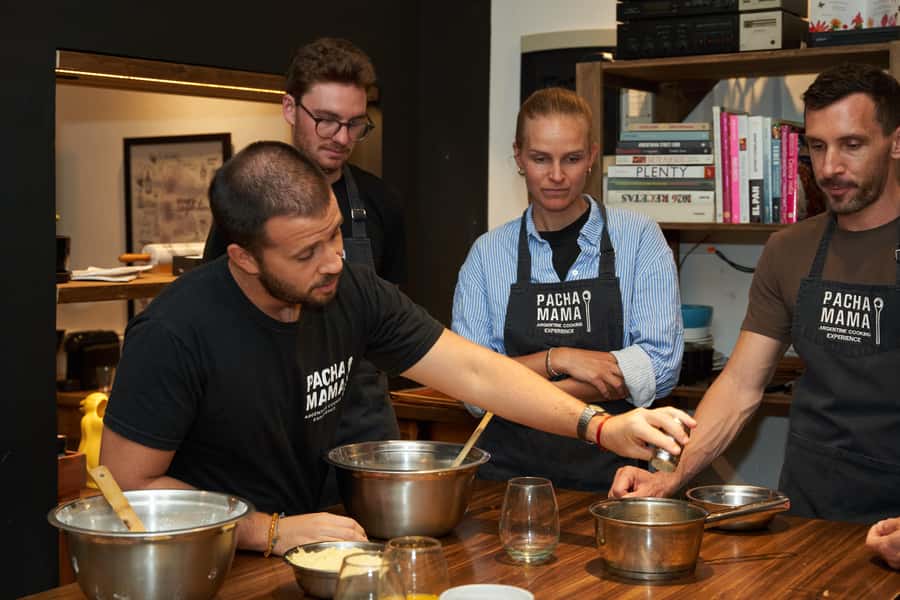
The activity is advertised as lasting three hours, while the fuller description gives an approximate length of 3.5 hours. I would plan for the longer figure, especially if you want to enjoy the meal instead of rushing away.
The class has several moving parts: the welcome picada, the cultural introduction, four recipes, wine service, and the final shared meal. Add questions, photographs, and conversation at the table, and the extra half hour makes sense.
A private group can request a shorter version of about 2.5 hours. That option may work well if you have a packed Buenos Aires schedule or want a more focused event with your own group. The standard shared class is limited to 10 participants, so it remains relatively intimate even when you are not booking privately.
The experience is given in English. Private groups can request Spanish, which is useful for Spanish-speaking families, friends, or company groups.
Is $75 a fair price?
At $75 per person, Pachamama is not the cheapest way to eat Argentine food. You can order empanadas, steak, wine, and dessert for less at many Buenos Aires restaurants.
The comparison is not quite fair, though. This price includes a welcome picada, a vermouth cocktail, a five-stage food experience, Durigutti wines, water, lemonade, instruction, recipes, photos, and city recommendations. You are paying for an activity as well as lunch or dinner.
I think the value is strongest if you want a social event with food at its center. You will leave with recipes and a better understanding of local dishes, rather than only a full stomach. The class also gives you a chance to meet people from around the world, which can be a pleasant break from sightseeing with your own group.
The value is weaker if you already have a full cooking schedule, do not drink wine, or want to prepare every dish independently. Since the cooking is shared, you should book this for the atmosphere and cultural setting as much as for individual kitchen practice.
Dietary needs and accessibility
The menu can be adapted for vegetarian, gluten-free, and lactose-free diners. You should provide those requirements when booking so the team can plan the substitutions.
The activity is wheelchair accessible. No hotel pickup or drop-off is included, so you need to arrange your own way to the venue. The supplied information identifies the location as Buenos Aires Province, but does not provide a more specific meeting address here, so check the booking details carefully before setting out.
Who will enjoy Pachamama most?
I would recommend this class to first-time visitors who want a friendly introduction to Argentine food without spending an entire day on a formal food tour. It also suits couples, solo visitors, and small groups who enjoy sitting down with new people.
Families may like the hands-on format, especially if children are interested in cooking, though the available information does not give a minimum age. Food-focused visitors will appreciate the chance to learn recipes they can try again at home.
The class is also a good choice for people who want more than steak and Malbec. Chipá, chimichurri, humita, fermented hot sauce, dulce de leche, and mate culture give you a broader view of Argentine food.
You may want to skip it if you need a tightly timed activity, dislike group participation, or expect a private lesson where each person cooks every recipe alone. The group effort is part of the design, not a flaw to be corrected.
Booking flexibility and useful extras
You can cancel up to 24 hours before the activity for a full refund. You can also reserve now and pay later, which helps if your Buenos Aires plans are still changing.
The recipe book is delivered in PDF format through a QR code. That is more useful than a paper handout that gets lost in your luggage, though you should make sure your phone can scan and save the file before leaving the venue.
Class pictures are included as well. Combined with the recipes and local recommendations, these extras help the class remain useful after the meal is over.
My call: should you book Pachamama?
Book Pachamama if you want a social Argentine food lesson, a substantial meal, and wine in one compact activity. The strongest reasons are the small group, the broad menu, the English-speaking team led by Franco, and the chance to understand the customs behind the dishes.
Keep your expectations realistic. You will help with the cooking, but you may not prepare every recipe alone. Allow up to 3.5 hours, arrange your own transport, and tell the team about dietary needs in advance.
For a first visit to Buenos Aires, $75 is a reasonable price when you count the food, drinks, instruction, recipes, photographs, and cultural context. It is especially worthwhile if you want to leave the city knowing how Argentine food is made, not just how it tastes.
FAQ
How long does the Pachamama cooking experience last?
The activity is listed as three hours, while the detailed description gives an approximate duration of 3.5 hours. Private groups can request a shorter version of about 2.5 hours.
What food will I prepare?
You will help prepare chipá with barbecue and fermented spicy sauces, beef empanadas with chimichurri, humita stew gratin, and flamed dulce de leche crepes with ice cream and homemade limoncello.
Is wine included?
Yes. The five-step menu is paired with Durigutti wines from Las Compuertas in Mendoza. Vermouth, water, and homemade lemonade are also included.
Is this a private cooking class?
The standard activity is a small-group class limited to 10 participants. Private groups can arrange a Spanish-language session and may request a shorter format.
Can the menu accommodate dietary restrictions?
Yes. The menu can be adapted for vegetarian, gluten-free, and lactose-free diners.
Is the experience offered in English?
Yes. The standard experience is given in English. Private groups can request Spanish.
Is hotel pickup included?
No. Hotel pickup and drop-off are not included, so you must arrange your own transportation to and from the venue.
Can I cancel if my plans change?
Yes. You can cancel up to 24 hours in advance for a full refund. You can also reserve now and pay later.
Just added around Buenos Aires
- Unique Tigre and Delta Private Day Cruise Navegation★ 5.0 · 3 reviews
- Buenos Aires: Customizable City Tour in Polish★ 4.7 · 3 reviews
- Velez Sarsfield Football Match★ 5.0 · 3 reviews
- Tango Show at: MichelAngelo★ 4.5 · 3 reviews
- Enjoy a Rural Experience in a Vineyard near Buenos Aires★ 4.7 · 3 reviews
- Guided tour Boca Juniors Museum & Stadium + Caminito★ 3.3 · 3 reviews
- From Colonialism to Eclecticism, Buenos Aires arquitectonica★ 5.0 · 3 reviews
- Buenos Aires: Private City Tour by Car with Hotel or Pickup★ 5.0 · 3 reviews
Buenos Aires Cooking Classes, compared.

BA: Empanadas and Alfajores Cooking Experience in Palermo
Read our review →
Argentinian Empanadas Cooking Experience in Palermo, Bs As
Read our review →
Private Argentine Cooking Class and Tango Lesson in Buenos Aires
Read our review →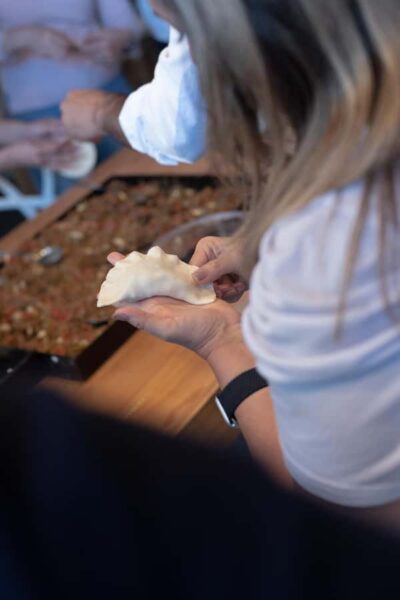
Premium Empanadas Cooking Class & Wine Tasting Experience
Read our review →Browse the lists this tour appears in