
Reviewed · WALKING TOURS
Jewish Sites Buenos Aires Private Walking and Car Tour
Buenos Aires’ Jewish story is told through places of worship, memorials, museums, and painful reminders of violence. This private tour links Templo Libertad, the Holocaust Museum, and AMIA in a compact route, giving you context that is easy to miss if you simply pass these sites on your own. I like the personal format and the chance to discuss both Jewish life in Argentina and the 1994 AMIA bombing. The main drawback is that the 2-hour option is mostly an outdoor walk, and synagogue entry is not included.
I also like the choice between a focused 2-hour route, a 3-hour tour with the Salvador Kibrick Museum, and a 4-hour version with private car transport. Guide Richard Shpuntoff has been singled out for warm, personal explanations of Argentina’s history and current politics. Do note that the museum requires your original passport or Argentine identity card, and the tour runs in rain or shine.
In This Review
- Key points to know before booking
- Why this Jewish heritage tour matters in Buenos Aires
- Templo Libertad and the old Jewish quarter
- The Holocaust Museum and stories of rebuilding
- AMIA and the memory of the 1994 bombing
- What the 3-hour museum option adds
- What the 4-hour private car tour adds
- How the private guide changes the experience
- Walking conditions, timing, and meeting point
- Who should choose each tour length?
- Is the $129 price good value?
- Should you book this Buenos Aires Jewish heritage tour?
- FAQ
- How long does the Jewish Sites Buenos Aires tour last?
- Is the Salvador Kibrick Jewish Museum included?
- Is transportation included?
- Where does the tour meet?
- Can I enter the synagogues during the tour?
- What identification is required for the museum?
- What languages are available?
Key points to know before booking
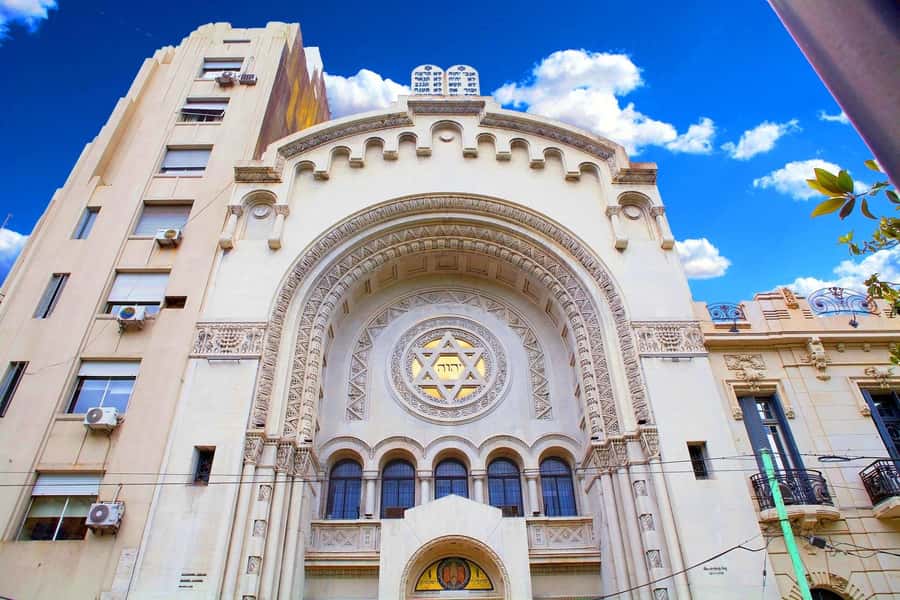
- Templo Libertad begins the story: See the exterior of Argentina’s first synagogue and hear how Jewish immigration shaped Buenos Aires.
- AMIA brings history into the present: The 1994 bombing is discussed as both a national tragedy and a turning point for Argentina’s Jewish community.
- The 3-hour option adds museum access: Enter the Salvador Kibrick Jewish Museum to see ritual objects, photographs, and historical documents.
- The 4-hour tour covers more ground: Private transport adds Plaza Libertad, 9 de Julio Avenue, the Israeli Embassy Memorial, and Plaza General San Martín.
- Private guiding is the main advantage: You can ask questions, adjust the pace, and choose how much attention to give history, religion, politics, or family stories.
- The walking is manageable but not effortless: Expect about 25 to 30 minutes on foot, with some uneven surfaces and steps.
Why this Jewish heritage tour matters in Buenos Aires
Buenos Aires has one of Latin America’s largest Jewish communities, and its story is tied closely to immigration, religious life, cultural institutions, persecution, and public memory. This tour gives you a way to see those subjects in the city itself rather than treating them as abstract facts in a museum display.
I like that the route does not stop at architecture. Templo Libertad offers a starting point in religious and community life. The Holocaust Museum connects Argentina to the events of World War II and the experiences of survivors who rebuilt their lives here. AMIA then brings the subject into modern Argentine history through the 1994 bombing and its continuing effect on the community.
A private guide matters on a subject like this. The places are meaningful, but several are best understood through explanation. You can ask about immigration, Jewish customs, Argentina’s political climate, or the relationship between memory and public space. A large group tour would make that harder.
The tour is offered in English, Spanish, French, Italian, and Portuguese. The group size is limited to 1 to 25 people per guide, with additional guides arranged for larger groups. That is not the same as a tiny walking tour, so ask about group size if quiet conversation is important to you.
More walking tours in Buenos Aires:
- Buenos Aires Hop-On Hop-Off Bus, Free Walking Tours & Discounts
★ 4.5 · 2,218 reviews - Buenos Aires: La Boca Guided Walking Tour in English
★ 4.8 · 1,587 reviews - Nazis in Buenos Aires: a historical walking tour
★ 4.9 · 193 reviews
Templo Libertad and the old Jewish quarter
The 2-hour tour begins at Hotel Presidente on Cerrito 850. The hotel is only a meeting point, so do not go inside expecting the staff to know about the tour. From there, your guide leads you toward Libertad Street and the area associated with Buenos Aires’ early Jewish community.
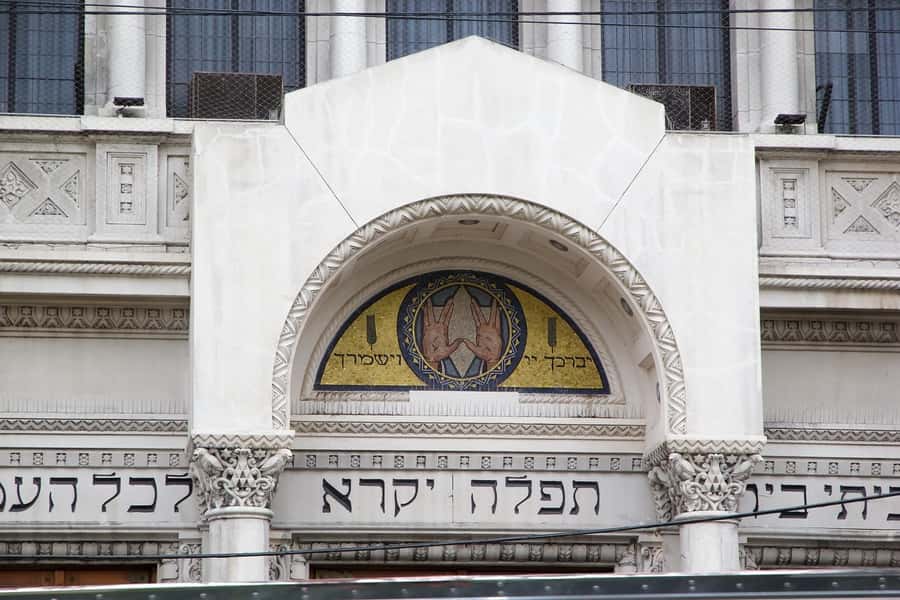
Templo Libertad is the first major stop. It is Argentina’s first synagogue, and its exterior gives you a useful introduction to the community’s place in the city. You will not enter the synagogue on this tour, so the value here comes from the façade and your guide’s interpretation.
That limitation is worth knowing before you book. If you want an interior synagogue visit, this experience does not promise one. The tour is better suited to understanding the site in its urban and historical setting than to seeing religious interiors.
Nearby, you pass the Museo Judío de Buenos Aires. The museum helps explain immigration and integration through its collections and building. On the 2-hour tour, however, the included museum entry is for the Salvador Kibrick Jewish Museum on the 3-hour and 4-hour options only. Confirm exactly which museum access is included when selecting your duration.
This part of the route is relatively compact. The walking portion covers about 25 to 30 minutes, but the tour may also include time standing, listening, crossing streets, and dealing with uneven surfaces or steps. Comfortable shoes are a sensible choice.
The Holocaust Museum and stories of rebuilding

The Buenos Aires Holocaust Museum gives the tour its most reflective section. Your guide discusses Argentina’s role during and after World War II, along with the stories of survivors who made new lives in the city.
This stop is valuable because it connects global events with local experience. Argentina was not simply a distant observer of European history. Jewish immigration, survivor stories, and the later development of Jewish institutions all form part of the country’s own story.
Allow the guide’s pace to shape this section. It is not a stop to rush through while trying to collect photographs. The subject calls for attention, and a private tour lets you pause for questions or spend more time on the themes that matter to you.
The experience is also not presented as a story of suffering alone. The route includes cultural pride, religious life, community building, and survival. That wider view helps you understand Jewish Buenos Aires as a living community rather than a set of memorials.
AMIA and the memory of the 1994 bombing

The tour culminates at AMIA, the Asociación Mutual Israelita Argentina. AMIA is a major cultural and community institution, but it is also linked to the 1994 bombing, one of the darkest events in Argentine Jewish history.
Your guide reflects on the attack and its lasting impact on the Jewish community and the country. This is where the tour’s themes of remembrance and resilience come together. The stop can feel especially powerful because AMIA is not an isolated monument. It represents an active community affected by a tragedy that remains part of Argentina’s public life.
I would choose this experience for the chance to ask questions here. News coverage can give you the basic facts, but a guide can help place the bombing within Argentina’s social and political setting. The commentary may also address the way public memory continues to shape the city.
The emotional weight is a consideration. This is not a light sightseeing walk, and some of the subjects are painful. If you prefer a tour built around cafés, grand avenues, and architecture alone, this is probably not the right choice. If you want a serious look at Jewish life and memory in Buenos Aires, AMIA is an important reason to go.
A few more Buenos Aires outings worth weighing up
- Buenos Aires Private City Tour with Local Guide
★ 5.0 · 308 reviews - Buenos Aires: Private Tango Lesson
★ 4.9 · 244 reviews - Buenos Aires: Personalized 2 to 8-Hour Private Walking Tour
★ 4.7 · 149 reviews - Private Arrival Transfer: Ezeiza Airport to Buenos Aires Hotels
★ 4.0 · 136 reviews
What the 3-hour museum option adds
The 3-hour tour adds entry to the Museo Judío de Buenos Aires Dr. Salvador Kibrick. This is the best middle option for most people who want more than an overview but do not need private transport.
Inside, you can see ritual objects, photographs, and historical documents. These items give physical form to the story introduced outside at Templo Libertad and the nearby Jewish institutions. A museum visit also lets you examine details at your own pace rather than relying only on spoken commentary.
The museum requires foreign visitors to present an original passport. Argentine visitors must bring their national identity card. Do not rely on a photocopy unless the operator confirms that it is accepted, since the stated requirement is the original document.
The 3-hour option does not include pickup or drop-off. You meet the guide at Hotel Presidente and make your own way back afterward. That is not a major issue if you are already near central Buenos Aires, but it reduces the convenience compared with the 4-hour package.
At $129 per person, the value depends on how many people are in your private group and how much you care about guided interpretation. For one or two people, it is a fairly substantial spend for three hours. The museum entry and private attention help justify it, especially if this subject is a priority. For a larger group, the per-person cost becomes easier to accept, provided everyone is genuinely interested.
What the 4-hour private car tour adds
The 4-hour version includes museum entry plus private transportation from your accommodation in Buenos Aires. This is not simply the 3-hour walk with an extra hour attached. The car lets you cover additional places and gives you a break from the streets.
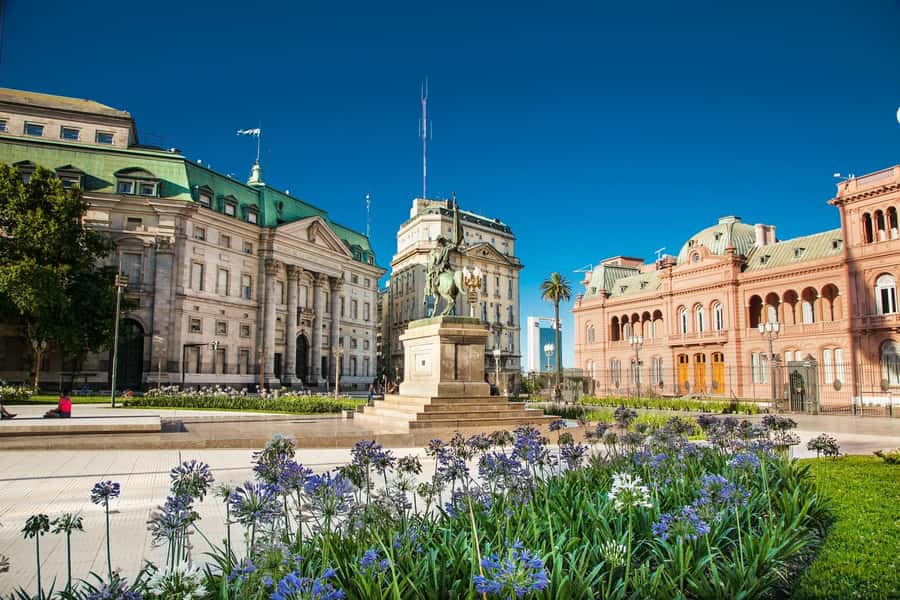
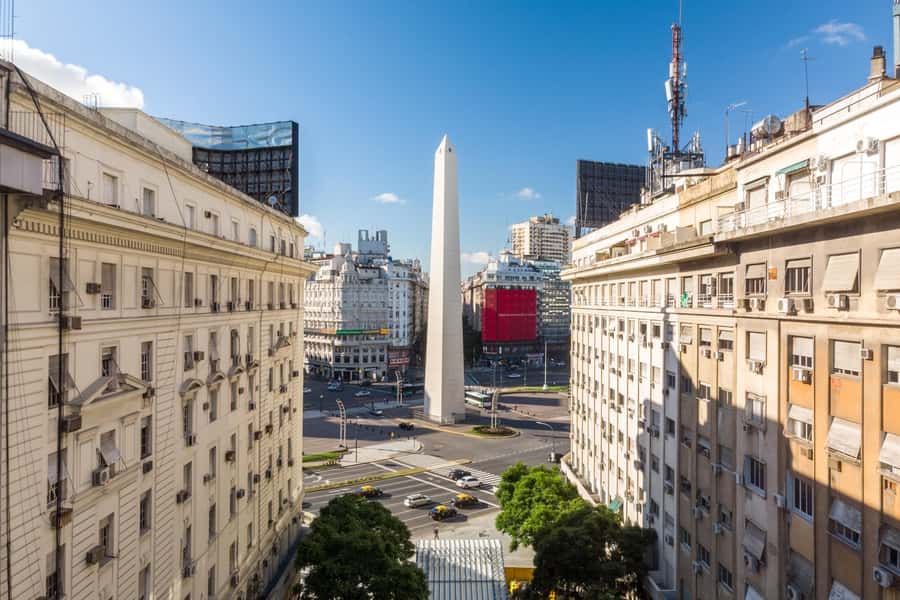
The route adds Plaza Libertad, a quiet square surrounded by important architecture. It also includes 9 de Julio Avenue, one of the widest boulevards in the world. These stops place Jewish heritage within the wider city, showing how community history fits into Buenos Aires’ grand civic spaces.
You also visit the Israeli Embassy Memorial, a solemn site connected to the 1992 attack. Together with AMIA, it shows that Jewish memory in Buenos Aires includes more than one act of violence and more than one location of remembrance.
Plaza General San Martín adds another layer. The square is linked to Argentina’s military and immigrant history, making it a useful setting for discussing how different communities became part of the nation’s story.
Private transport is most useful if you have limited time, dislike long urban walks, or are staying outside the central area. It also matters in poor weather, although the walking portions still require suitable clothing because the tour operates rain or shine.
The 4-hour tour is the easiest option logistically. Pickup and drop-off are included, and you see more of the city without arranging taxis between stops. It is also the strongest value for a family or small group that would otherwise pay for separate transport.
How the private guide changes the experience
The clearest strength of this tour is the guide rather than the vehicle or the route. You are not just being moved between addresses. You are given a person who can connect architecture, migration, religion, tragedy, and present-day Argentina.
The guide speaks your chosen language and adjusts the pace to suit your group. You can ask for more detail about Jewish customs, focus on the Holocaust Museum, or spend more time on the AMIA bombing and its aftermath.
One guide, Richard Shpuntoff, has received especially warm praise for combining historical explanation with personal and family stories. That kind of approach can make Argentina’s current political and social climate easier to understand. Richard may not be the guide assigned to your booking, so treat his style as an example rather than a guarantee.
The tour’s best moments are likely to come through conversation. Ask questions. Tell the guide if you have a family connection to Jewish history or a particular interest in migration, memorials, or Argentine politics. The private format gives you room to shape the discussion.
Walking conditions, timing, and meeting point
The tour lasts from 2 to 4 hours depending on the option you choose. Starting times vary, so you need to check availability for your preferred date.
The 2-hour and 3-hour versions are moderately paced walking tours. The stated walking time is about 25 to 30 minutes, with some uneven surfaces and steps. That sounds easy on paper, but city touring also involves standing and moving between stops. Wear comfortable shoes and prepare for changing weather.
The meeting point is in front of Hotel Presidente at Cerrito 850, C1010, Buenos Aires. Do not enter the hotel. The staff is not informed about the tour, so wait outside for your guide.
Check your email the day before departure for information from Rosotravel Argentina. This is especially useful for confirming the meeting details, guide contact information, and any instructions for the museum.
You can cancel up to 24 hours in advance for a full refund, and the reserve-now-pay-later option keeps your money out of the booking until later. Those policies are useful if your Buenos Aires schedule is still shifting.
Who should choose each tour length?
Choose the 2-hour tour if you want a focused introduction to Buenos Aires’ Jewish heritage. It covers the key outdoor sites, including Templo Libertad, the Holocaust Museum, and AMIA. It is the most efficient option, but it does not include museum entry or transportation.
Choose the 3-hour tour if you want the strongest balance of time and substance. The Salvador Kibrick Museum adds objects and documents that make the history more tangible. This is my pick for people who enjoy museums and can comfortably reach the central meeting point on their own.
Choose the 4-hour tour if comfort and wider coverage matter most. The private car, hotel pickup, museum admission, and extra memorial and civic sites make it the most complete package. It is the sensible choice for families, older adults, or anyone who wants to avoid arranging taxis across the city.
The tour suits visitors with a serious interest in Jewish history, Argentine society, immigration, or public memory. It may also work well for people with a personal or family connection to Jewish life. It is less suitable if you want a purely architectural tour or a relaxed sightseeing outing without difficult subjects.
Is the $129 price good value?
The advertised price is $129 per person. That is not a bargain for a short walking tour, so value depends on what you want from the experience.
You are paying for a private licensed guide, commentary in your chosen language, and a route built around places that can be hard to interpret without context. The 3-hour and 4-hour options include Salvador Kibrick Museum admission. The 4-hour option also includes private pickup and drop-off, which adds practical value.
For solo visitors, the cost may feel high. For couples, families, or a small private group, the price is easier to defend because the guide’s attention is shared only within your booking. If the subject is central to your Buenos Aires trip, the personal conversation can be worth more than a cheaper, larger group tour.
Remember that synagogue entry, food, and drinks are not included. The 2-hour option also excludes museum entry and transfers. Read the selected duration carefully before paying, since the inclusions change sharply between the three versions.
Should you book this Buenos Aires Jewish heritage tour?
Book it if you want more than a list of Jewish sites. The route links Argentina’s first synagogue, Holocaust remembrance, the Salvador Kibrick Museum, the Israeli Embassy Memorial, and AMIA into one clear story.
I would choose the 3-hour option for most people. It keeps the walking manageable and adds the museum without the higher time commitment of the car tour. Pick the 4-hour version if pickup, drop-off, and broader city coverage are important.
The 2-hour tour is worthwhile for a first look, but understand its limits: outdoor viewing, no synagogue entry, no included museum, and no private transport. Bring comfortable shoes, your original passport for the museum, and a willingness to discuss difficult history. If that sounds right for you, this is a thoughtful and well-focused way to understand an essential part of Buenos Aires.
FAQ
How long does the Jewish Sites Buenos Aires tour last?
You can choose a 2-hour, 3-hour, or 4-hour private tour. The 3-hour option adds entry to the Salvador Kibrick Jewish Museum, while the 4-hour option also includes private transportation.
Is the Salvador Kibrick Jewish Museum included?
Museum entry is included with the 3-hour and 4-hour tours. It is not included with the 2-hour option.
Is transportation included?
Private pickup and drop-off at your Buenos Aires accommodation are included only with the 4-hour tour. The 2-hour and 3-hour tours meet at Hotel Presidente and do not include private transfers.
Where does the tour meet?
The meeting point is in front of Hotel Presidente at Cerrito 850, C1010, Buenos Aires. Do not enter the hotel, since its staff is not informed about the tour.
Can I enter the synagogues during the tour?
Entry to synagogues is not included. The tour includes exterior viewing and guided information about sites such as Templo Libertad.
What identification is required for the museum?
Foreign visitors must present their original passport. Argentine visitors must present their national identity card.
What languages are available?
The live guide is available in English, Spanish, French, Italian, and Portuguese.
Just added around Buenos Aires
- Unique Tigre and Delta Private Day Cruise Navegation★ 5.0 · 3 reviews
- Buenos Aires: Customizable City Tour in Polish★ 4.7 · 3 reviews
- Velez Sarsfield Football Match★ 5.0 · 3 reviews
- Tango Show at: MichelAngelo★ 4.5 · 3 reviews
- From Colonialism to Eclecticism, Buenos Aires arquitectonica★ 5.0 · 3 reviews
- Enjoy a Rural Experience in a Vineyard near Buenos Aires★ 4.7 · 3 reviews
- Guided tour Boca Juniors Museum & Stadium + Caminito★ 3.3 · 3 reviews
- Buenos Aires: Private City Tour by Car with Hotel or Pickup★ 5.0 · 3 reviews
Walking Tours, compared.
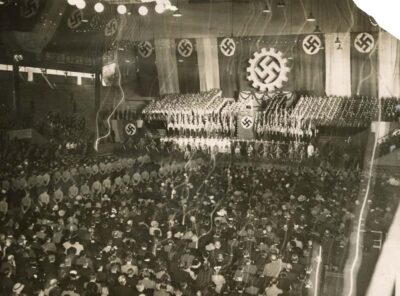
Nazis in Buenos Aires: a historical walking tour
Read our review →
Buenos Aires Walking Tour with Local Guide and Optional Rooftop
Read our review →
Full Day Private Walking Tour of Buenos Aires Neighborhoods
Read our review →
Browse the lists this tour appears in